


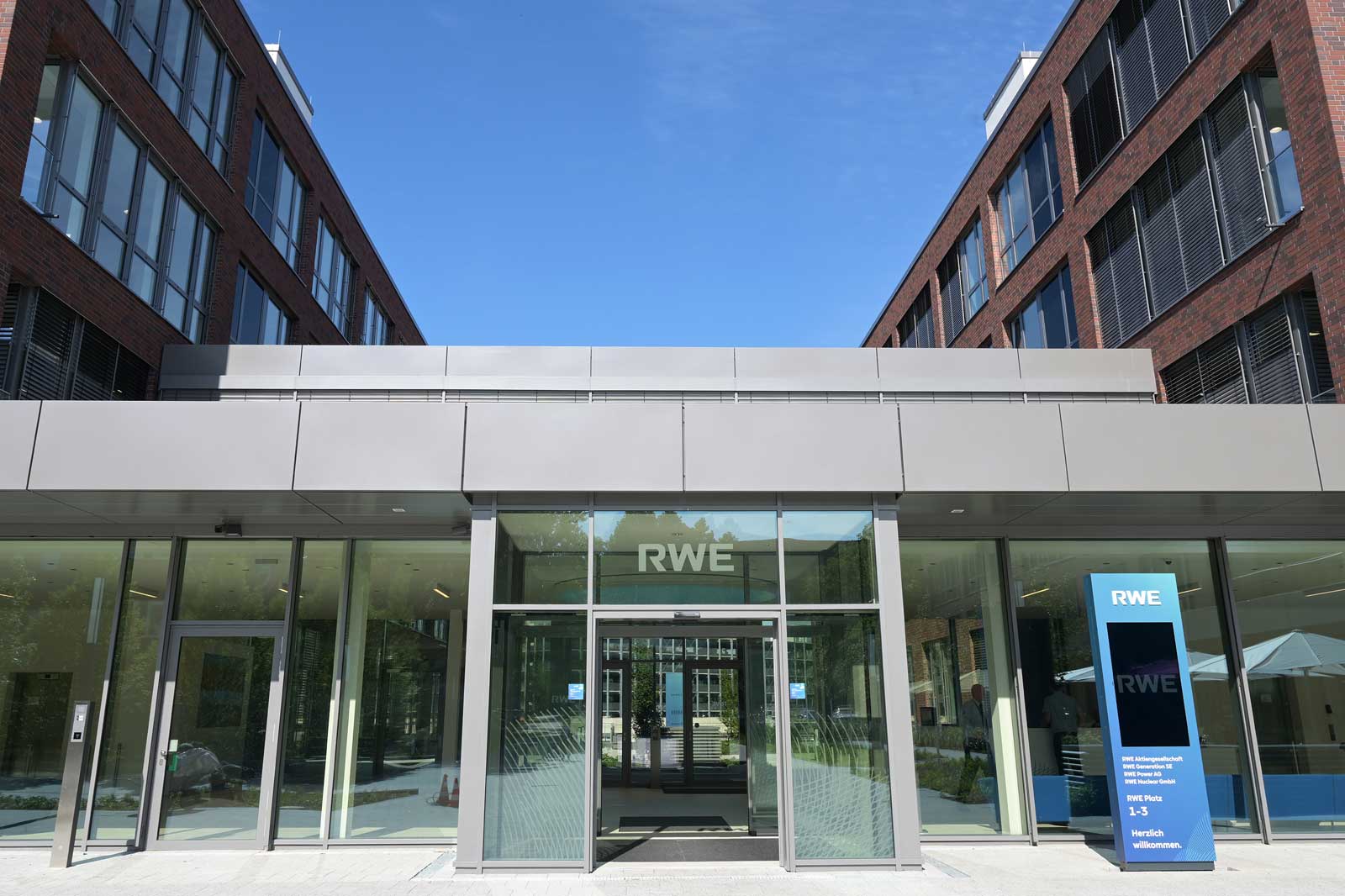


Germany’s strategy to build an industrial scale hydrogen economy has reached another operational milestone as the first volumes of green hydrogen have been produced during commissioning at RWE’s 300 MW electrolyzer project in Lingen.
The development moves one of Europe’s largest integrated hydrogen facilities from construction into early operation, while providing an important test of whether large scale electrolyzers, dedicated pipeline infrastructure, underground storage, and industrial demand can function as a coordinated value chain.
The initial hydrogen production comes from the first 100 MW of proton exchange membrane (PEM) electrolyzer capacity supplied by UK manufacturer ITM Power. The hydrogen is already being transported through a 120 kilometer pipeline to chemical producer Evonik’s site in Marl, demonstrating that hydrogen transport infrastructure is being commissioned alongside production capacity rather than waiting for full plant completion.
The Lingen facility forms the core of RWE’s GET H2 Nukleus project, one of Germany’s flagship hydrogen initiatives. Once fully operational, the site will combine 200 MW of PEM electrolyzers from ITM Power with 100 MW of pressurized alkaline electrolyzers supplied by German manufacturer Sunfire. The hybrid approach reflects a growing trend among developers to diversify electrolyzer technologies, balancing the fast response capabilities of PEM systems with the lower capital costs typically associated with alkaline technology.
Commercial commissioning remains phased. RWE expects 200 MW to enter operation during 2026, followed by the remaining 100 MW in 2027. At full capacity, the facility is designed to produce up to 49,000 metric tons of renewable hydrogen annually, placing it among the largest green hydrogen production plants currently under development in Europe.
The project also illustrates the scale of public investment still required to launch Europe’s hydrogen economy. Germany’s federal government and the state of Lower Saxony have committed €619 million ($712 million) in funding, substantially reducing investment risk for infrastructure that remains commercially challenging under current hydrogen market conditions.
While electrolyzer capacity often attracts the greatest attention, the broader system integration may ultimately determine commercial success. Rather than relying solely on local consumption, the project incorporates dedicated hydrogen transport and storage infrastructure from the outset. Transmission system operators Nowega, OGE, and Thyssengass operate the 120 kilometer pipeline linking Lingen with industrial consumers, while additional hydrogen will be stored in underground caverns at RWE’s Gronau Epe storage facility to improve supply flexibility.
This integrated approach addresses one of the principal constraints facing hydrogen deployment across Europe. Production capacity alone offers limited value without reliable transportation and storage networks capable of connecting renewable hydrogen with industrial demand centers.
Industrial offtake agreements are also beginning to provide longer term revenue certainty. During the initial operating phase, regional industrial customers including Evonik will consume hydrogen produced at Lingen. From 2030, RWE plans to supply 30,000 metric tons of green hydrogen annually to TotalEnergies’ refinery in Leuna under a 15 year supply agreement, representing one of Germany’s largest long term renewable hydrogen purchase contracts announced to date.
The project builds on operational experience already gained at the site. RWE reached final investment decision in 2024 after operating a 14 MW pilot installation consisting of 10 MW of Sunfire alkaline electrolyzers and 4 MW of ITM Power PEM technology. That earlier demonstration reduced technical uncertainty before construction of the significantly larger commercial facility.
For ITM Power, commissioning at Lingen represents an important commercial validation as the company seeks to establish itself among Europe’s leading PEM electrolyzer suppliers after several years of financial restructuring and manufacturing expansion. Delivering hydrogen from the first 100 MW demonstrates that PEM technology can operate at a scale substantially larger than previous commercial deployments.
The project also highlights Germany’s broader strategy of coupling renewable hydrogen production with industrial decarbonization rather than prioritizing export markets. Chemical production, refining, and other hard to abate industries remain the primary target sectors, reflecting the country’s objective of replacing fossil based hydrogen already consumed in industrial processes before expanding into new applications.
Add EnergyNews.biz as a preferred source on Google


