


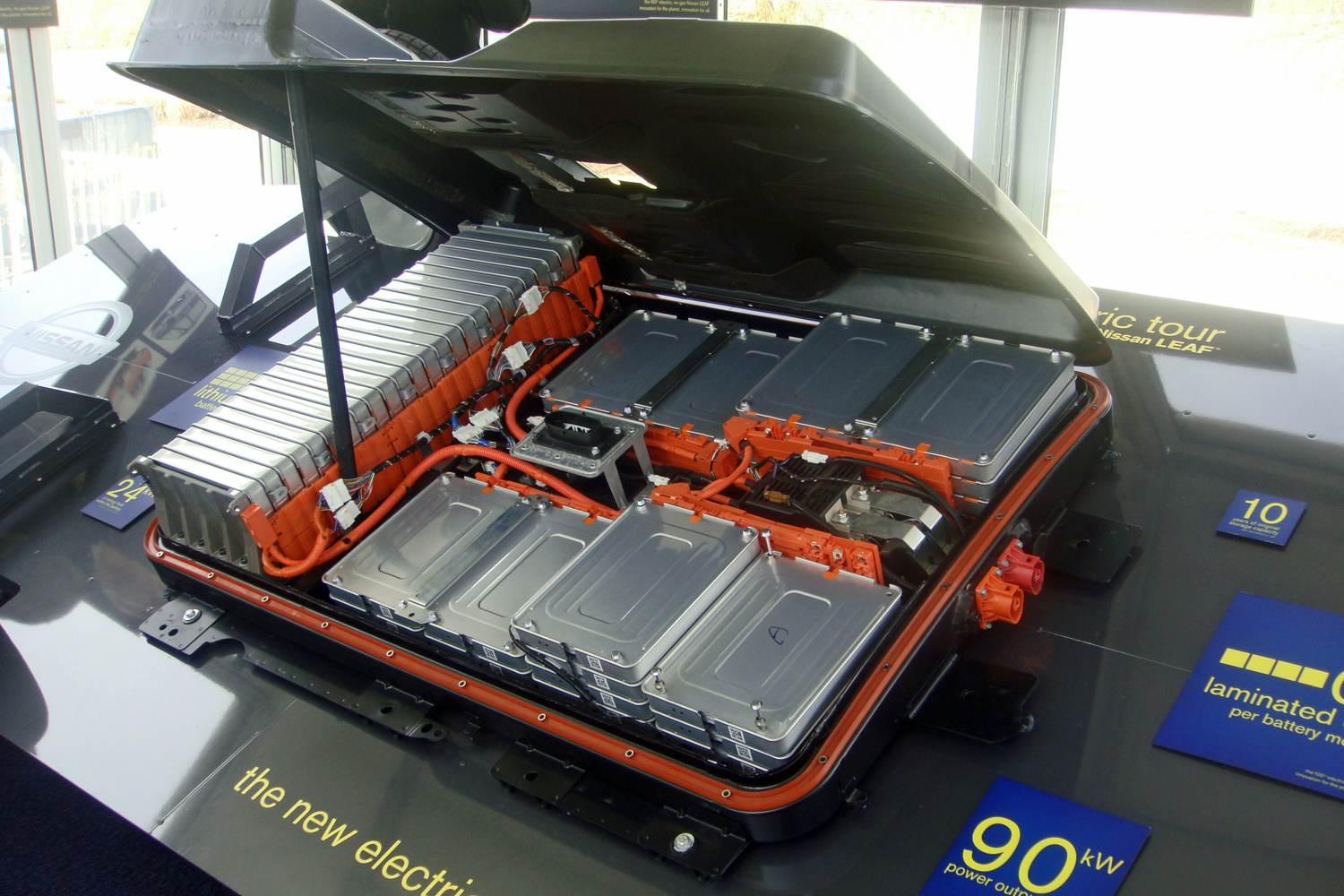


The business of giving used electric vehicle batteries a second life as grid storage lost to cheaper new cells, and Europe’s storage market is better for it. That is the argument of David Oudsandji, who co-founded Voltfang in Aachen and built what he calls Europe’s largest second-life storage factory, which now installs almost all new cells. The facts he cites support the argument and need one correction, because the storage market they describe is growing faster than the second-life thesis ever expected.
The thesis, and why it did not hold
The original case was strong on paper. A 2019 McKinsey report said second-life supply could have a cost advantage of 30 to 70 percent over new batteries, and a 2022 study predicted 227 GWh of used EV batteries would become available by 2030. Oudsandji names three reasons it did not work out. Used batteries did not return on schedule, because new EV registrations in Germany fell 27.4 percent in 2024 to about 380,000. New batteries became cheap, so that testing, dismantling and reassembling a used cell in Europe now costs more than buying a new cell from Asia. And the few batteries that do return stay with carmakers, who use them in their own storage projects, charging infrastructure and fleets to secure recycled material for EU recyclate quotas that apply from 2031.
The article is an opinion by the chief executive of a company whose business changed course, so its claims are the author’s. They match the pattern in public price data, which is what the next section checks.
The price numbers, checked at source
One figure in the article needs correcting. It says stationary storage system prices fell 45 percent in 2025 to US$70 per kWh according to BloombergNEF. BloombergNEF’s survey, as reported at publication, puts the global average turnkey storage system at US$117 per kWh in 2025, a fall of 31 percent from 2024, and describes US$70 per kWh as the average price of stationary storage battery packs, the lowest of any market segment. The direction is the same and the fall is steep, and the corrected figures are the ones to use.
| Turnkey storage system, 2025 | US dollars per kWh |
|---|---|
| Global average | 117, down 31 percent on 2024 |
| China | 73 |
| Europe | 177, a fall of 37 percent in a year |
| United States | 219 |
Europe’s fall of 37 percent was sharper than China’s 29 percent, which BloombergNEF attributed to overcapacity from Chinese suppliers reaching the European market. The same survey forecasts average prices for four hour systems of US$101 per kWh in Europe by 2035. Cheaper cells are the reason the second-life route lost, and also the reason storage can be built at the scale Germany needs.
The size of the gap is the opportunity
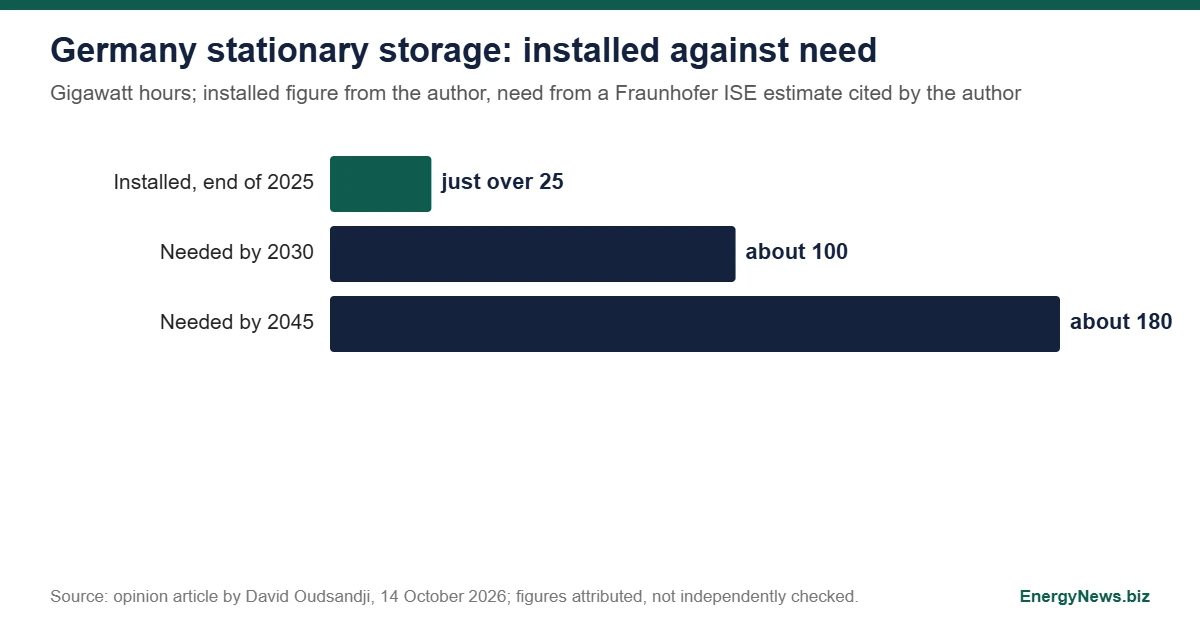
The author cites an estimate by Fraunhofer ISE that Germany needs about 100 GWh of stationary battery storage by 2030 and about 180 GWh by 2045, and says just over 25 GWh was installed by the end of 2025. Those figures are attributed, not checked against the study here. Taken at face value, reaching 100 GWh by the end of 2030 from 25 GWh needs 75 GWh of additions in five years, an average of 15 GWh a year, or compound growth of about 32 percent a year. A market that has to quadruple needs a supply of new cells at scale, as the author argues.
What would have to be true next
The author’s remedies are practical: resume subsidies for storage that serves the grid, speed up permitting and grid connection, because he says hundreds of gigawatts of private capital sit in grid operators’ queues, and give battery recycling a binding expansion path. He also argues that the value of a storage system lies in integration, software, grid services and operations as well as the cell, and that these steps are done in Europe. The checks are dated: the 2030 storage target, and the 2031 start of EU recycled content quotas that the author expects carmakers to prepare for by keeping returned batteries. For another storage market with a stated national target, see India’s 50 GWh programme. Sources: opinion article by David Oudsandji, chief executive of Voltfang, published 14 October 2026; BloombergNEF survey figures as reported in December 2025.
Add EnergyNews.biz as a preferred source on Google


