





Canada’s first commercial small modular reactor is already under construction at Ontario Power Generation’s Darlington site, positioning the country among the global leaders in next generation nuclear deployment.
Yet as governments accelerate plans for SMRs to support electricity demand growth and decarbonization, some analysts argue the strategy introduces a fundamental tradeoff: replacing Canada’s historically self sufficient nuclear model with one increasingly dependent on foreign reactor technology and enriched uranium supplies.
According to York University professor Mark Winfield, Canada’s planned shift toward light water SMRs represents more than a technological transition. It also reshapes the country’s nuclear supply chain, potentially creating new strategic dependencies that contrast with Ottawa’s broader objectives of strengthening domestic manufacturing, energy security, and industrial sovereignty.
Unlike Canada’s existing fleet of CANDU reactors, which operate using natural uranium, the leading SMR designs under development require enriched uranium fuel. Canada is one of the world’s largest uranium producers and possesses domestic mining, refining, and conversion capabilities, but it currently lacks commercial uranium enrichment facilities.
That leaves policymakers with two options. Canada could import enriched uranium, most likely from suppliers in the United States, or invest billions of dollars to establish a domestic enrichment industry. Winfield argues that both approaches present significant challenges.
Importing fuel could expose Canada’s nuclear sector to geopolitical and commercial risks at a time when governments increasingly emphasize resilient domestic energy systems. Developing an enrichment industry, meanwhile, would require substantial capital investment that may be difficult to justify based solely on Canadian demand.
“The most likely somewhere else would be the United States, which presents some energy security challenges in the current context,” Winfield told Energi Media.
The issue extends beyond fuel supply. Ontario’s flagship SMR project at Darlington is based on GE Hitachi’s BWRX 300 reactor, an American Japanese design that differs fundamentally from the domestically developed CANDU technology that has defined Canada’s nuclear sector for decades.
Canada’s original nuclear program was deliberately structured around domestic capabilities. CANDU reactors used natural uranium mined within Canada, while reactor design, engineering, manufacturing, and much of the supply chain remained under Canadian control. That integrated approach reduced dependence on international fuel markets while supporting domestic industrial development.
The emerging SMR landscape follows a different model. Provinces seeking near term deployment are increasingly turning to established international reactor vendors because Canada’s next generation CANDU technology remains under development. AtkinsRéalis is advancing a new CANDU design, but commercial availability is not expected until the next decade, leaving governments pursuing earlier deployment schedules with relatively few domestic alternatives.
Winfield argues that this evolution raises broader questions about industrial policy. While SMRs are often presented as an opportunity to create domestic manufacturing jobs and expand Canada’s clean energy economy, a significant share of intellectual property, reactor technology, and potentially fuel supply could originate outside Canada.
Building domestic enrichment capacity would not necessarily resolve those concerns. Canada’s nuclear market alone may be too small to support a commercially viable enrichment industry, meaning operators would likely need to export enriched uranium to justify investment.
That introduces another layer of complexity because uranium enrichment is considered a dual use technology. The same enrichment processes used to manufacture civilian reactor fuel can also produce material suitable for nuclear weapons if operated at higher enrichment levels. Although Canada has long maintained a strong international nonproliferation record, Winfield argues that expanding enrichment capability would require careful consideration of Canada’s treaty obligations and broader geopolitical responsibilities.
The debate also reflects broader questions about Canada’s long term electricity strategy. Federal plans envision significant expansion of nuclear generation, including proposals for as many as 10 additional large reactors alongside SMRs. However, details regarding reactor locations, technology selection, financing structures, and implementation timelines remain limited.
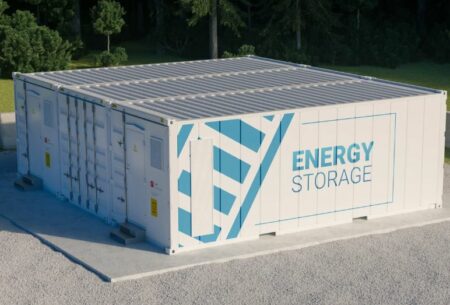
Critics argue that this emphasis on nuclear generation risks overshadowing other low carbon technologies capable of strengthening domestic supply chains. Winfield contends that renewable energy, geothermal power, battery storage, and energy efficiency receive comparatively less attention despite their potential to leverage Canadian manufacturing and resource advantages.
Supporters of SMRs counter that nuclear power provides reliable, dispatchable generation capable of complementing variable renewable energy while supporting industrial decarbonization and rising electricity demand. Canada’s early leadership in deploying commercial SMRs could also position domestic companies to participate in a growing global market for advanced nuclear technologies.