





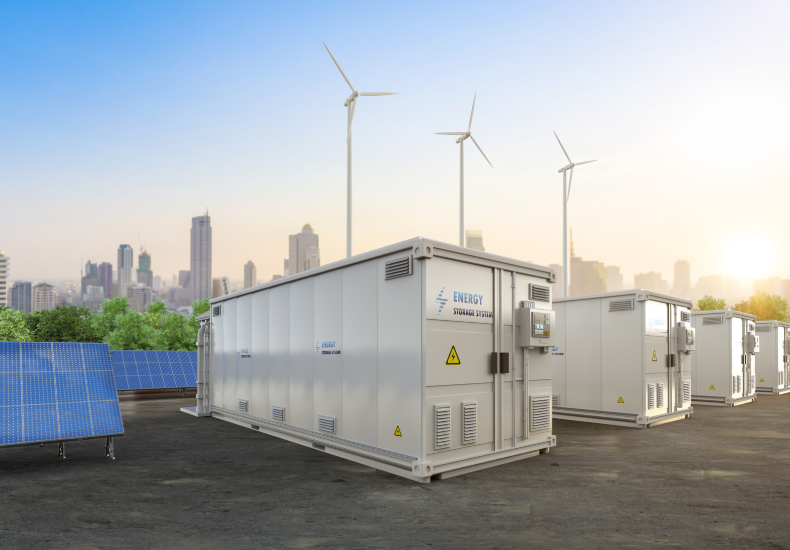
In April 2026, CATL signed a 60 GWh sodium-ion supply agreement with integrator HyperStrong, the largest sodium order ever placed, and declared the chemistry mainstream-ready. The 2 GWh agreement with Solarpro for deployment across Central and Eastern Europe, announced this week using CATL’s Tener Sodium platform, is smaller in absolute volume but more significant in geographic reach: it represents the first large-scale sodium-ion battery energy storage project in a region where the technology’s core performance advantage, cold-weather retention, is directly relevant to grid operating conditions.
CATL’s CTO of its domestic energy storage solutions division stated that the company’s goal is to have sodium-ion battery cell costs match those of LFP batteries by the end of 2026, with total system cost parity projected for 2027. At the cell level, that convergence is already underway. Sodium-ion cell costs fell 24% year-over-year through 2025 and 2026, dropping from approximately $75 per kWh to around $53 per kWh on average, approaching LFP cells, which currently sit at $52 to $55 per kWh. The supply chain maturity gap between the two chemistries remains real, but the cost trajectory has accelerated enough that deployers are now making commercial commitments at GWh scale rather than treating sodium as a long-run speculative bet.
Why Eastern Europe Is the Right Market for This Technology
The Tener Sodium system’s cold-weather performance specification is not a marginal feature for the Solarpro deployment. The system retains 92% of its capacity at negative 20 degrees Celsius, using what CATL calls dipole wide-temperature electrolyte technology that eliminates the need for the active heating systems that lithium iron phosphate systems require to maintain performance in extreme cold. Lithuania, identified in the announcement as a target country for the deployment, regularly experiences winter temperatures between negative 15 and negative 20 degrees Celsius. Bulgaria, where Solarpro has already deployed 752 MWh of CATL lithium systems over the past two years, has less extreme cold but significant seasonal temperature variation.
For grid storage operators in Eastern Europe, the conventional solution to cold-temperature lithium degradation involves thermal management systems that consume parasitic electricity, add capital cost, and introduce additional maintenance complexity. A sodium-ion system that operates at specification without active heating represents a genuine operational simplification, not merely a marginal efficiency improvement. CATL specifies that Tener Sodium supports more than 10,000 cycles at 45 degrees Celsius without additional insulation or active cooling, and claims a self-consumption rate of 1%, half the industry average.
The 15,000-cycle claim in the announcement and the 25 to 30 year design life position the system for grid applications where assets are expected to cycle daily and hold residual value beyond the typical 10 to 12 year lithium-ion replacement cycle. Whether those cycle life claims hold under field conditions in Eastern European operating environments remains to be demonstrated at scale, but the underlying chemistry supports the durability argument: sodium-ion cells do not experience the same lithium plating mechanisms that accelerate degradation in LFP cells at low temperatures, and the absence of thermodynamic stress from deep cold reduces one of the primary degradation pathways for grid storage systems operating in northern climates.
The Solarpro Partnership and What the Track Record Suggests
CATL and Solarpro’s relationship provides a more informative deployment context than a new bilateral agreement alone would suggest. The two companies commissioned a 150 MWh EnerC+ liquid-cooled lithium system in Bulgaria in 2024, followed by a 602 MWh Tener lithium system connected to Bulgaria’s grid in May 2026, a project that increased the country’s total installed energy storage capacity by approximately 10%. The sequencing from 150 MWh to 602 MWh to a 2 GWh sodium commitment follows a pattern of progressive scale-up by an integrator with direct operational experience of CATL’s systems in the target market.
Bulgaria’s grid context is relevant. The country has been managing a generation mix that includes ageing coal capacity, significant nuclear at Kozloduy, and a growing but curtailed renewables portfolio. The 602 MWh system commission increased national storage capacity by 10%, which indicates the baseline was very low. Central and Eastern Europe broadly lags Western European markets on storage deployment per unit of installed renewable capacity, creating commercial conditions where a credible 2 GWh commitment represents a material market share claim in a region where multi-hundred MWh projects have only recently become operational.
The Broader Sodium Deployment Signal
CATL’s Alfen partnership announced in July 2026 will bring Tener Sodium to the Netherlands, with deployments scheduled to begin in 2027. The Solarpro agreement for Central and Eastern Europe sits alongside deals that CATL is closing across European markets, suggesting the company is treating 2026 and 2027 as the commercial launch window for sodium-ion in grid storage rather than a period of continued piloting. The third European Hydrogen Bank auction attracted 58 bids at more than six times oversubscription, with Spain and Germany adding €1.7 billion in national funds through Auctions-as-a-Service. While that is a separate policy domain, it illustrates the pace at which European energy storage and renewable infrastructure markets are absorbing capital commitments, providing the demand backdrop against which sodium-ion’s commercial scaling is occurring.
Hard-carbon anode costs, a critical input for sodium-ion cells, are expected to drop from 60,000 to 70,000 yuan per tonne in 2024 to 35,000 to 40,000 yuan per tonne by 2026, with a long-term target below 25,000 yuan per tonne. That input cost trajectory is the primary mechanism through which system-level sodium-ion costs will continue to fall below the LFP baseline over the next two to three years, and it is occurring through the same manufacturing scale dynamics that drove LFP cost reductions over the past decade. The Solarpro deployment, once operational, will generate real-world performance data in a cold-climate, grid-connected context that currently exists mostly in the form of manufacturer specifications. How the Tener Sodium system performs at scale in Eastern European winter conditions over multiple years will determine whether the commercial sodium pipeline developing across Europe continues to accelerate or encounters the operational qualification barriers that have slowed previous battery chemistry transitions from announcement to widespread adoption.