





Cement production accounts for roughly 7 percent of global carbon dioxide emissions, a figure that continues to position the sector among the most difficult to decarbonize due to its reliance on process emissions rather than energy use alone.
A new pilot initiative led by the University of Regina aims to test whether carbon capture technologies can be deployed at scale in emerging markets where demand for cement remains structurally high.
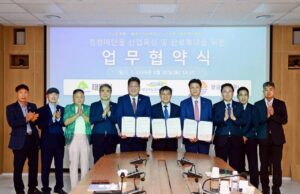
The project, developed in collaboration with the Thai Cement Manufacturers Association, involves the shipment of a carbon capture pilot unit to Thailand for real-world testing. Designed by the university’s Clean Energy Technologies Research Institute, the system is intended to demonstrate carbon capture, utilization, and storage under operational conditions rather than controlled laboratory environments.
Unlike power generation or transport, cement production emissions are heavily tied to the chemical transformation of limestone into clinker, which releases CO2 regardless of the energy source used. This limits the effectiveness of electrification or fuel switching as standalone solutions and elevates the importance of carbon capture technologies.
The pilot unit funded by Environment and Climate Change Canada and commissioned by the United Nations Industrial Development Organization reflects a growing recognition that carbon capture may be one of the few viable pathways to deep emissions reductions in this sector.
However, carbon capture in cement remains at an early stage of deployment. High capital costs, energy penalties, and integration challenges continue to constrain large-scale adoption. Demonstration projects such as this one are therefore critical in establishing technical feasibility and cost benchmarks under industrial conditions.
The partnership highlights a broader trend toward cross-border technology transfer, particularly between developed economies with established research infrastructure and emerging markets with high industrial emissions growth.
The involvement of the University of Regina builds on a memorandum of understanding between the Government of Saskatchewan and the Thai Cement Manufacturers Association, aimed at strengthening technical cooperation in energy and industrial decarbonization.
For Canada, the project represents an opportunity to position domestically developed carbon capture technologies in international markets. For Thailand, it provides access to advanced systems without the need to develop them from scratch, accelerating deployment timelines.
Yet this model also raises questions about scalability. Pilot units can validate performance, but replication across an entire cement industry requires significant capital investment, supportive policy frameworks, and integration with existing plant infrastructure.
A key objective of the pilot is to move beyond theoretical performance metrics and assess how carbon capture systems operate within the variability of industrial environments. Factors such as flue gas composition, operational downtime, and maintenance requirements can significantly impact capture efficiency and overall economics.
Dr. Hussameldin Ibrahim, director of the research institute, emphasized that the university’s selection reflects its expertise in advanced carbon capture systems. However, translating that expertise into consistent field performance remains a critical step.
The pilot’s deployment in Thailand will provide data on system reliability, capture rates, and operational costs, all of which are essential for informing investment decisions in future projects.
Thailand’s cement sector has set a target of reaching net zero emissions by 2050, aligning with broader global climate commitments. Achieving this goal will require a combination of strategies, including alternative fuels, clinker substitution, and carbon capture.
Carbon capture is likely to play a central role in addressing residual emissions that cannot be eliminated through other means. The pilot project contributes to building the technical and operational foundation needed to support that transition.
At the same time, the success of such initiatives will depend on policy support, including carbon pricing mechanisms, subsidies, or regulatory mandates that can offset the high costs associated with capture technologies.