





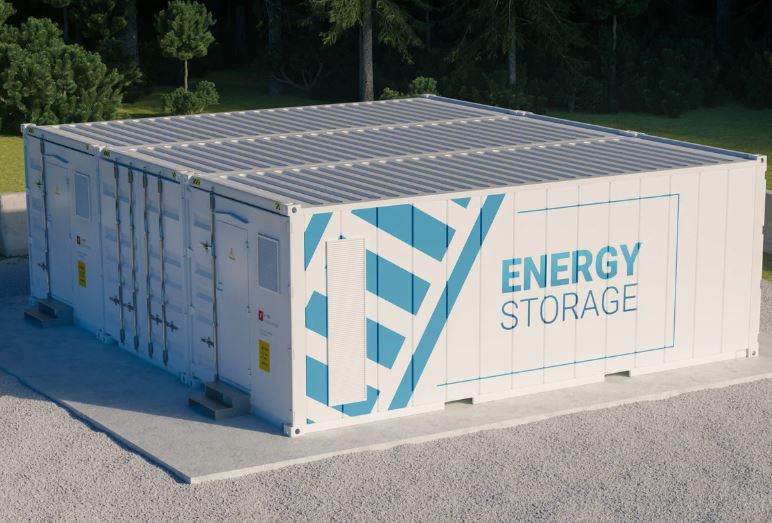
ENGIE is expanding its battery energy storage footprint across key markets, with new projects in Spain and France pushing its European pipeline beyond 1 GW.
The company has acquired two battery projects in Spain totaling 278 MW and 1.1 GWh, alongside launching construction of its first battery system in France. These developments reflect a broader strategic shift toward integrating flexibility assets as core components of renewable portfolios rather than auxiliary additions.
The Spanish projects, located in Andalusia, include a 78 MW system in Álora and a 200 MW installation in Tarifa. With four-hour storage duration, both sites are designed to address intra-day variability in solar and wind generation, a growing challenge in regions with high renewable penetration.
Spain’s renewable fleet has expanded rapidly in recent years, with solar generation in particular creating midday surpluses that strain grid infrastructure and depress wholesale prices. Storage systems capable of shifting energy into peak demand periods are increasingly seen as essential for maintaining system balance and market stability.
ENGIE’s decision to prioritize multi-hour storage aligns with this trend, as shorter-duration batteries often lack the capacity to manage sustained imbalances. However, longer-duration systems also face higher capital costs, raising questions about revenue adequacy in existing market structures.
A notable feature of the Spanish projects is the inclusion of synchronous condensers, a technology traditionally associated with conventional power plants. These systems provide inertia and reactive power support, helping stabilize grid frequency and voltage in systems with declining levels of rotating generation.
The integration of such equipment into battery projects reflects a shift in how storage assets are positioned within the grid. Rather than focusing solely on energy arbitrage, developers are increasingly targeting ancillary services that address the technical challenges of high-renewable systems.
This hybridization of storage and grid support functions may improve project economics by unlocking additional revenue streams, but it also increases technical complexity and capital requirements.
France Marks Entry Into a Different Market Structure
In France, ENGIE has begun construction of a 110 MW and 220 MWh battery in Castelnau d’Aude, scheduled for commissioning in 2027. With a two-hour duration, the project is tailored to shorter-term balancing needs within a system that remains heavily influenced by nuclear generation.
France presents a different set of dynamics compared to Spain. While renewable capacity is growing, the country’s power system benefits from relatively stable baseload generation, reducing the frequency of extreme price volatility. As a result, battery projects must rely more heavily on ancillary services and capacity mechanisms rather than pure energy arbitrage.
ENGIE’s entry into the French battery market suggests an expectation that flexibility demand will increase as renewable penetration rises and nuclear availability fluctuates.
With more than 700 MW of battery capacity already operational or under construction, ENGIE’s latest additions bring its European total above 1 GW, spanning eight countries including Belgium, Germany, Italy, the Netherlands, Romania, and the United Kingdom.
This expansion is part of a broader strategy to reach 95 GW of renewable and storage capacity by 2030, up from 57.2 GW installed at the end of 2025. The inclusion of storage within this target indicates a recognition that renewable growth alone is insufficient without corresponding investments in flexibility.
However, the pace of storage deployment remains uneven across Europe, influenced by national regulatory frameworks, market incentives, and grid conditions. While countries like the United Kingdom and Germany have established more mature storage markets, others are still developing the policy structures needed to support large-scale investment.