



Europe’s stationary battery market is expected to nearly quadruple this decade, with Wood Mackenzie forecasting annual demand to increase from 36 GWh in 2025 to approximately 138 GWh by 2030.
That growth is driving established energy companies to expand beyond conventional businesses, and Eni has positioned battery manufacturing as a central element of its industrial transformation.
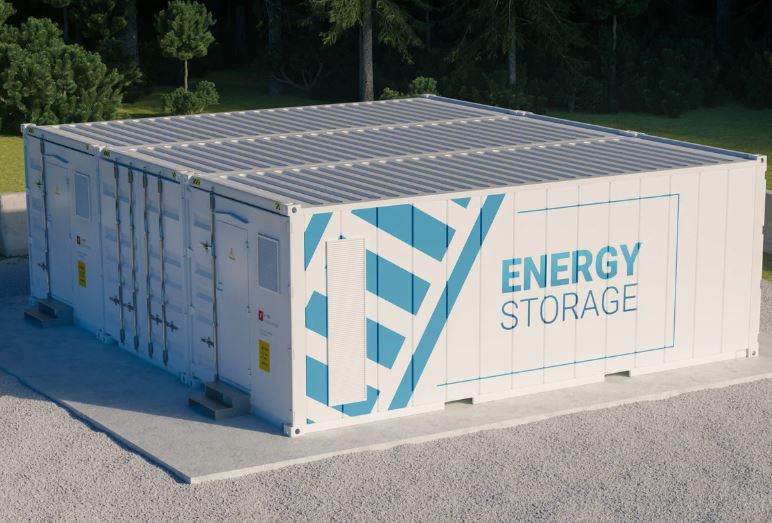
The Italian energy company has begun construction of a lithium iron phosphate battery gigafactory in Brindisi, marking its formal entry into battery cell manufacturing. Developed through Eni Storage Systems, a joint venture between Eni Industrial Evolution and FIB, part of the Seri Industrial Group, the facility will produce battery cells, modules, and battery energy storage systems primarily for grid scale applications.
The project forms part of a broader industrial strategy rather than a standalone manufacturing investment. By 2030, Eni plans to achieve a combined annual production capacity of 16 GWh through the new Brindisi facility and Seri Industrial’s existing gigafactory under development in Teverola. Approximately half of that capacity is expected to come from the Brindisi site, which will also include an assembly plant capable of integrating battery modules produced both locally and at the Caserta facility.
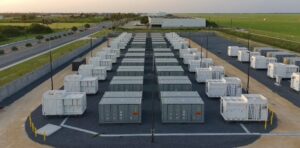
The investment reflects the increasing strategic importance of stationary energy storage as renewable electricity generation expands across Europe. Larger volumes of intermittent wind and solar power require flexible resources capable of balancing electricity supply and demand while supporting grid stability. Battery energy storage systems have become one of the fastest growing technologies addressing that need, creating an emerging manufacturing opportunity alongside electric vehicle batteries.
Eni’s strategy also extends beyond battery assembly. A second phase of the Brindisi development will incorporate production of lithium iron phosphate cathode active material together with a battery recycling facility. The objective is to establish a more integrated domestic supply chain capable of supporting both Italian gigafactories while reducing dependence on imported battery components.
That approach aligns with broader European industrial policy, which has increasingly emphasized strategic autonomy in critical technologies. Although Europe has announced numerous battery manufacturing projects in recent years, much of the global battery supply chain, particularly for processed materials and cell production, remains concentrated in Asia. Establishing local production of both battery components and recycled materials could improve supply chain resilience while reducing transportation related emissions.
The choice of lithium iron phosphate chemistry also reflects changing market dynamics. While nickel based batteries continue to dominate many electric vehicle applications because of their higher energy density, LFP technology has gained market share due to lower material costs, improved thermal stability, and longer operating life. Those characteristics have made LFP batteries particularly attractive for stationary energy storage, where weight is less critical than durability and cost effectiveness.
The Brindisi project will also repurpose a former industrial site owned by Versalis, Eni’s chemical subsidiary. Redeveloping existing industrial infrastructure has become a recurring strategy among European manufacturers seeking to accelerate new energy investments while preserving industrial employment in regions affected by the gradual decline of traditional heavy industries.
For Eni, however, manufacturing batteries represents a significant strategic shift rather than a natural extension of its legacy operations. The company has historically focused on oil, natural gas, refining, and chemicals. Success in battery manufacturing will depend not only on production capacity but also on its ability to compete in a market characterized by rapid technological change, falling battery prices, and increasing international competition.
The company’s stated ambition to secure more than 10 percent of Europe’s battery energy storage system market by 2030 illustrates the scale of those ambitions. Achieving that target will require more than manufacturing capacity alone. Market penetration will depend on execution across the entire value chain, including raw material sourcing, technology competitiveness, system integration, recycling capabilities, and commercial relationships with utilities and renewable energy developers.