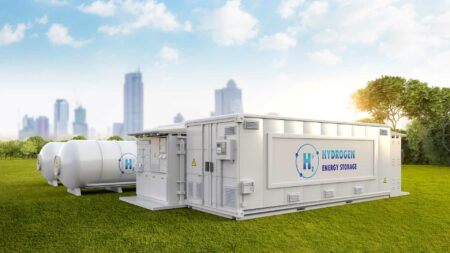





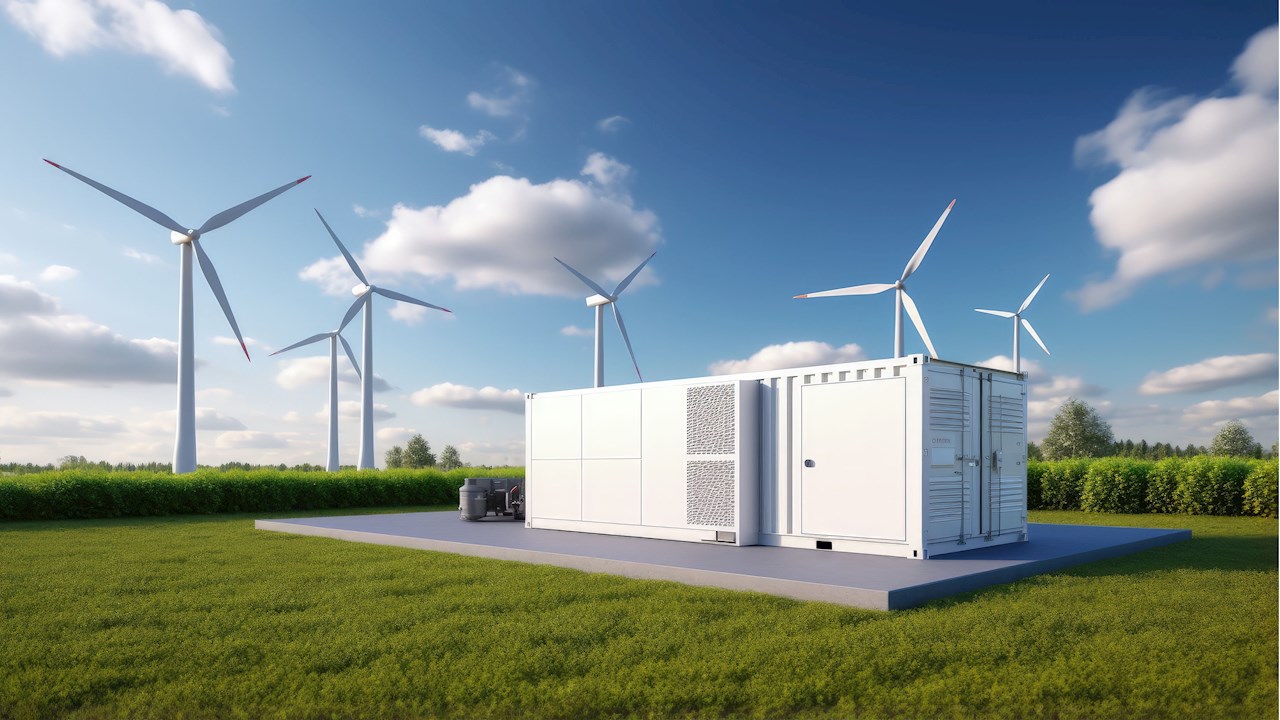
A 12.8 gigawatt-hour battery storage cluster in Inner Mongolia, anchored by a 4 gigawatt-hour single-site facility, is being framed this week as a fresh milestone in China’s grid-scale storage buildout. It isn’t one. The Envision Jingyi Chagan Hada Energy Storage Power Station connected to the grid in the final days of December 2025, and the completion of the full 12.8 GWh cluster, along with its integration into Envision’s AI dispatch platform, was already covered in depth by multiple outlets in February 2026, six months before this account presents the same facility as newly online.
That timeline matters because the underlying claims deserve to be read against what was already known rather than treated as breaking developments. The assertion that the flagship plant “could very well be” the world’s largest single-site electrochemical storage facility traces to a single unnamed source rather than an audited or independently verified ranking, and it is narrower than it sounds: it applies to single-site capacity, not to total project scale. On that broader measure, 2026’s storage pipeline has already produced larger commitments elsewhere. Abu Dhabi’s Round the Clock project, pairing a 5.2 gigawatt solar array with a 19 gigawatt-hour battery system, awarded BYD an 11.275 gigawatt-hour supply contract in July. Australia’s proposed Australia-Asia Power Link carries a 42 gigawatt-hour storage component. India’s Ladakh corridor includes a planned 12 gigawatt-hour tranche. Industry trackers describe the “world’s largest battery” title as a moving target that reshuffles every few months as Chinese, Gulf, and Australian projects reach commercial operation in overlapping windows, which makes any single superlative claim a snapshot rather than a durable record.
The dispatch economics attached to the story deserve the same scrutiny. The claim that AI-driven predictive dispatch will lift lifetime revenue by roughly 20% compared with fixed-schedule operation again rests on an unnamed source’s estimate rather than a published performance dataset. It sits within a plausible range: separate academic and industry analysis of health-aware, predictive battery dispatch elsewhere in the sector has documented lifetime profitability gains in the 21% to 29% band, so a 20% figure is not an outlier claim on its face. But without disclosed methodology, a stated baseline, or a defined time period, it functions as a directional estimate rather than a verified result, and describing live spot-market data as having “validated” the model without publishing that data does not resolve the gap.
What is separately and genuinely new is the Galaxy Campus in Ulanqab, announced August 6, two days before this account, and grounded in wire-service and company disclosure rather than anonymous sourcing. The campus is designed to scale past 2 gigawatts of capacity to support up to one million AI accelerators inside a 120,000 square meter facility. The power figure checks out against known hardware: current-generation AI accelerators draw roughly 1 to 2 kilowatts each once cooling and rack overhead are included, so a million-accelerator facility plausibly requires on the order of 1 to 2 gigawatts for compute alone, consistent with the campus’s stated capacity envelope rather than inflated relative to it. The campus is also explicitly positioned as the first project under Envision’s broader initiative to build 5 gigawatts of renewable-powered AI computing capacity in arid regions by 2030, which frames Ulanqab as a pilot for a much larger program rather than a standalone facility.
The commercial logic connecting storage and compute in Inner Mongolia is sound even where individual claims need qualification. The region’s wind and solar output regularly exceeds local transmission capacity, and pairing battery clusters with co-located, high-density compute load is a more direct way to monetize curtailed generation than waiting for long-distance ultra-high-voltage lines to catch up. China added roughly 167 gigawatt-hours of new battery storage capacity in 2025 and is on track for another 203.5 gigawatt-hours in 2026, a build-out increasingly driven by AI data center demand rather than grid balancing alone, which places the Chagan Hada cluster and the Galaxy Campus within a much larger national trend rather than as an isolated company milestone.
What the reporting conflates is provenance. A December 2025 grid connection, an unverified anonymous-source estimate about dispatch economics, and a freshly dated, company-confirmed AI infrastructure announcement are stitched into a single continuous narrative under one dateline. Each element carries a different evidentiary weight, and treating them as equally current status updates obscures which parts of the story are corroborated news and which are six-month-old developments repackaged alongside them.