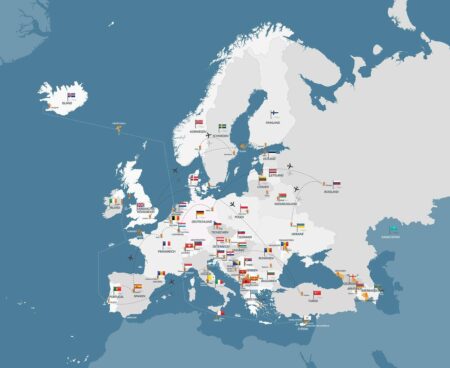







European energy storage hardware startups have raised €2.14 billion in equity funding, accounting for 46.7% of capital raised over the past three years, according to analysis from Avnet Silica covering commercial, industrial, and grid-scale applications. The investment acceleration reflects mounting pressure to address renewable intermittency and grid stability challenges. However, capital concentration patterns reveal persistent questions about which technologies can achieve commercial scale against entrenched lithium-ion incumbents and Chinese manufacturing dominance.
Mechanical storage systems captured €696.7 million, more than double the €331.8 million directed toward battery energy storage systems, despite representing fewer companies in the European startup landscape. This funding disparity signals investor recognition that duration requirements for grid-scale applications increasingly exceed lithium-ion’s economic sweet spot of two to four hours. Mechanical approaches, including gravity-based systems, compressed air energy storage, and flywheel technologies, target duration ranges of eight hours to multiple days, addressing market segments where battery costs scale linearly with capacity while mechanical systems demonstrate more favorable economics at extended durations.
The €696.7 million allocation to mechanical storage warrants scrutiny given the sector’s sparse operational track record at commercial scale. Pumped hydro storage dominates existing long-duration capacity globally, benefiting from decades of operational experience and well-understood economics. Novel mechanical approaches must demonstrate reliability, round-trip efficiency, and lifecycle costs competitive with both pumped hydro and declining battery prices to justify current valuations. Several mechanical storage startups have announced projects without reaching commercial operation, suggesting that significant portions of raised capital will fund first-of-kind installations where technical and execution risks remain elevated.
Lithium-ion battery systems attracted €221 million, a figure that appears modest relative to mechanical storage but reflects market maturity dynamics. Established manufacturers, including CATL, BYD, and LG Energy Solution, control battery production at scales European startups cannot replicate without capital commitments exceeding current funding levels by orders of magnitude. European battery startups consequently target differentiated applications, specialized chemistries, or integration services rather than competing directly in commodity cell manufacturing. The €15 million raised by lithium-sulfur developers indicates continued interest in post-lithium-ion chemistries, though these technologies face persistent challenges with cycle life and manufacturing scalability that have repeatedly delayed commercialization timelines over the past decade.
EV charging infrastructure with integrated energy storage garnered €435.5 million, the second-largest category after mechanical systems. This allocation addresses grid connection constraints in locations where transformer capacity limits peak charging power or where grid extension costs prove prohibitive. Battery-buffered charging enables high-power delivery without proportional grid upgrades, solving a specific infrastructure bottleneck as EV adoption accelerates. However, the economic case for buffered charging depends heavily on electricity pricing structures, demand charge mechanisms, and utilization rates. Projects in low-throughput locations struggle to amortize battery capital costs, limiting addressable markets to high-traffic corridors and urban fast-charging networks where utilization justifies investment.
Thermal energy storage attracted €105.9 million, split between sensible heat systems at €80.4 million and phase-change materials at €24.5 million. Industrial heat represents approximately 50% of European energy consumption, predominantly supplied through natural gas combustion. Decarbonizing this demand requires either electrification with renewable power or biomass alternatives, both of which benefit from thermal storage to manage intermittency or optimize combustion efficiency. Sensible heat storage using materials like rock, ceramic, or molten salt offers relatively mature technology with established thermodynamic principles, though market adoption depends on industrial process integration complexity and payback periods acceptable to manufacturing facilities operating on tight margins.
Supply chain investments totaling €259.4 million concentrate on next-generation battery chemistry at €113.2 million and cell production capabilities at €89.0 million. These allocations reflect efforts to establish European battery manufacturing capacity independent of Asian supply chains, aligning with policy objectives under the European Battery Alliance and related industrial strategy initiatives. However, achieving cost competitiveness with established Asian manufacturers requires scale that current funding levels cannot support. European cell production startups face the challenge of securing sufficient offtake commitments to justify gigawatt-hour scale facilities while navigating technology selection risk as battery chemistry continues evolving.
Hydrogen storage raised €73.7 million alongside €54.4 million for power-to-X applications, positioning these technologies as energy storage vectors rather than solely as fuel production pathways. This framing addresses seasonal storage requirements where battery duration limitations become prohibitive. Converting excess renewable generation to hydrogen for storage and subsequent reconversion enables storage durations from weeks to months, though round-trip efficiency penalties of 60-75% for hydrogen compared to 85-95% for batteries create substantial energy losses. Economic viability depends on renewable curtailment volumes and the value differential between low-priced excess generation periods and high-priced scarcity periods.
Portable energy storage for construction sites, events, and temporary applications attracted €127.1 million across three startups. This market addresses diesel generator displacement in applications where noise, emissions, and fuel logistics create operational challenges. Battery-based portable power systems offer zero-emission operation and reduced maintenance, though capital costs significantly exceed those of diesel generators. Market penetration requires either regulatory mandates restricting diesel use or total cost of ownership advantages emerging through fuel savings and carbon pricing mechanisms.
Circular economy initiatives, including battery recycling, garnered €19 million between Circu Li-ion and tozero, a relatively modest allocation given growing end-of-life battery volumes from first-generation EV deployments. Europe faces increasing quantities of retired EV batteries requiring processing, creating both environmental obligations and potential resource recovery opportunities. However, recycling economics depend heavily on commodity prices for recovered materials and competition from primary mining operations. Current lithium prices have declined from 2022 peaks, compressing margins for recyclers and challenging business models predicated on sustained high material values.
Fourteen battery storage startups incorporate second-life batteries either exclusively or optionally, extending battery utility beyond initial automotive applications. Second-life batteries offer lower upfront costs for stationary storage applications where energy density requirements prove less stringent than automotive use. Technical challenges include state-of-health assessment accuracy, warranty liability allocation, and degradation prediction under different usage profiles. Successful second-life business models require sophisticated battery management systems and robust supply chains for acquiring, testing, and grading retired automotive packs.
The 84.4% of total funding raised within the past five years indicates recent acceleration but also suggests limited operational history for many funded companies. Early-stage ventures typically require multiple funding rounds before achieving commercial scale, meaning substantial portions of raised capital support development activities rather than revenue-generating operations. This funding profile creates execution risk, particularly for hardware-intensive businesses where prototype-to-production transitions consume significant capital and time while facing technical challenges absent in software development.
Avnet Silica’s methodology excluded software-only companies unless integrated with hardware production, focusing analysis on physical asset developers. This approach captures capital requirements for manufacturing-intensive businesses but may underrepresent the total ecosystem value, including software, controls, and integration services that increasingly differentiate energy storage offerings. Grid-scale storage projects require sophisticated energy management systems, market participation software, and grid services optimization algorithms that software specialists provide, capabilities that traditional hardware manufacturers often lack internally.
The geographic distribution of funded companies and their target markets remains unspecified in available data, limiting assessment of whether capital flows align with regions facing the most acute storage needs. Southern European markets with high solar penetration demonstrate different storage requirements than Nordic regions with hydroelectric resources and seasonal demand patterns. Capital allocation efficiency depends on matching technology characteristics to specific market requirements rather than pursuing generalized solutions across diverse regulatory and grid environments.
Investment concentration among well-funded leaders versus distribution across numerous smaller players affects sector development trajectories. A few companies capturing disproportionate funding shares may achieve scale advantages through accelerated development and market entry, while broader distribution supports technology diversity and competitive dynamics. The mechanical storage sector’s high funding total with relatively few companies suggests investor conviction in specific ventures rather than broad sector exploration, creating concentrated execution risk if leading companies encounter technical or commercial difficulties.
Chinese manufacturing dominance in battery production remains a key competitive context that frames European startup strategies. Even with substantial equity funding, European manufacturers cannot match Chinese scale economies or government support levels that enabled Asian supply chain development. European players consequently pursue differentiation through specialized applications, premium market positioning, or vertical integration strategies that leverage proximity to end customers and regulatory advantages within European markets. Whether these strategies generate sustainable competitive moats depends on the quality of execution and evolving trade policies that affect market access for Chinese competitors.