




Germany added an estimated 6.57 gigawatt-hours of stationary battery storage capacity in 2025, lifting the country’s total installed capacity to approximately 24 gigawatt-hours.
The increase, roughly 8 percent year on year, reflects renewed momentum in the storage sector following a slowdown in 2024, according to data compiled by ISEA RWTH Aachen.
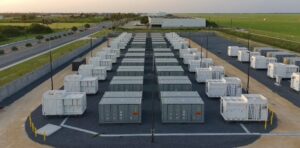
The growth was largely concentrated in industrial and large-scale systems. Approximately 530,000 new storage systems, totaling 5.84 gigawatt-hours, were commissioned and registered last year, with late registrations expected to add another 0.73 gigawatt-hours. Industrial-scale deployments accounted for a significant share of this expansion, while the large-scale segment saw dynamic growth due to increasing demand for grid stability and peak shaving solutions.
In contrast, home battery installations declined amid weaker rooftop solar uptake. Residential systems added 4.19 gigawatt-hours in 2025, down 6.4 percent compared with the previous year. Analysts attribute the decline to reduced incentives for rooftop PV, rising equipment costs, and slower uptake in new housing projects. The divergence highlights a structural shift in Germany’s storage market, where commercial and utility-scale solutions are increasingly driving capacity expansion.
Market experts point to several factors underpinning industrial and large-scale growth. Energy-intensive manufacturing facilities are adopting storage to manage electricity costs and participate in flexibility markets, while regional grid operators leverage large batteries to stabilize supply amid rising renewable penetration. Germany’s Renewable Energy Act and incentives for demand-side management have further supported the deployment of commercial and utility-scale projects.
The sector’s evolution raises questions about future residential adoption. With the industrial segment scaling rapidly, storage providers may increasingly focus on high-capacity systems rather than small home units, particularly as digital energy management systems enable more sophisticated energy optimization for enterprises.
The home storage decline signals potential barriers to achieving widespread residential flexibility, while grid integration for large-scale systems requires continued investment in interconnection, monitoring, and regulatory adaptation. Germany’s experience also underscores the importance of aligning incentives with market realities to sustain long-term growth across all segments.
As Germany’s storage market matures, the trend suggests a dual-track development: industrial and utility-scale systems driving capacity expansion and grid resilience, while residential installations face headwinds without targeted policy support. The 2025 data provides a clear signal to policymakers, investors, and energy planners on where deployment momentum is strongest and where interventions may be required to maintain a balanced storage ecosystem.