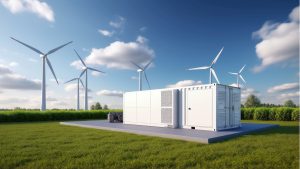





The world is on track to invest $3.4 trillion in energy in 2026, yet the most significant shift is not the scale of spending but where the money is flowing. Electricity infrastructure, renewables, nuclear power, storage, and efficiency are attracting nearly twice as much investment as fossil fuels, reflecting how a second major energy crisis within five years is reshaping global perceptions of energy security.
According to the International Energy Agency’s latest World Energy Investment report, the disruption of shipping flows through the Strait of Hormuz has triggered a reassessment of energy strategies among both importing and exporting nations. Coming only four years after Russia’s invasion of Ukraine upended global energy markets, the latest crisis is reinforcing a trend toward diversification, electrification, and greater reliance on domestic energy resources.
The shift marks a significant evolution in how governments and companies assess risk. While previous decades focused primarily on fuel affordability and supply availability, energy security is increasingly being viewed through the lens of resilience to geopolitical disruptions.
The result is a growing preference for investments that reduce dependence on vulnerable trade routes. Renewables, nuclear power, grid infrastructure, battery storage, and energy efficiency are attracting larger shares of capital as countries seek to strengthen domestic energy systems and reduce exposure to imported fuels.
Of the projected $3.4 trillion in global energy investment this year, approximately $2.2 trillion will be directed toward grids, storage, low emissions fuels, nuclear energy, renewables, efficiency measures, and electrification technologies. By comparison, investment in oil, natural gas, and coal is expected to total roughly $1.2 trillion.
Electricity has become the dominant theme across global energy spending. Investment in electricity supply and infrastructure is expected to reach nearly $1.6 trillion in 2026 and approach $2 trillion when electrification technologies are included. Spending on electricity grids alone is projected to reach almost $550 billion, representing nearly 20% year over year growth, while battery storage investment is expected to exceed $100 billion.
The scale of grid investment reflects a growing recognition that generation capacity alone cannot deliver energy security. Many regions continue to face transmission bottlenecks, aging infrastructure, and increasing electricity demand from industrial electrification, electric vehicles, and digital infrastructure. As a result, grids are emerging as one of the most critical components of the energy transition.
Renewable energy continues to attract the largest share of power sector investment, although growth rates have moderated compared with previous years. Global investment in renewable power projects is expected to reach approximately $665 billion in 2026, including $365 billion dedicated to solar energy.
Despite slower growth, low emissions technologies still account for more than 70% of total global power generation investment. This suggests that while market expansion may be normalizing after years of rapid acceleration, investor preference continues to favor technologies that can provide long term energy security without exposure to fuel price volatility.
Nuclear power is also experiencing a sustained revival. Annual investment has exceeded $80 billion, with nearly 80 gigawatts of new capacity currently under construction across 15 countries. Rising electricity demand, concerns about grid stability, and the need for firm low carbon generation are helping drive renewed interest in nuclear projects despite persistent challenges related to costs and construction timelines.
Yet the latest energy crisis is not producing a uniform shift away from fossil fuels.
Natural gas investment is expected to reach $330 billion in 2026, its highest level in a decade. Much of this growth is being driven by a new wave of liquefied natural gas export projects, particularly in the United States and Qatar. Policymakers increasingly view LNG infrastructure as a means of diversifying supply sources and reducing vulnerability to regional disruptions.
Oil, by contrast, appears to be entering a different phase. Despite elevated crude prices resulting from Middle East tensions, global oil investment is expected to decline for a third consecutive year, falling below $500 billion.
The divergence highlights growing investor caution toward long lead time oil projects. The IEA points to uncertainty surrounding the duration of current price increases, supply chain limitations, and tighter offshore rig markets as factors constraining investment growth outside the Middle East. The industry appears reluctant to commit capital based on geopolitical price spikes that may prove temporary.
Coal presents a more complex picture. Global coal investment is expected to rise to $180 billion this year, the highest level since 2012. China accounts for nearly 70% of global coal supply spending, while several Asian economies affected by the current crisis are considering extending the operational life of existing coal fired power plants.
This trend illustrates a recurring challenge in energy transitions. During periods of supply uncertainty, governments often prioritize reliability and affordability over emissions reduction targets. While renewables and nuclear are attracting increasing investment, some countries continue to view coal as an available domestic resource capable of providing immediate energy security.
Demand side measures are also receiving renewed attention. The IEA estimates that approximately $350 billion is invested globally in energy efficiency improvements each year. Following the latest energy market disruptions, around 20 countries have already introduced new efficiency policies aimed at reducing energy consumption and limiting exposure to fuel price volatility.
Historically, major energy shocks have accelerated efficiency improvements, and policymakers increasingly regard reduced demand as one of the most cost effective tools for improving energy security. However, significant gaps remain between policy ambitions and implementation, particularly in sectors such as buildings, transport, and industry.
Financing conditions could become an increasingly important factor shaping future investment decisions. The conflict in the Middle East has contributed to financial market volatility, raising concerns about the cost and availability of capital for large scale energy projects.
The impact is particularly significant for capital intensive technologies such as nuclear power, grid infrastructure, and renewable energy developments. Emerging and developing economies face additional challenges because financing costs are already substantially higher than in advanced economies, potentially slowing deployment even where economic fundamentals remain attractive.
Another emerging influence on energy investment is the rapid expansion of artificial intelligence and data centers. In the United States, electricity demand from digital infrastructure is becoming a major driver of power sector planning and investment decisions.
Orders for new gas fired power plants reached a 25 year high in 2025, with data center growth playing a significant role. The surge in demand for generation equipment in the United States and the Middle East is also tightening global turbine supply chains, creating deployment challenges for projects in other regions.