




LG Energy Solution is intensifying its push into battery recycling and repurposing, positioning circular resource systems as a core component of its long-term supply strategy.
The company’s approach reflects a broader shift across the battery industry, where vertical integration is extending beyond cell manufacturing into end-of-life processing. By establishing a closed-loop system that spans raw material sourcing, production, usage, and recycling, LG Energy Solution aims to reduce exposure to volatile commodity markets while securing a secondary supply of critical inputs.
At the center of this effort is its recycling joint venture, Green Metals Battery Innovations, formed with Toyota Tsusho in North Carolina. The facility is designed to process up to 13,500 metric tons of battery material annually, equivalent to waste streams from more than 40,000 electric vehicles. Its primary function is preprocessing, converting end-of-life batteries and manufacturing scrap into black mass, an intermediate material from which lithium, cobalt, and nickel can be recovered and reintroduced into battery production.
This scale, while modest relative to projected global battery demand, highlights a key challenge facing the recycling segment. Even as EV adoption increases, the volume of end-of-life batteries remains limited in the near term, given typical vehicle lifespans. As a result, much of the feedstock for recycling facilities currently comes from manufacturing scrap rather than retired vehicles, constraining the pace at which closed-loop systems can materially offset primary mining.
LG’s parallel expansion in Europe through its joint venture with Derichebourg underscores the regulatory dimension of the strategy. The European Union has introduced increasingly stringent requirements around battery lifecycle management, including minimum recycled content thresholds and mandatory recovery rates for critical materials. Establishing a regional recycling footprint is therefore not only a supply chain decision but also a compliance measure, particularly for manufacturers seeking to maintain access to the European EV market.
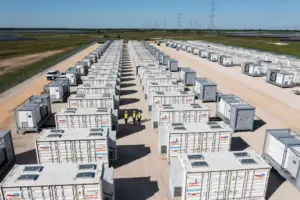
Beyond material recovery, LG Energy Solution is also developing secondary applications for used batteries, targeting the growing market for stationary energy storage systems. Its EV Charging Reuse ESS, deployed at its Ochang Energy Plant, utilizes batteries retired from electric taxis after more than 100,000 kilometers of use. The system supports 100 kilowatt fast charging and demonstrates the potential for extending battery life cycles before recycling.
This repurposing strategy addresses a different but related inefficiency in the battery value chain. While EV batteries degrade over time, they often retain sufficient capacity for less demanding applications such as grid support or commercial charging infrastructure. By redeploying these assets, manufacturers can extract additional economic value while delaying the energy and cost associated with material recovery.
However, both recycling and repurposing face technical and economic constraints that limit immediate scalability. Battery chemistries are evolving rapidly, with lithium iron phosphate gaining market share due to cost advantages and reduced reliance on cobalt and nickel. This shift could reduce the economic incentive for recycling processes that depend on recovering high-value metals. At the same time, variations in battery design complicate disassembly and material recovery, increasing operational complexity.
Cost competitiveness remains another critical factor. Recycling processes must compete with primary extraction, where economies of scale and established supply chains continue to keep costs relatively low, particularly in regions with abundant mineral resources. Achieving parity will depend on technological improvements, higher recovery efficiencies, and regulatory frameworks that internalize the environmental costs of mining.
LG Energy Solution’s strategy reflects an attempt to address these challenges through early investment and geographic diversification. By building infrastructure in both North America and Europe, the company is positioning itself to capture value across multiple regulatory regimes while aligning with regional supply chain localization efforts.