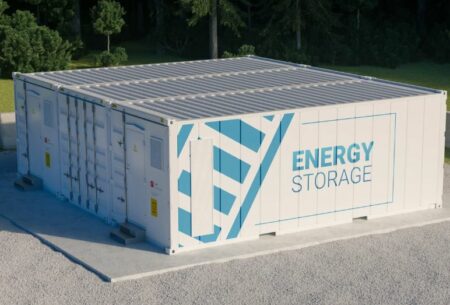







Energy developer NatPower and Tesla have signed an agreement to deploy 25 GWh of battery storage capacity across Italy and the United Kingdom, representing the first stage of a broader programme that could require up to $5 billion in investment.
The partnership highlights a shift in the energy storage sector from individual projects toward large-scale portfolios designed to integrate renewable power, provide grid services and participate in electricity markets. While battery costs and technology performance have improved significantly, project execution, permitting, financing structures and market access remain major constraints limiting deployment.
NatPower plans to use Tesla’s Megapack battery storage systems for the planned facilities, combining hardware deployment with Tesla’s energy trading platform.
The software component is intended to optimize when electricity is purchased, stored and sold by responding to market signals. For utility-scale storage operators, this optimization capability is becoming increasingly important as revenue models evolve beyond simple energy arbitrage.
Battery storage projects increasingly rely on multiple income streams, including frequency regulation, balancing services, capacity mechanisms and wholesale market participation. However, these revenue sources vary significantly between markets, creating uncertainty for investors assessing long-term project economics.
The use of integrated battery systems and trading platforms reflects a broader industry trend toward combining physical infrastructure with digital optimization tools. Storage assets are increasingly being viewed not only as electricity reserves but also as flexible market participants.
The first phase of the NatPower and Tesla agreement involves five projects that are expected to establish the foundation for a larger deployment strategy.
The companies anticipate that the programme could eventually exceed 100 GWh of installed storage capacity, with estimated construction costs between $4 billion and $5 billion. The portfolio is projected by the partners to generate more than $15 billion in revenue over a 20-year operating period.
Such projections depend heavily on market conditions, electricity price volatility and regulatory frameworks. Large-scale storage economics remain sensitive to factors including battery degradation, financing costs, grid connection timelines and changes in electricity market design.
A 100 GWh portfolio would represent a significant addition to Europe’s storage infrastructure. The scale reflects growing recognition that renewable expansion requires not only additional generation capacity but also systems capable of shifting electricity availability across time periods.
Europe’s increasing reliance on wind and solar power is creating new demands on electricity networks. Renewable generation can fluctuate depending on weather conditions, producing periods of excess supply as well as shortages that require flexible balancing resources.
Battery storage is increasingly positioned as one of the technologies capable of addressing these challenges. Unlike traditional generation assets, batteries can respond rapidly to grid requirements, absorbing excess renewable electricity and releasing power when demand rises.
However, the growth of storage capacity also depends on overcoming infrastructure bottlenecks. Grid connection delays, permitting processes and the availability of suitable locations remain significant barriers across European markets.
NatPower CEO Fabrizio Zago said the partnership aims to address the gap between available capital and the delivery of operational infrastructure at scale.