



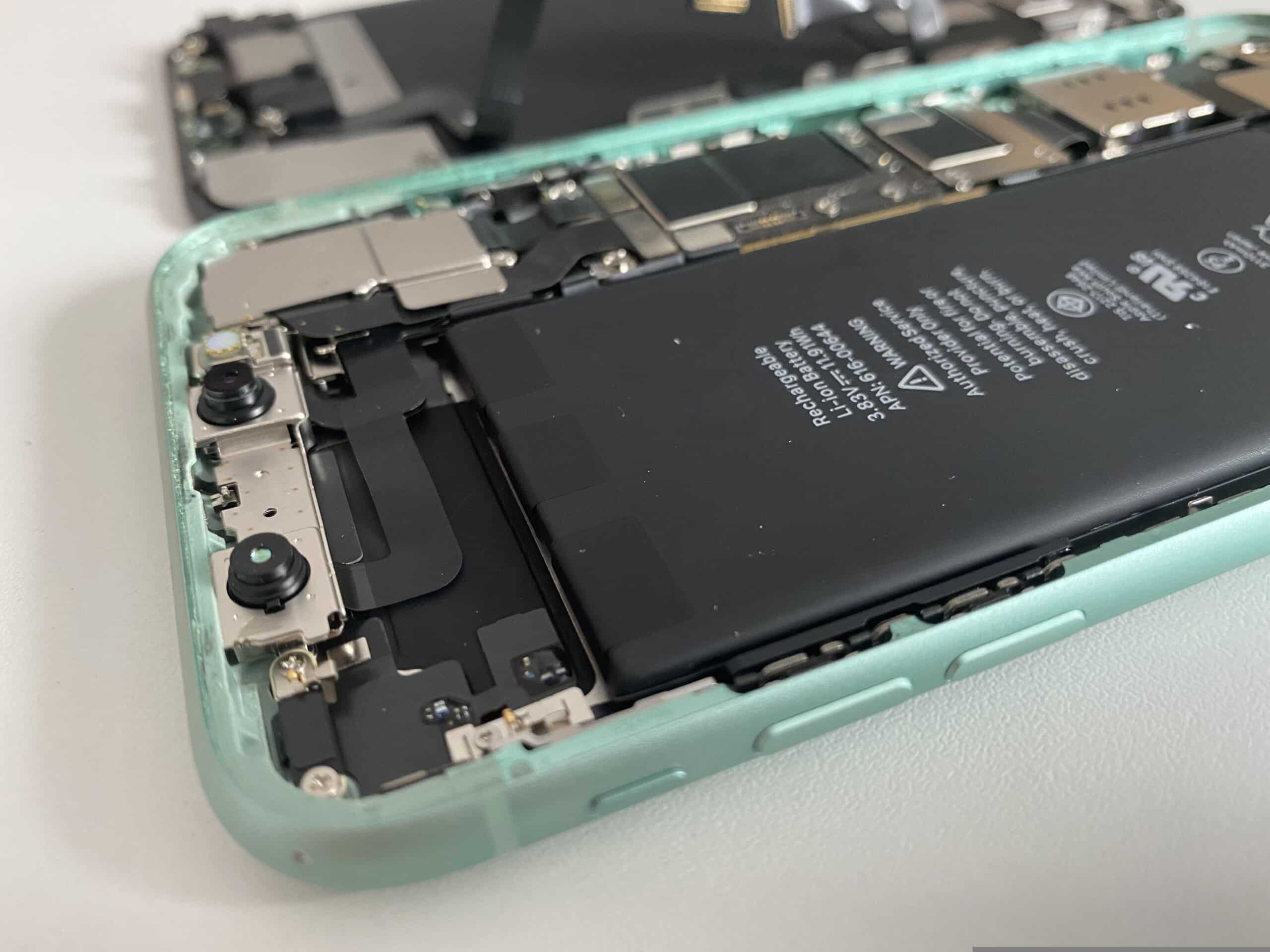
Global electronic waste exceeded 60 million metric tons annually in recent years, yet only a limited share is formally recycled, leaving substantial volumes of recoverable nickel, cobalt, and other battery metals unused.
At the same time, lignin, a byproduct of the pulp and paper industry, continues to be generated in massive quantities worldwide, with most of it still burned for low-value heat recovery rather than converted into advanced materials. A new study published in Biochar X suggests those two waste streams may be able to solve part of sodium-ion batteries’ materials challenge simultaneously.
Researchers from Henan Normal University and Qilu University of Technology developed a sodium-ion battery anode by combining nickel cobalt sulfides recovered from discarded Nokia phone batteries with lignin-derived carbon. The resulting composite, identified as NiCo₂S₄/Co₉S₈@LC50, demonstrated improved conductivity, ion transport, and cycling stability compared with unmodified sulfide materials.
The research addresses a growing tension within battery manufacturing. Sodium-ion batteries are increasingly positioned as a lower-cost alternative to lithium-ion chemistry because sodium resources are abundant and geographically diversified. However, commercial adoption still faces technical barriers, particularly in anode performance. Many candidate materials suffer from poor long-term stability, limited rate capability, or complex synthesis requirements that undermine cost advantages.
Nickel cobalt sulfides, particularly NiCo₂S₄, have attracted attention because of their high theoretical capacity and favorable electrochemical activity. Yet pure NiCo₂S₄ structures typically experience severe volume expansion and structural degradation during repeated sodium insertion and extraction cycles. Previous attempts to stabilize the material often relied on commercial carbon additives derived from conventional industrial feedstocks, weakening the sustainability argument surrounding next-generation batteries.
The Chinese research team instead pursued what it described as a “waste-to-waste” pathway. Using spent Nokia mobile phone batteries as a metal source and industrial lignin residue as a carbon precursor, the researchers designed a dual-recycled composite intended to reduce both raw material costs and environmental burdens.
The process began with hydrothermal recovery and synthesis of NiCo₂S₄ extracted from discarded batteries. Purified lignin was then combined with the recovered sulfide precursor in varying ratios before undergoing alkaline treatment, precipitation, K₂CO₃ activation, and staged carbonization under nitrogen conditions. Among the tested formulations, the sample containing a 50% lignin ratio delivered the strongest overall electrochemical performance.
Structural characterization revealed that lignin played a more active role than simply serving as a conductive carbon coating. During thermal treatment, the lignin-assisted carbonization process promoted partial formation of a secondary cobalt sulfide phase, Co₉S₈, creating a heterostructure integrated within a mesoporous carbon matrix.
Microscopy and spectroscopy analyses including Raman spectroscopy, X-ray diffraction, XPS, SEM, and TEM confirmed the formation of a honeycomb-like porous architecture. According to the researchers, this morphology improved electrolyte penetration and shortened sodium-ion diffusion pathways while helping buffer structural stress during cycling.
The electrochemical results suggest the architecture materially improved sodium storage behavior. The optimized NiCo₂S₄/Co₉S₈@LC50 sample delivered an initial discharge specific capacity of 1,062.8 mAh g⁻¹ and retained 244.5 mAh g⁻¹ after 100 cycles. Initial Coulombic efficiency reached 65.61%, exceeding that of the unmodified counterpart.
Rate capability testing also indicated relatively stable performance across rising current densities. The material maintained average discharge capacities of 548.2, 423.3, 328.1, 247.1, and 208.7 mAh g⁻¹ at current densities ranging from 0.1 to 2 A g⁻¹. Even after 300 cycles at 0.5 A g⁻¹, the anode preserved approximately 207 mAh g⁻¹.
Electrochemical impedance measurements showed lower charge-transfer resistance and higher sodium-ion diffusion coefficients than comparison materials lacking the optimized lignin-derived structure. Additional pseudocapacitive analysis suggested that rapid surface-controlled sodium storage contributed significantly to overall performance, a factor increasingly associated with high-rate sodium-ion systems.
Density functional theory calculations further supported the experimental findings, indicating that the NiCo₂S₄/Co₉S₈ heterostructure improved electronic conductivity and facilitated charge transfer between active sites. Such heterointerface engineering has become a growing focus in battery materials research because it can enhance electrochemical kinetics without relying solely on nanostructuring approaches that are difficult to scale industrially.
The broader significance of the work lies less in record-setting performance metrics and more in its materials sourcing strategy. Battery manufacturers face mounting pressure to reduce dependence on virgin critical minerals while simultaneously improving lifecycle sustainability. Recycling remains heavily concentrated on lithium-ion recovery pathways optimized for cobalt, nickel, and lithium extraction, whereas industrial biomass residues remain comparatively underutilized in advanced energy applications.
By integrating two waste streams into a functional sodium-ion battery component, the study highlights how future battery supply chains may increasingly depend on secondary resource valorization rather than exclusively on mined inputs. Whether such laboratory-scale synthesis methods can be economically scaled remains uncertain, particularly given the energy intensity associated with activation and carbonization processes. Still, the work provides a technically credible example of how circular materials engineering could extend beyond recycling alone and into the design of higher-performance electrochemical systems.