






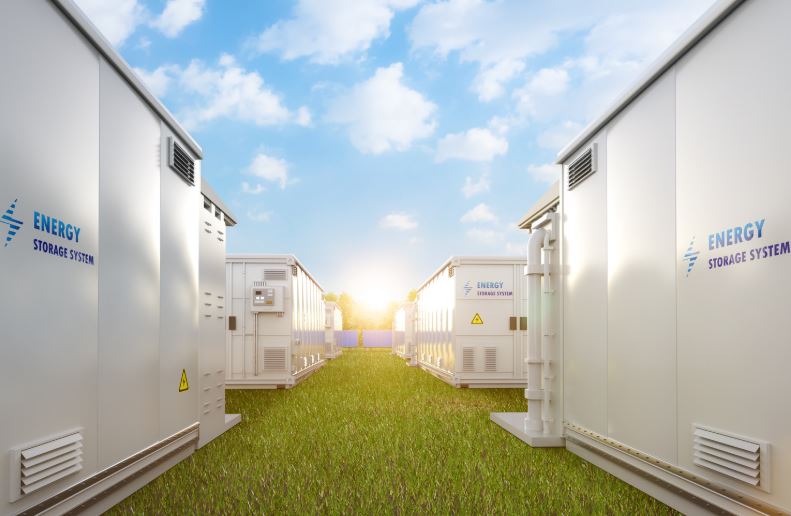
Tesla and UAE based digital utility company Esyasoft have announced a collaboration to develop and deploy an initial portfolio exceeding 15 GWh of utility scale battery energy storage systems across the United Kingdom, Western Europe, the Gulf Cooperation Council, and India.
The scale of the planned portfolio places the initiative among the larger announced battery storage collaborations in recent years, although the companies have not disclosed project locations, deployment schedules, investment values, or customer commitments. Those details will ultimately determine how quickly the announced capacity translates into operational assets.
The partnership combines Tesla’s battery energy storage technology with Esyasoft’s expertise in digital utility platforms, grid management, and project delivery. The companies intend to jointly develop, deploy, operate, and manage battery assets throughout their lifecycle under the Esyasoft Energy Storage powered by Tesla brand.
The announcement reflects broader structural changes in electricity markets rather than simply increased renewable energy deployment. Power systems are becoming more dynamic as intermittent solar and wind generation account for a larger share of electricity supply while electrification of transport, industrial processes, and artificial intelligence infrastructure drives demand growth. These trends are increasing the value of flexible assets capable of balancing supply and demand over short timeframes.
The International Energy Agency has repeatedly identified battery storage and grid modernization as essential components of the global objective to triple renewable electricity capacity by 2030. While renewable generation costs have fallen substantially over the past decade, transmission constraints and variability continue to limit integration in many electricity markets. Utility scale batteries can help address these challenges by shifting excess renewable generation to periods of higher demand, reducing curtailment, and providing ancillary grid services.
The selected markets illustrate where storage demand is expanding rapidly for different reasons. The United Kingdom and Western Europe continue to integrate growing volumes of offshore wind and solar generation while strengthening electricity system flexibility. Gulf countries are investing heavily in renewable energy as part of economic diversification strategies while maintaining reliable power systems under high cooling demand. India, meanwhile, faces simultaneous growth in electricity consumption, renewable capacity additions, and industrial development, creating increasing demand for storage technologies that support grid stability.
The companies also highlighted rising electricity consumption from artificial intelligence infrastructure as a driver for battery deployment. AI data centers require highly reliable electricity supplies with minimal interruption, prompting technology companies and utilities to evaluate combinations of battery storage, renewable generation, gas fired generation, and in some cases nuclear power. While batteries alone cannot provide extended backup power over multiple days, they can improve resilience, reduce peak demand charges, and support grid reliability during short duration disturbances.
Despite favorable market conditions, large scale battery deployment continues to face commercial and regulatory challenges. Project economics depend on revenue stacking across multiple grid services, electricity market design, permitting timelines, and transmission availability. In several European markets, connection queues rather than technology availability have become one of the primary constraints on new storage projects.
Lifecycle management also represents an increasingly important aspect of utility scale battery investment. As storage portfolios grow, operators are placing greater emphasis on software optimization, predictive maintenance, and performance monitoring to maximize asset utilization and extend operational life. Digital management platforms therefore become a competitive differentiator alongside battery hardware.
For Tesla, the collaboration expands the reach of its energy business beyond equipment supply toward integrated infrastructure deployment through regional partners. For Esyasoft, which operates across smart utilities, digital energy platforms, electric mobility, and energy as a service, the agreement strengthens its position within rapidly expanding battery storage markets.