




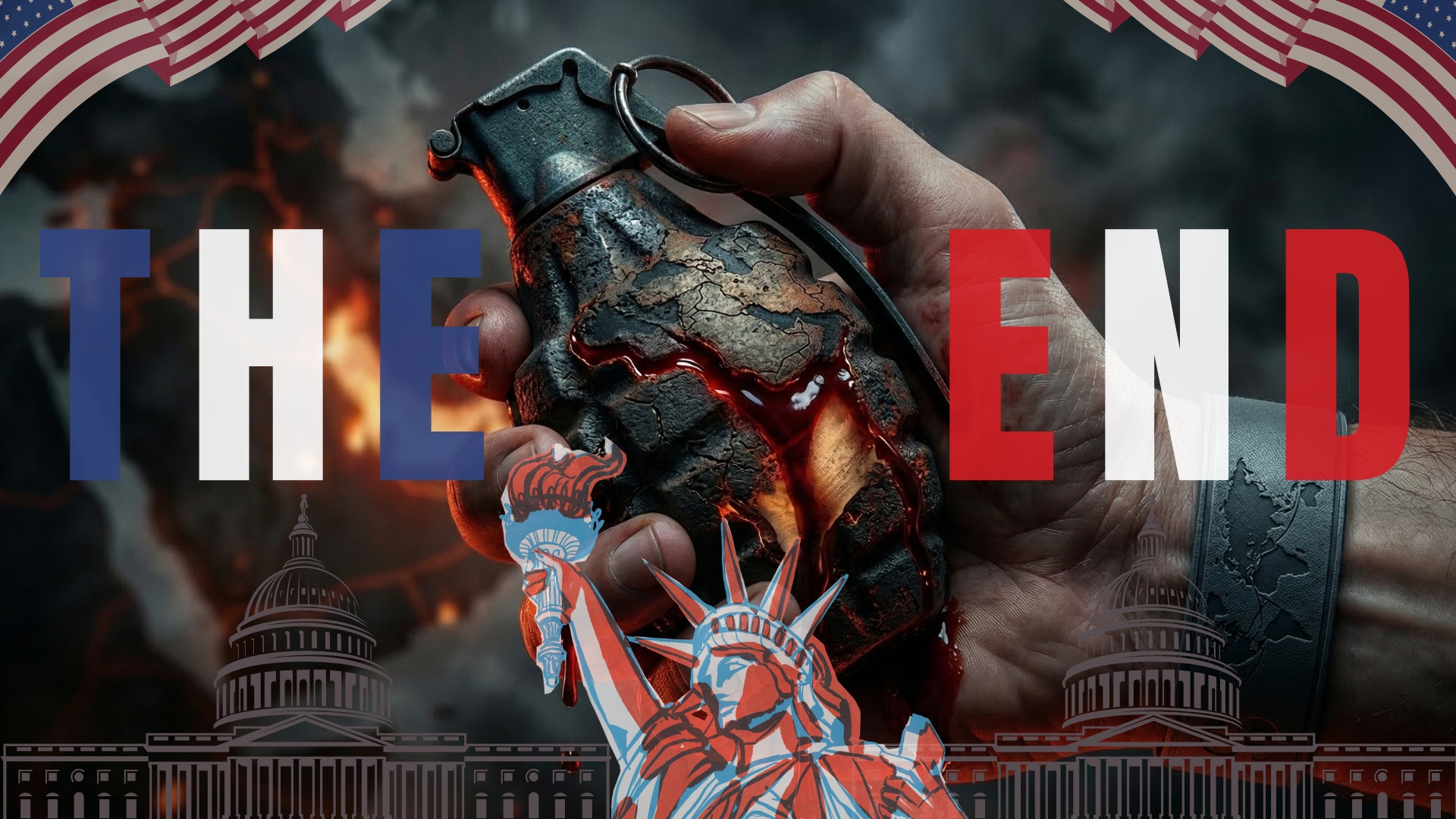
Welcome to the new world order. For the past twenty years, politicians in expensive suits have assured us that the global economy is a well-oiled machine, carefully managed by the responsible adults in the room. But as conflict intensifies in the Middle East and the global supply chain groans under the weight of inflation, those “adults” are starting to look a lot like toddlers holding a live grenade.

We are fed a steady diet of comforting bedtime stories: the US military can project power anywhere at any time, and the glorious transition to green energy means we don’t even need Middle Eastern oil anymore.
It is a beautiful narrative. It is also completely, demonstrably false.
Behind the political theater and the cable news shouting matches, there is a cold, hard mathematical reality. The Anglo-American financial empire is choking on its own debt, and the “axis of resistance” knows exactly where the global supply chain’s jugular is.
The Mathematics of a Chokepoint
Let’s pause the geopolitical posturing and look at the actual physics.
The Strait of Hormuz is not just a shipping lane; it is the central artery of the industrialized world. Every single day, approximately 21 million barrels of oil flow through that narrow stretch of water. That is roughly 21% of global petroleum liquids consumption.
If that strait is mined, or if shipping companies are even credibly threatened, insurance premiums for oil tankers skyrocket to the point of unprofitability. Suddenly, that billion-dollar carrier strike group sent to “project power” is burning fuel that the Treasury has to borrow money to pay for.
With the US National Debt sitting at over $34 trillion, Washington is funding a kinetic war with a maxed-out credit card. And adversaries are acutely aware of this vulnerability.
Fifth-Generation Warfare and the Green Fantasy
As Associate Professor of Geometallurgy, Simon Michaux recently explained on our latest broadcast, the nature of global conflict has fundamentally shifted.
“Information warfare has changed. It’s no longer kinetic. It’s now economic. It’s now information. It’s now psychological. Fifth-generation hybrid warfare… The war is over before that new strike fighter is even launched.” — Simon Michaux
Yet, policymakers in the West seem entirely distracted by the PR campaign of the “green transition.” The fantasy suggests we can simply slap solar panels on the Pentagon and electrify M1 Abrams tanks.
Despite the trillions spent on greenwashing, fossil fuels still account for roughly 80% of global primary energy consumption. You cannot run a modern military, forge steel for artillery shells, or manufacture semiconductor chips with wind turbines and good vibes.
The people managing our macroeconomic policy operate under the delusion that if they just print enough money, the physical limitations of the Earth’s crust will politely step aside. But you cannot print a barrel of diesel.
Playing Economic Go
This is the shadow war beneath the kinetic war. It’s not just about who controls the sand; it’s about who controls the pricing mechanism of the energy that keeps humanity alive.
For fifty years, the United States exported its inflation to the rest of the world because everyone needed dollars to buy oil. But the board has flipped. The expanded BRICS coalition has invited major energy producers to the table, and they now control roughly 40 to 45% of global crude oil production.
When a missile is fired in the Middle East, it is a stress test on the fragile architecture of the Petrodollar. The East is watching Western central banks desperately try to manage inflation while the geopolitical risk premium goes through the roof.
While the West plays 20th-century geopolitical checkers, moving aircraft carriers around on a map, BRICS is playing 21st-century economic Go. They don’t need to defeat the US military in a head-to-head fight. They simply need to wait for the debt saturation to reach its breaking point, letting the sheer cost of maintaining the empire crush the currency.
As Michaux grimly notes, “We don’t run out of oil. We run out of money.”
The Wealth Transfer
The world is rapidly splitting into two blocks: those who produce the physical commodities required to survive, and those who print the paper required to buy them. Eventually, paper burns.
If you want to survive the greatest wealth transfer in modern history, you need to understand the data, not the propaganda. When the music finally stops on the Petrodollar, what exactly is backing your bank account?
Don’t let the mainstream media dictate your financial reality. Join the tens of thousands of sharp-minded professionals who rely on our unvarnished macro-analysis. Subscribe to the EnergyNews Insider Dispatch below so you never miss a deep dive.