





The accelerating energy demand from AI and high-performance computing has pushed US data center load forecasts to levels that outpace new generation additions in several regions. Against this backdrop, Deep Atomic has submitted a proposal to the US Department of Energy’s Office of Nuclear Energy to develop what it calls the nation’s first fully integrated nuclear-powered AI data center campus, located at Idaho National Laboratory in Idaho Falls. The proposal arrives as utilities, regulators, and developers confront growing concerns about whether the US grid can support multi-gigawatt AI clusters without significant delays or cost escalation.
The consortium behind the initiative includes Parker Tide, Clayco, Gleeds, Paragon Energy Solutions, EvapCo Dry Cooling, Bedrock Labs, Azimuth Renewables, Future-Tech, and MoonliteAI. Their model introduces a phased development strategy that allows early data center operations to begin within 24 to 36 months using a mix of grid, geothermal, and solar resources while Deep Atomic’s MK60 small modular reactor advances through design certification, fabrication, and commissioning. This staged configuration appears designed to address a central bottleneck facing large-scale AI facilities: the gap between near-term computational demand and the lengthy timelines associated with licensing and deploying nuclear technologies.
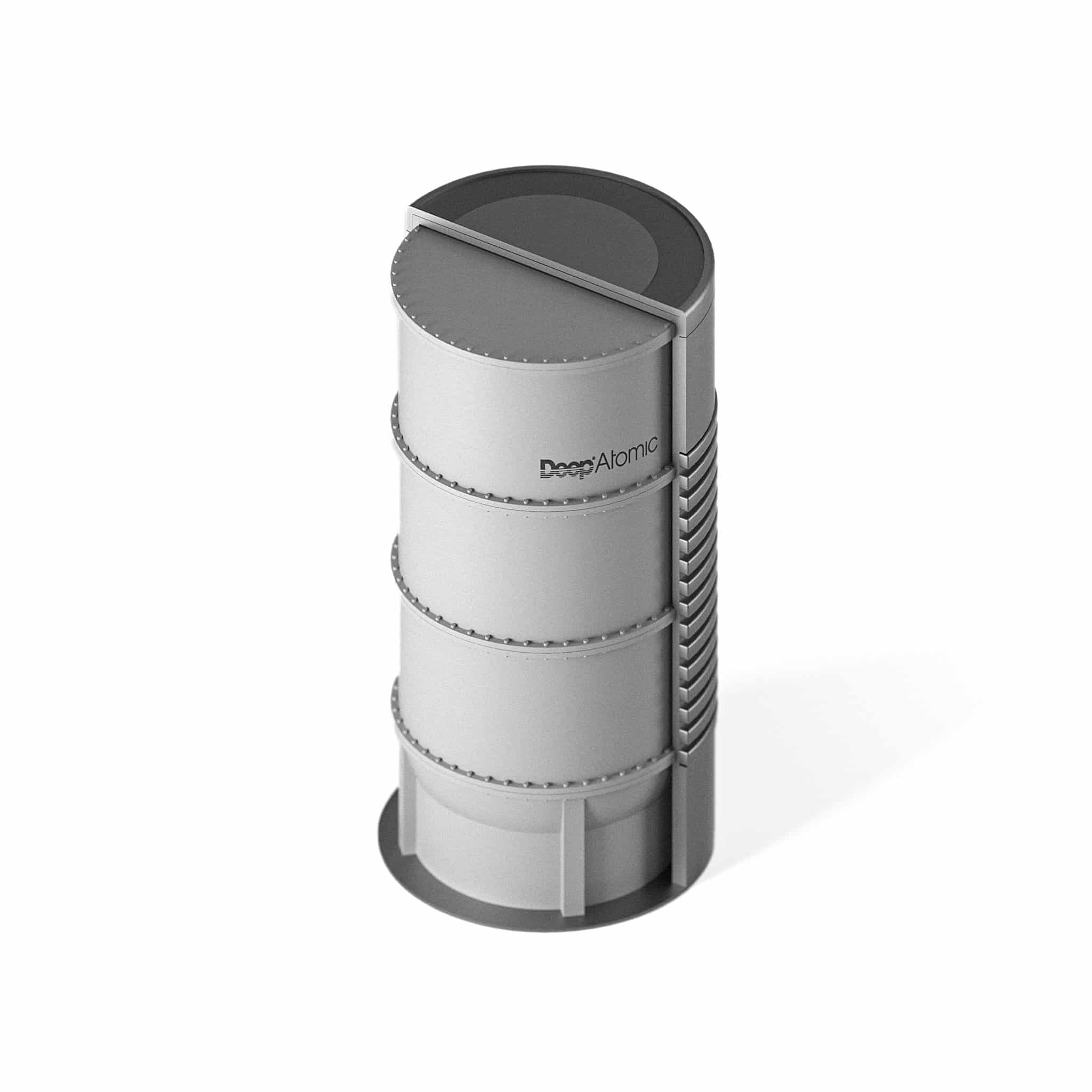
The MK60 SMR itself is described as a light-water reactor delivering 60 megawatts of electricity, 60 megawatts of integrated cooling capacity, and 200 megawatts of thermal output. The dual electrical and cooling design is positioned as a direct response to the thermal density of AI workloads, which can exceed traditional data center cooling requirements by a considerable margin. While the concept of pairing nuclear heat with hyperscale cooling is not new in principle, purpose-built reactor designs for compute-dense environments remain rare in current nuclear development pipelines.
Deep Atomic’s CEO, William Theron, argues that the MK60 is engineered specifically for AI and HPC applications rather than adapted from existing reactor designs. This claim reflects industry momentum toward bespoke energy-compute integration, although it warrants careful assessment, as no SMR currently in the US licensing queue has been certified for direct data center integration. The real test will be whether the dual-output configuration delivers materially higher energy efficiency than conventional SMR-powered grid supply models once operational data becomes available.
The consortium frames the project as a national demonstration site for nuclear-powered AI infrastructure. If the DOE accepts the proposal, the facility would function as a replicable model for federal campuses, national laboratories, cloud operators, and private sector data platforms that are struggling to secure firm power at scale. The replicability argument aligns with policy signals from the DOE and NRC urging modular, standardized nuclear components that reduce development risks and shorten deployment cycles. However, the feasibility of scaling a multi-module MK-series architecture depends on regulatory throughput, supply-chain readiness, and the industry’s ability to validate cost assumptions that historically challenge nuclear new builds.
Shane Todd of Parker Tide emphasizes that US AI ambitions require firm, clean, and scalable power, suggesting nuclear-integrated AI campuses could address security, reliability, and carbon intensity concerns simultaneously. This positions the proposal within a broader geopolitical context in which nations are competing to establish energy-secure AI infrastructure. Reports from national labs and grid operators show that conventional renewable-plus-storage portfolios are struggling to deliver the round-the-clock reliability demanded by hyperscale AI clusters, strengthening the case for evaluating nuclear co-location models.
Deep Atomic, which publicly introduced its SMR concept last year, claims the MK-series platform can scale through additional modules and data center blocks. While modularity is a defining feature of SMR architectures, real-world examples remain limited. Whether the MK60 can meet diverse data center requirements, from cloud computing to cryptocurrency processing to intensive AI workloads, will depend on operational validation rather than design intent.
The proposal highlights a convergence that energy analysts have anticipated for several years: nuclear developers seeking new off-take markets and data center operators searching for firm power anchors that circumvent grid congestion. Idaho National Laboratory’s existing infrastructure, regulatory expertise, and history with reactor testing make it a practical location for an initial demonstration. The project will test whether purpose-built nuclear-compute integration can move beyond conceptual promise and deliver a scalable template for the next generation of US AI infrastructure.