

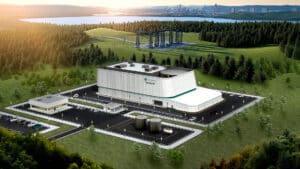





Fusion energy systems have spent decades operating under a persistent commercial constraint: even advanced experimental reactors still struggle with net energy stability once internal power demands are fully accounted for.
In magnetic confinement concepts, particularly tokamaks, a significant portion of generated energy is reinvested simply to sustain plasma conditions, a parasitic load that remains one of the most cited barriers to economic viability according to International Energy Agency assessments of system efficiency limits in magnetically confined fusion concepts.
WATCH HERE

This structural inefficiency is driving renewed scrutiny of alternative confinement geometries, most notably the stellarator, which eliminates the need for sustained plasma current by embedding rotational transform directly into its external magnetic field configuration. The distinction is not aesthetic but operational, reshaping how energy input is distributed across the reactor system.
Tokamak designs rely on inducing a toroidal plasma current, typically on the order of millions of amperes, to generate part of the confining magnetic field. That current must be maintained continuously or in pulses, depending on configuration, which introduces both engineering and energy penalties. Inductive driving methods can sustain current only under changing magnetic conditions, forcing additional systems to compensate during steady-state operation. In large-scale conceptual designs, this requirement translates into substantial auxiliary power consumption that can exceed hundreds of megawatts in maintaining plasma stability, reducing net efficiency margins and complicating grid integration assumptions.
Stellarators approach confinement differently by eliminating the need for a large induced plasma current. Instead, magnetic confinement is achieved through intricately shaped external coils that generate a fully three-dimensional magnetic field. This configuration stabilizes plasma without relying on continuous internal current drive, enabling true steady-state operation in principle. However, this advantage shifts complexity away from plasma physics and into mechanical and computational engineering, as coil geometries must be precisely optimized and manufactured to tight tolerances using advanced numerical modeling techniques.
This trade-off has historically limited stellarator adoption. Tokamaks present a comparatively simpler magnet architecture and have dominated experimental fusion research due to their relative ease of construction and strong confinement performance. Stellarators, by contrast, require highly specialized coil systems and extensive computational design cycles, making them more difficult and expensive to build at scale. The result is a long-standing perception within parts of the research and policy community that stellarators represent an engineeringly elegant but commercially impractical solution.
That assumption is increasingly being revisited in the context of long-duration grid operation requirements. Unlike pulsed tokamak operation, stellarators offer continuous operation potential without the cyclic thermal and mechanical stress associated with repeated plasma ignition and shutdown phases. From a materials fatigue perspective, this reduces one of the major degradation pathways for plasma-facing components, which is a critical constraint in achieving multi-year operational lifetimes for commercial reactors.
The viability of both approaches is now increasingly dependent on advancements in superconducting magnet technology. Historically, low temperature superconductors limited achievable magnetic field strength, constraining plasma density and reactor compactness. Recent progress in high temperature superconductors has materially shifted this constraint, enabling stronger magnetic fields within more compact geometries. Since confinement efficiency scales with magnetic field strength, improvements in superconducting performance directly affect plasma density, energy confinement time, and overall reactor footprint.
Higher field strength also alters the economic scaling of fusion devices. More compact reactors reduce structural material requirements and can improve cost per unit of installed capacity, though they simultaneously intensify engineering demands on coil design and structural integrity. In stellarator configurations, where magnetic shaping is already complex, higher field operation further raises the importance of precision manufacturing and computational optimization, reinforcing the shift of fusion engineering from plasma control toward advanced materials and design systems.
Despite these advances, neither approach has resolved the central challenge of net system-level energy gain when accounting for full operational inputs, including magnet energization, cryogenic cooling, and auxiliary heating systems. This remains the key uncertainty in projecting commercial timelines, regardless of confinement geometry.
Recent pilot-scale initiatives, including industry partnerships exploring compact stellarator concepts alongside utility stakeholders, reflect a broader diversification of fusion development strategies. These efforts are increasingly focused not on experimental plasma stability alone, but on whether continuous-operation architectures can realistically integrate into existing grid economics without requiring sustained external energy support that offsets output gains.
The result is a technology landscape defined less by theoretical plasma physics breakthroughs and more by system engineering trade-offs: simplicity versus steady-state operation, inductive efficiency versus geometric complexity, and established tokamak dominance versus emerging stellarator persistence. As superconducting capabilities expand and computational design tools mature, the competition between these architectures is increasingly determined by manufacturing feasibility and lifecycle energy accounting rather than confinement physics alone.