






We are addicted to bad news. In the climate conversation, even the well-intentioned are often paralyzed by the idea that saving the planet requires a sacrifice we can’t afford. We hear that we are trading one environmental disaster for another: that to get off oil, we must rape the earth for metals.
WATCH THE FULL INTERVIEW HERE

Cédric Philibert, a former lead analyst at the International Energy Agency (IEA) and a man who predicted our current climate crisis with terrifying accuracy back in 1990, has a different message. It is time to stop viewing the energy transition as a burden and see it as a liberation from extraction.
The most pervasive myth today is that renewable energy requires impossible amounts of mining. We are told we are running out of copper, that lithium extraction is destroying the planet, and that there aren’t enough minerals in the ground.
Philibert shreds this argument with data. The reality? The energy transition actually reduces total planetary mining.
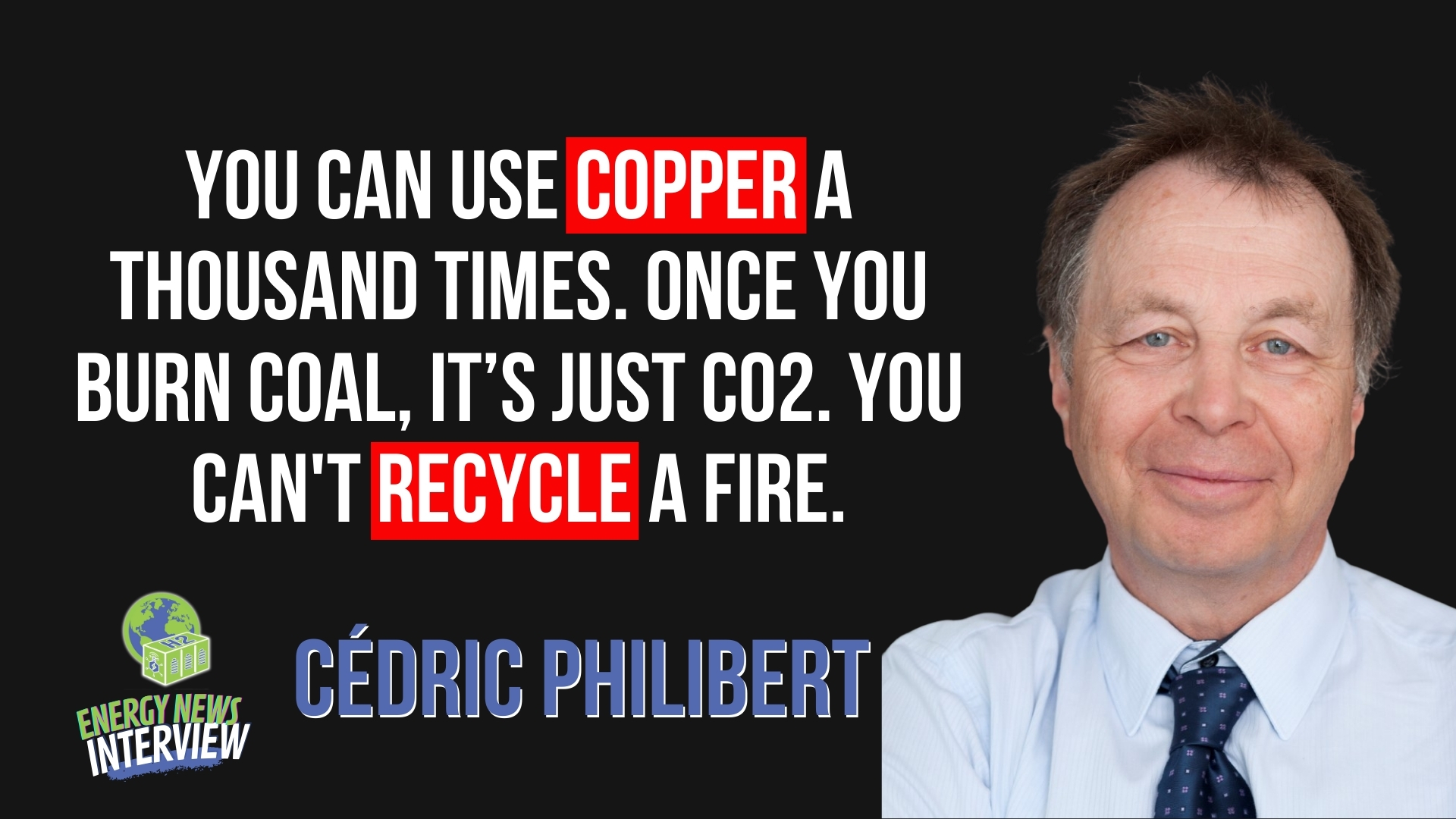
Consider the scale. Currently, humanity extracts about 15 billion tons of fossil fuels every single year. Coal requires moving massive amounts of earth, 40 billion tons of overburden to get 8 billion tons of coal. In contrast, the transition relies heavily on copper, iron, and gold. Even if we double our copper use, it is a rounding error compared to the mountain of coal we stop digging up.
Furthermore, unlike oil, which is burned once and gone forever (leaving only CO2 behind), metals are recyclable. We are moving from a system of constant extraction and combustion to a system of stock and maintenance.
Critics love to point out that copper ore grades are falling, from 1.7% decades ago to 0.6% today. They claim this signals the end. Philibert argues the opposite: lower grades are a lever for increased reserves. As technology improves and we exploit lower-grade ores, the volume of accessible copper explodes. We have moved from 360 million tons of reserves in 1990 to nearly 1 billion tons today, despite massive consumption in between.
Philibert also offers a sobering reality check on hydrogen, calling out the “hydrogen bubble.” While essential for greening heavy industry (like steel) and shipping, it is a thermodynamic disaster for general energy use. By the time you convert electricity to hydrogen, store it, transport it, and burn it, you are left with about 25% efficiency. Using batteries for storage and EVs for transport is simply physics winning over marketing.
The transition isn’t about “saving the planet” in the abstract; it’s about sovereignty and efficiency. Whether it’s the “Not In My Backyard” crowd fighting wind turbines or doomers claiming we are out of materials, the data suggests otherwise. We have the technology. We have the minerals. We just need to stop listening to the fake news funded by the industries actively losing the race.