


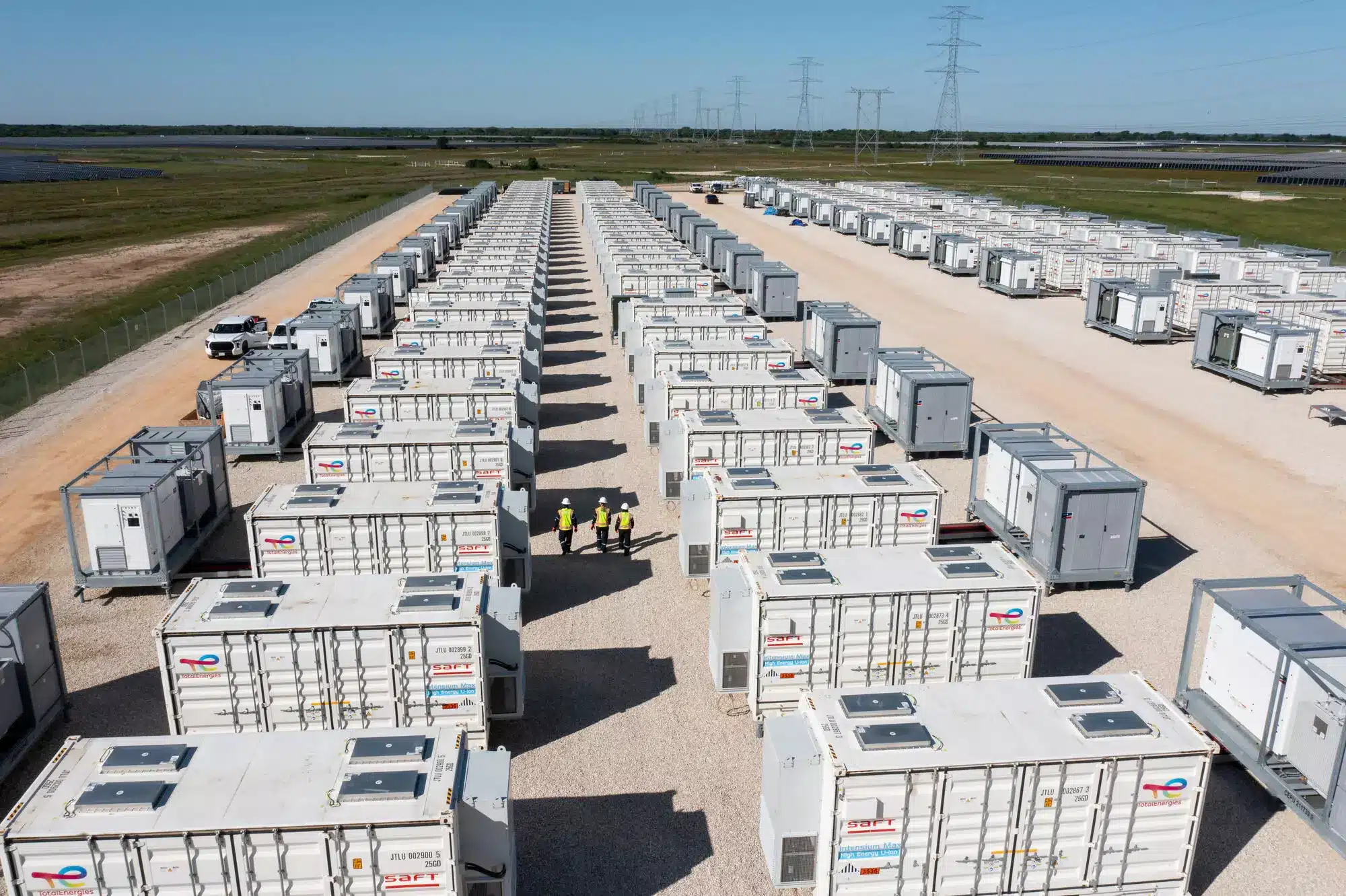


Seventy one percent of Americans oppose data center construction in their local area, according to Gallup’s March 2026 survey, a higher opposition rate than Americans express toward nuclear plants. Only 16% of that opposition traces to pollution, the category battery energy storage systems most directly address. Roughly half cites water and energy consumption, a set of concerns battery storage does not change.
Cummins’ newly announced battery energy storage deployment, described as the company’s largest to date, is being positioned in industry coverage as more than a technical upgrade to grid interconnection performance. It is being framed as a partial answer to the mounting local opposition that has made data centers, in Gallup’s telling, more unpopular with nearby residents than nuclear power plants, a facility category that has carried decades of public anxiety. That framing deserves scrutiny against Gallup’s own breakdown of why opponents object, published alongside its topline finding that 71% of Americans oppose data center construction in their area, with 48% strongly opposed. The pollution category most directly addressed by battery storage, covering noise, air, and water pollution combined, accounts for just 16% of the reasons opponents cite. About half of opponents instead point to what Gallup categorizes as excessive resource use, split nearly evenly between water consumption and energy consumption at 18% each, concerns a battery system installed for power quality and ride-through performance does not resolve. A further one in five cite quality-of-life issues such as traffic, population growth and competing land use preferences, and a comparable share raise economic concerns, consistent with a separate Reuters poll finding that 77% of respondents fear data centers will drive up their home electricity costs.
The distinction matters because battery storage and diesel generator noise address genuinely different parts of a data center’s footprint. A lithium iron phosphate system built to manage AI-driven load fluctuations at the utility interconnection point, the specific function described for Cummins’ new deployment, changes how smoothly and quietly a facility draws power from the grid and rides through disturbances. It does not reduce the facility’s total water draw for cooling, which is the specific concern behind the 18% of opponents citing water use, nor does it reduce the facility’s total electricity consumption, the underlying driver of both the 18% citing energy use and the broader worry about rising utility bills that shows up as an economic objection in Gallup’s data. Peak shaving and ride-through smoothing can modestly ease strain on local distribution infrastructure during demand spikes, but they do not change the aggregate load a hyperscale campus places on a regional grid, which is what utilities cite when justifying new generation and transmission investment that ultimately gets recovered through ratepayer bills.
Even within the pollution category where battery storage has a clearer claim, the technology’s role in eliminating diesel generator noise and emissions is more limited in practice than a simple substitution story suggests. Microsoft’s diesel-free-by-2030 commitment, first announced in 2020 and still described as a work in progress in reporting as recent as late 2025, has relied substantially on renewable diesel variants and hydrogenated vegetable oil for its generators rather than outright battery replacement, and the company’s own cloud operations team has noted that batteries typically supply only short-duration backup, often cited as bridging the roughly 30-second gap before a diesel generator starts, rather than replacing extended-outage backup capacity. That limitation is reflected directly in how Cummins markets its own BESS platform, which the company describes as bridge-to-grid ready and designed for integration with diesel and natural gas generators rather than as a wholesale substitute for them. A data center pairing battery storage with the kind of high-horsepower diesel or gas generation Cummins has spent a century building would retain much of the noise and emissions profile that drives the noise complaints documented in communities from Chandler, Arizona to Greenbrier, Arkansas, even as the battery system handles day-to-day grid interconnection duties.
None of this means battery storage lacks value for the specific problems it targets. Reducing noise output to something closer to an HVAC unit, avoiding on-site fuel storage, and eliminating operational emissions during normal running conditions are genuine improvements over diesel-only backup architectures, and they plausibly help developers site facilities in locations where noise ordinances or air permitting would otherwise complicate diesel generator installations. Major cloud operators including Microsoft, Google and Meta have real programs underway to reduce diesel dependence, and those programs respond to legitimate operational and reputational pressure. What the Gallup data indicates is that this pressure addresses a minority slice of why communities object to data centers in the first place. The larger and more politically consequential drivers, water consumption, electricity demand and its effect on household utility bills, and broader quality of life concerns about traffic and land use, sit outside what a battery system installed to smooth AI-driven load fluctuations can change, regardless of how quietly it operates. A National Republican Senatorial Committee memo reportedly flagged voter hostility toward data center construction as an active political liability in the 2026 midterms, and that hostility, per Gallup’s own attribution data, is running substantially on cost and resource concerns that sit outside the specific engineering problem battery energy storage was built to solve.


