


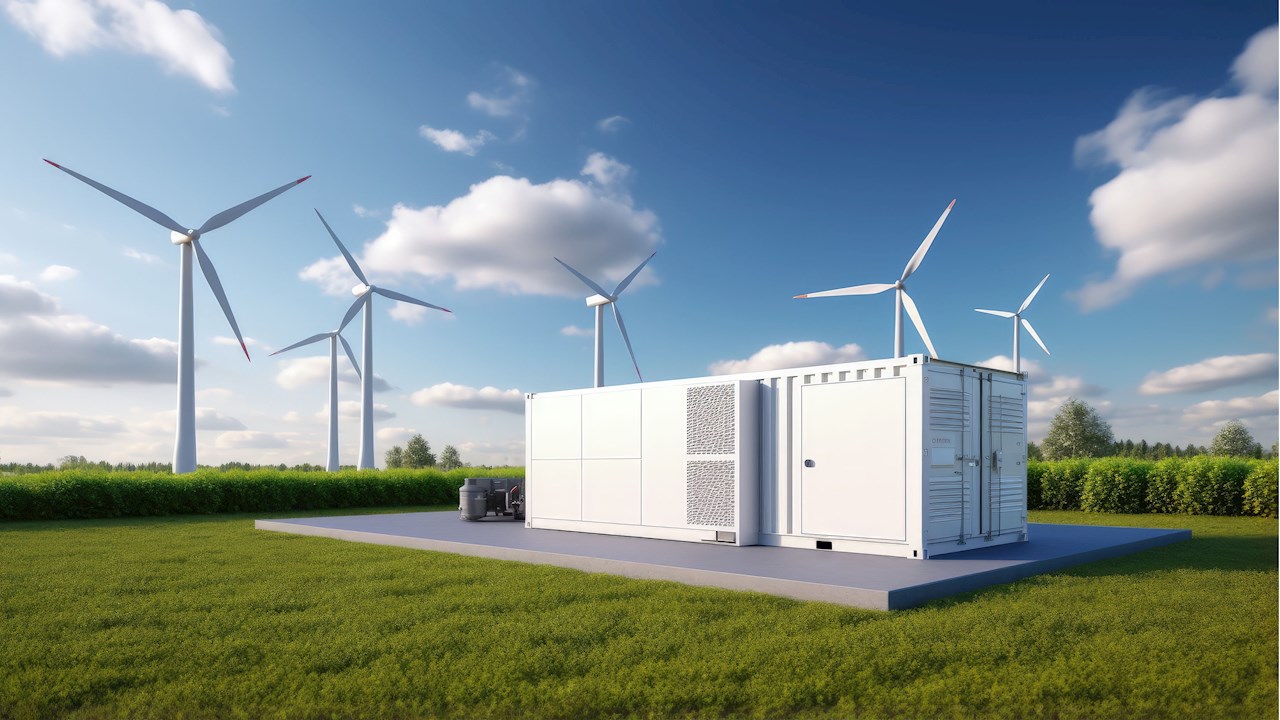


India’s utility-scale storage market faces a critical execution test as the Solar Energy Corporation of India Limited issues a Request for Selection targeting 800 MW / 3,200 MWh of standalone battery storage capacity. Published under tender reference SECI/C&P/IPP/15/0010/26-27, the SECI-ESS-IV solicitation establishes a tariff-based competitive bidding mechanism for four-hour duration assets operating on a Build-Own-Operate framework. As the Intermediary Procurer, SECI will execute 20-year Power Purchase Agreements (PPAs) with winning developers while backing these commitments through Power Sale Agreements (PSAs) with buying entities.
The technology-agnostic tender allows grid interconnections at either the Inter-State Transmission System (ISTS) or State Transmission Utility (STU) networks, setting a minimum voltage threshold of 220 kV. Bidders are subject to green charging mandates requiring at least 51 percent of the energy used for charging the storage systems to be sourced directly from renewable energy generators. Bidding capacity is structured to accommodate both regional developers and large portfolio operators, with project allocations ranging from a minimum threshold of 50 MW / 200 MWh up to the full 800 MW / 3,200 MWh capacity. All submission and electronic reverse auction activities will take place via the ISN-ETS portal under search code SECI-2026-TN000032.
While the procurement design aims to accelerate grid flexibility, the underlying financial structure imposes heavy upfront liquidity requirements on prospective developers. Participating firms must submit an Earnest Money Deposit (EMD) of ₹7.184 lakh per MW per project, translating to a ₹57.47 crore commitment for an entity bidding for the total 800 MW allocation. Upon selection, developers face a Performance Bank Guarantee (PBG) requirement of ₹17.96 lakh per MW prior to PPA execution, locking up ₹143.68 crore in credit facilities for maximum allocation bidders. Accepted security options include bank guarantees, Payment on Order Instruments from Power Finance Corporation or Rural Electrification Corporation, and insurance surety bonds.
Development costs are further elevated by mandatory non-reimbursable fee structures:
- Document fees stand at ₹50,000 plus GST, with bid processing fees set at ₹20,000 per MW, capped at ₹20 lakh plus GST.
- Successful developers must pay a success charge of ₹1 lakh per MWh plus GST, totaling ₹32 crore across the full 3,200 MWh tendered capacity.
- A payment security deposit of ₹5 lakh per MWh is mandated to underpin off-taker risk.
Micro and Small Enterprises holding valid Udyam registrations receive explicit exemptions from document fees, processing fees, and EMD requirements. However, the 50 MW / 200 MWh minimum project size ensures that actual market participation will remain centered on well-capitalized utility actors capable of absorbing high balance-sheet commitments.
The central operational bottleneck for SECI-ESS-IV lies in its compressed execution schedule. The tender sets a strict final commissioning deadline of April 30, 2027, leaving developers seven months from issuance to finalize equipment procurement, engineering, civil works, and grid integration. Furthermore, 100 percent financial closure must be achieved four months before the Scheduled Commissioning Date, compressing the capital structuring and debt syndication window into late December 2026. Developers must also ensure that final substation connectivity approvals carry an operational start date on or before April 30, 2027.
To mitigate supply chain friction and grid connection delays, SECI provides structural flexibility through phased commissioning protocols. Developers are permitted to commission projects in up to three separate installments, provided the initial operational tranche delivers at least 50 MW. This phased mechanism allows operators to generate early revenues while finalizing remaining battery installations and substation testing. By combining long-term revenue visibility under 20-year contracts with stringent financial entry barriers, the SECI-ESS-IV tender filters for high-solvency developers capable of navigating rapid procurement cycles to support India’s evolving transmission grid.
Add EnergyNews.biz as a preferred source on Google


