


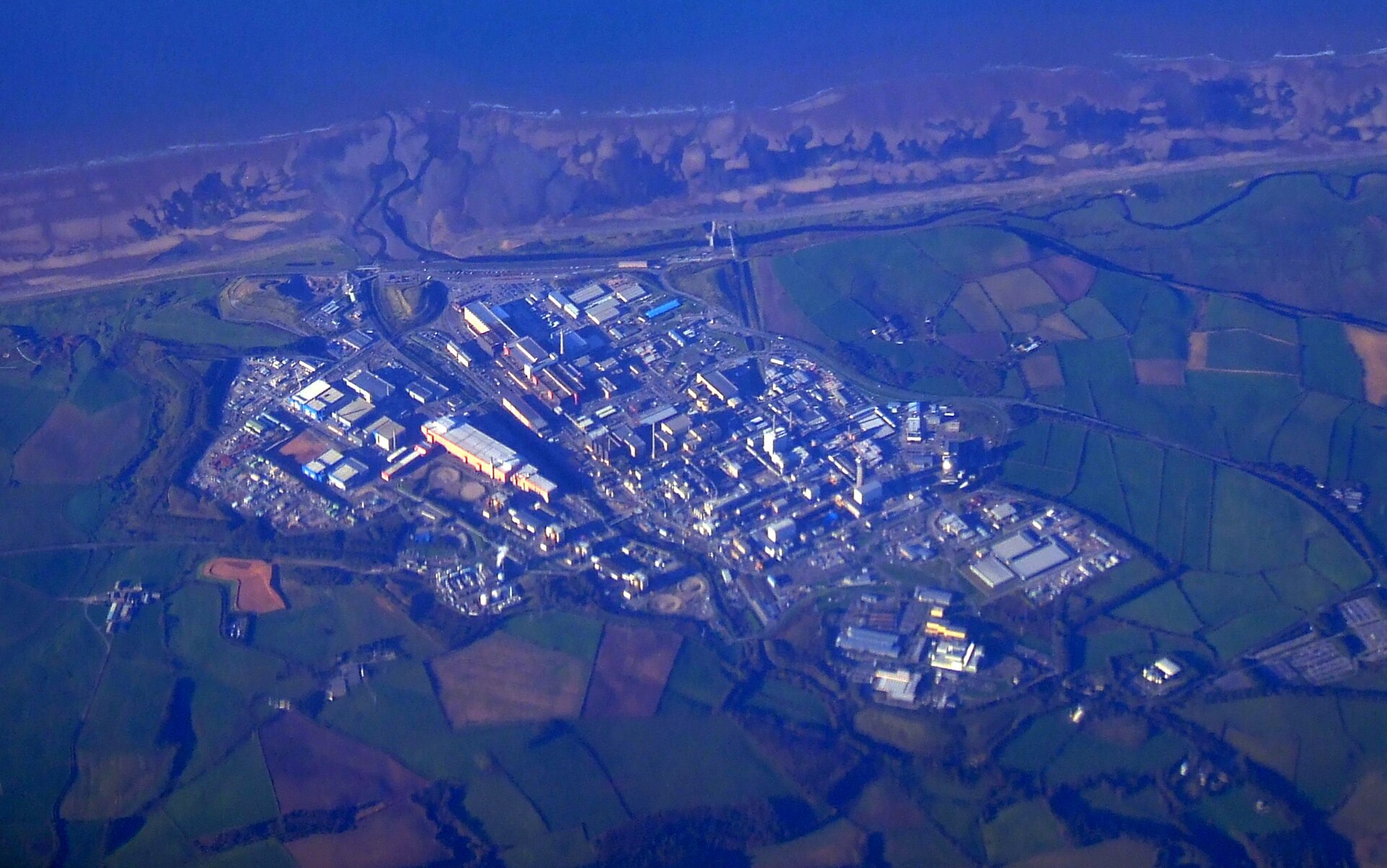


Around 110 cubic metres of radioactive liquor created in the 1950s has been moved out of the oldest tanks at Sellafield, and the company that runs the site published its strategy for the next five years on the same day. On 8 October 2026 Sellafield Ltd said it had completed the bulk removal of BUTEX liquor from the oldest tanks of its Highly Active Liquor Evaporation and Storage plant, HALES, and released Corporate Strategy 2026 to 2031, which sets the site’s objectives against an annual budget of about £2.7 billion.
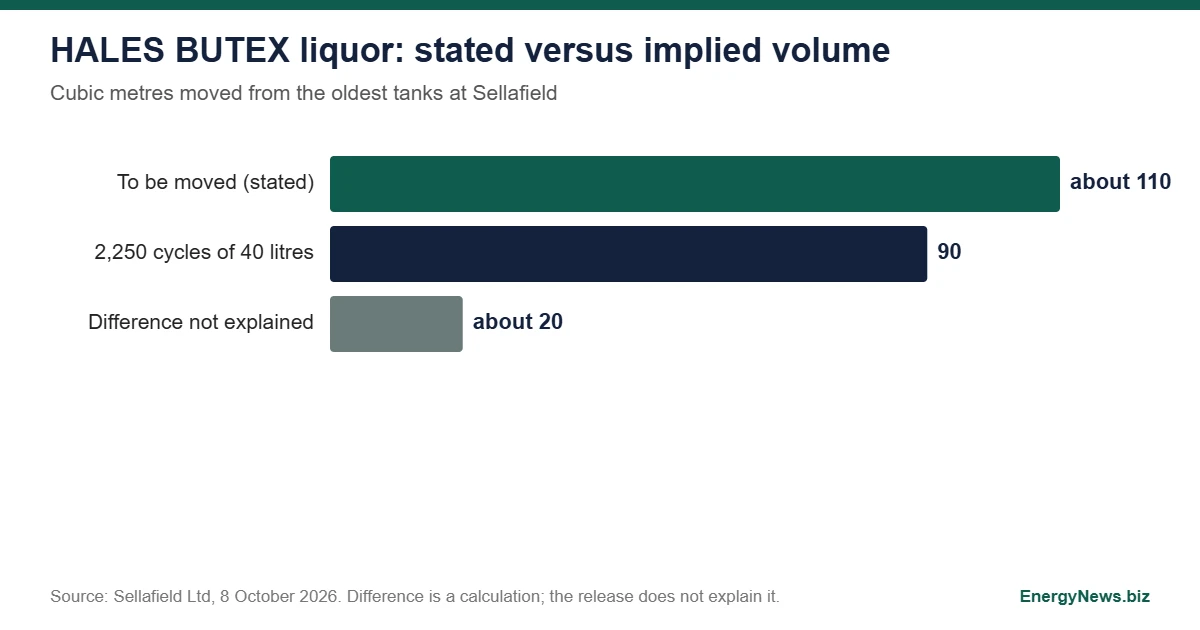
110 m³ of liquor from the first reprocessing campaigns
BUTEX liquor was created as a byproduct of Sellafield’s first reprocessing operations in the 1950s and stayed in the oldest HALES tanks for decades. The original plan was to hold it there until the end of operations in the facility, and there was also the problem of finding somewhere to put it on a busy site. The oldest tanks had not seen a transfer in almost 20 years, so there was concern that the systems needed to move the liquor would no longer work.
The teams updated the ventilation system, planned the work and secured the permissions through engagement with the Office for Nuclear Regulation and the Environment Agency. They started with small transfers through valves and controls into the new tanks, used what they learned to refine the method, and then began the large scale transfers. The company says the job took 2,250 operating cycles of 40 litres each, and that it took months to finish work that was expected to take more than a year.
2,250 cycles of 40 litres: 90 m³, not 110 m³
The two figures do not match on their face. 2,250 cycles of 40 litres is 90,000 litres, or 90 cubic metres, about 82 percent of the 110 cubic metres the company says needed to move. The release does not say what accounts for the remaining 20 cubic metres. The early small transfers, which were not part of the 2,250 cycles, may be one explanation, but the document does not state it.
The self heating liquor is now in the new HALES tanks, which reduces the heat load on some of the plant’s oldest assets, and its next step is vitrification, in which it is mixed with glass for long term storage. The company gives no date for that step. It credits the shift teams, who worked through 2026 to complete the programme alongside normal operations.
A strategy built on a £2.7 billion a year budget
The Corporate Strategy 2026 to 2031 has three priorities: safe, secure and sustainable site stewardship, reducing hazard and risk at pace, and delivering lifetime value for money. Its page of numbers lists more than 11,000 direct employees, 43,000 people in the supply chain and an annual budget of about £2.7 billion. At that annual figure held flat, the five year strategy period would represent about £13.5 billion, a calculation from the stated annual number and not a figure in the document.
The same page sets out what the site has to dispose of: about 1,400 cubic metres of packaged high level waste, about 350,000 cubic metres of intermediate level waste, and future raw arisings of about 360,000 cubic metres of low level waste and about 2,750,000 cubic metres of very low level waste. High level waste is by far the smallest of the four volumes.
“Intolerable condition”
The strategy is unusually blunt about the oldest facilities. It says some of them are already in an intolerable condition, calls recovering them to an acceptable safe state the most urgent work, and says nuclear safety takes priority and is supported by a risk based framework that illustrates the condition of its facilities. The tank emptying is an example of that work, completed in months where a year was expected, and it does not answer how many similar legacy inventories remain.
The checks are not dated in either document. The company gives no timetable for vitrification of the BUTEX liquor, and the strategy sets objectives, not a schedule for individual facilities. Other UK nuclear regulation this week includes the Environment Agency’s Hinkley Point C backup generator permit and the US NRC’s three filings covering seven reactors. Sources: Sellafield Ltd news item, 8 October 2026; Sellafield Ltd Corporate Strategy 2026 to 2031, published 8 October 2026.
Add EnergyNews.biz as a preferred source on Google


