


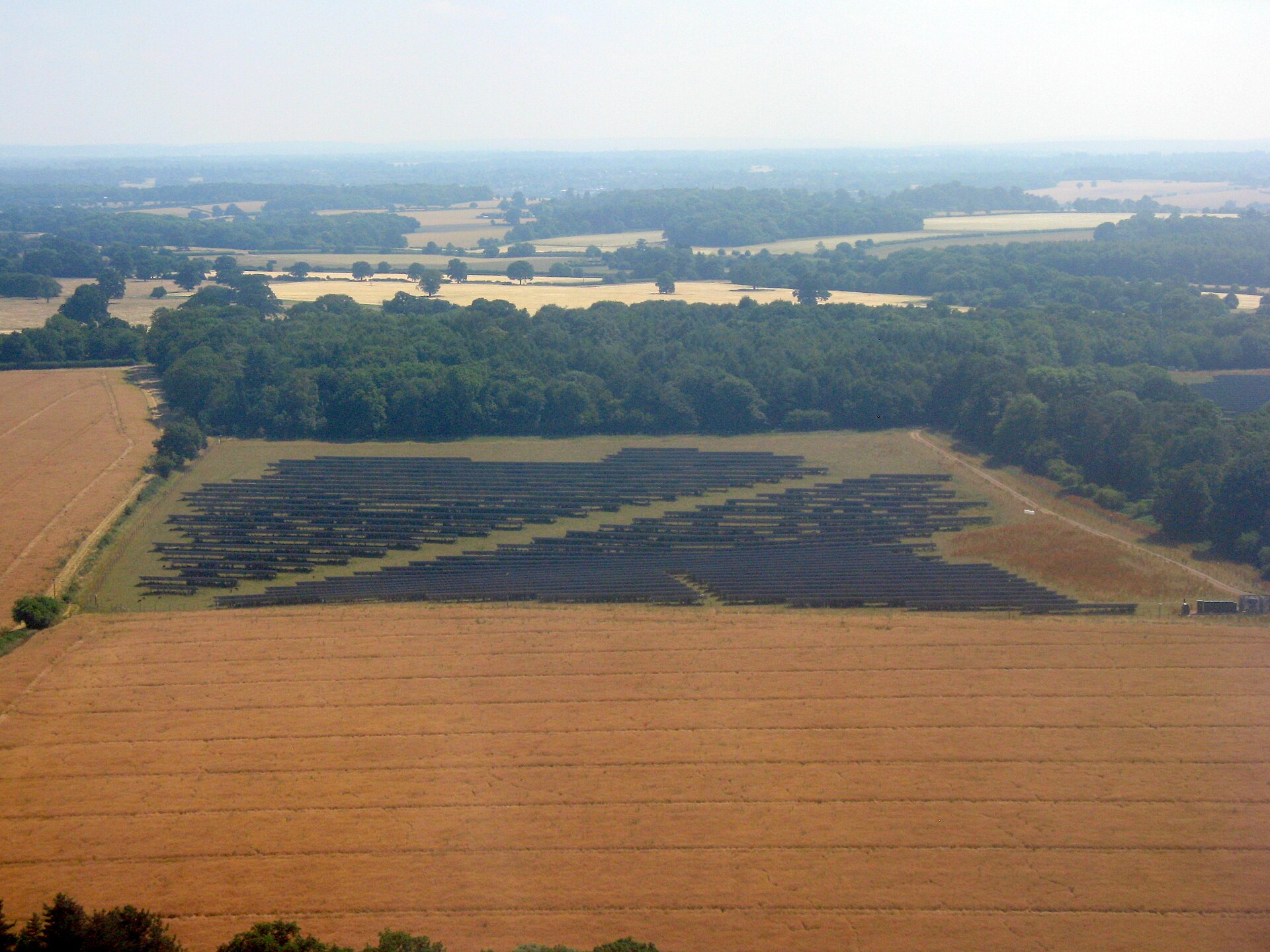


854.5 hectares of best and most versatile agricultural land will not be available for arable farming for 60 years. That is the figure the UK government accepted on 8 October 2026 when it granted development consent for the Green Hill Solar Farm, a scheme of up to 500 MW on land south and west of Wellingborough and north of Northampton, and it is the figure that two councils asked ministers to shorten by cutting the project’s life to 40 years. Ministers declined.
Up to 500 MW, 1,262 representations, three councils
The Green Hill Solar Farm comprises ground mounted solar arrays, a battery energy storage system (BESS) and grid connection infrastructure, connecting at the Grendon substation. The land lies in the areas of North Northamptonshire Council, West Northamptonshire Council and Milton Keynes City Council, and the applicant, Green Hill Solar Farm Limited, also sought compulsory acquisition and temporary possession powers. The Examining Authority received 1,262 relevant representations.
The timeline is the statutory one, used to the day. The application was accepted for examination on 19 June 2025, the six month examination ran from 21 October 2025 to 10 April 2026, three examining inspectors reported on 8 July 2026, and the decision came on 8 October, exactly three months later. The department sent two information requests in August, and two further consultations followed before the decision. Challenges can be brought to the High Court within six weeks, which runs to about 19 November 2026.
Substantial weight for need, moderate weight against on soil and landscape
The Secretary of State, acting through a minister, agreed with the Examining Authority and weighed the scheme as follows. Need for the project carries substantial positive weight, and the BESS makes the energy system more resilient. Agriculture and soil carry moderate negative weight, and landscape and visual effects carry moderate negative weight. On biodiversity the Examining Authority had given little positive weight, and the Secretary of State instead gave it neutral weight. The conclusion is that the public benefits outweigh the harm.
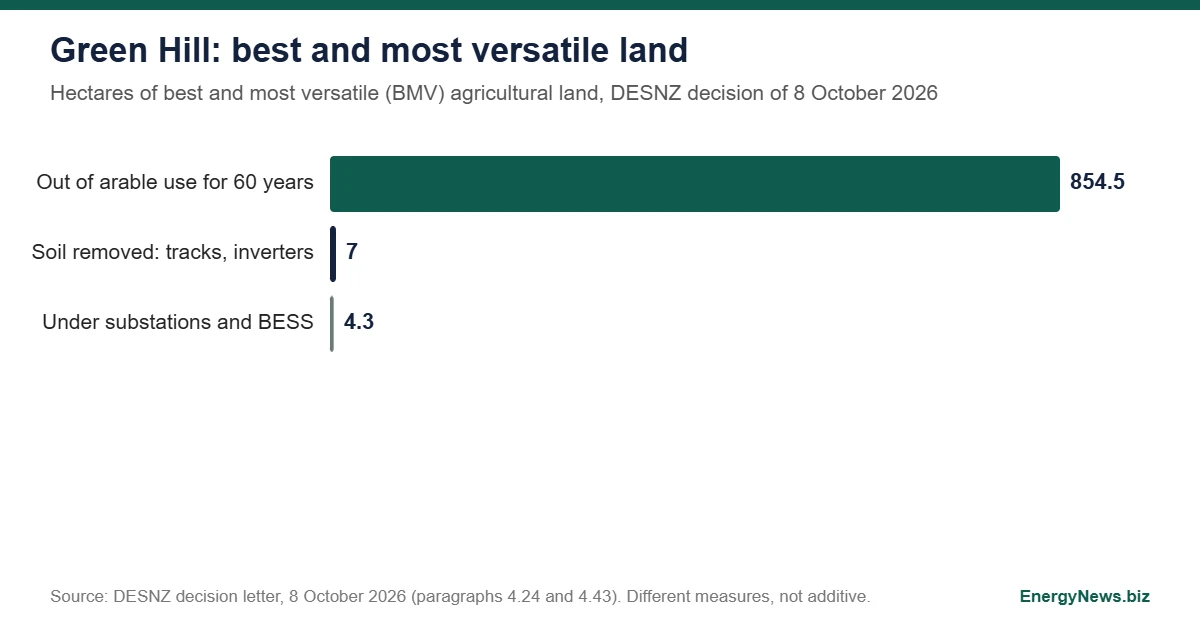
The soil numbers are specific. The applicant said all land can be restored to its pre construction grade at decommissioning, but that in areas where soil is removed for tracks, inverters, substations and the BESS, 11.3 ha of best and most versatile land would be temporarily affected: 7 ha under tracks and inverters and 4.3 ha under the substations and BESS. The Secretary of State took the precautionary view of treating the land under the BESS and substation as permanent loss. She also accepted that the 854.5 ha of identified best and most versatile land could be used for grazing, but noted this is not secured by the Order and gave it no weight.
The 60 year argument
North Northamptonshire and West Northamptonshire councils maintained that the 40 year period the energy national policy statement calls typical would be materially preferable, and that 60 years made the impacts closer to permanent than temporary. The applicant replied that solar farms are consented for 60 years and that nothing in the Environmental Statement warranted less. The Secretary of State saw no reason to change the operational life, noting the assessment and the Order are built on 60 years, called the period long but fixed term and reversible, and said Requirement 21 secures decommissioning and restoration.
Several objectors had argued for rooftops and brownfield land instead. The applicant answered that no suitable brownfield land existed near the Grendon substation and that rooftops could not deliver the scale. The Examining Authority concluded that reasonable alternatives had been considered, and that any alternative connecting at Grendon would be likely to affect a similar scale of best and most versatile land.
Battery safety and a city plan
The scheme includes the Green Hill BESS with an option for an additional BESS at Green Hill C. Requirement 6 requires a battery storage safety management plan approved by the local planning authority in consultation with the Northamptonshire Fire and Rescue Service and the Environment Agency. Objectors raised the proximity of the BESS to ancient woodland, and the Environment Agency pressed for automatically closing valves on BESS drainage outfalls so that firewater could be contained. Milton Keynes City Council also argued that two fields should fall within a proposed Ouse Valley Special Landscape Area under its emerging City Plan 2050; the Examining Authority gave the plan little weight because it was still being examined, and the Secretary of State agreed.
The next checks are dated: the six week challenge window to about 19 November 2026, the approval of the battery storage safety management plan under Requirement 6, and the decommissioning requirement that will govern the land at the end of the 60 year life. For UK consenting in the same week, see the LionLink ruling that a capacity rise needs no new direction, and for the connection queue behind projects like this one, NESO’s cut from 700 GW to 283 GW. Sources: Planning Inspectorate project page EN010170; DESNZ decision record, 8 October 2026; the Secretary of State’s decision letter of 8 October 2026.
Add EnergyNews.biz as a preferred source on Google


