


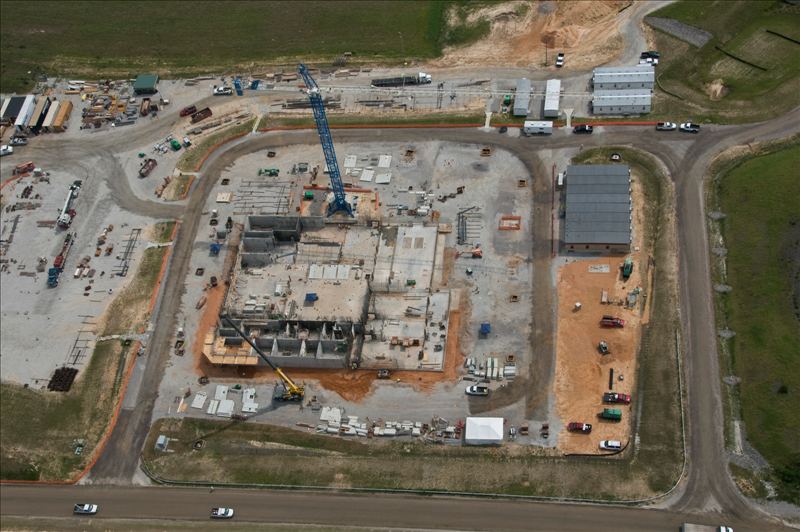


The newcleo Curio agreement announced on 16 November links a European fast reactor developer with a US recycling start-up. newcleo, the London based company listed on Nasdaq, and Curio, based in Washington, D.C., will collaborate on supplying recycled used nuclear fuel and transuranic materials for mixed oxide, or MOX, fuel at newcleo’s planned fuel fabrication plant in the United States.
The fuel would be used in newcleo’s lead cooled fast reactors once they are deployed. The agreement also covers joint research on used fuel recycling technologies.
What the newcleo Curio agreement covers
The newcleo Curio deal sets a framework for evaluating commercial arrangements and is not a supply contract. newcleo’s filing with the US Securities and Exchange Commission gives no volumes, prices, delivery dates or financial terms, and does not name the locations of either company’s planned US facilities.
MOX fuel combines plutonium recovered from used reactor fuel with depleted uranium left over from enrichment. Fast reactors can also burn other long lived elements recovered from used fuel, which is why developers of such reactors see recycling as a way to shrink the volume and lifetime of nuclear waste. Curio’s NuCycle process recovers uranium, plutonium and other materials and is designed to avoid separating pure plutonium, a feature the companies present as supporting non-proliferation goals.
Lead cooled fast reactors use molten lead as a coolant and run on fast neutrons, which can split a wider range of heavy elements than conventional water cooled reactors. That makes them suitable for recycled fuel and lets them operate at near atmospheric pressure, which simplifies some safety systems. The trade off is that lead is heavy and corrosive at high temperature, so materials and component testing take time. newcleo has developed its designs largely in Europe, and a US fuel plant would give it a foothold in a market where policymakers are again debating a closed fuel cycle.
Where each company stands
newcleo has begun pre-application engagement with the Nuclear Regulatory Commission and submitted a regulatory engagement plan ahead of a licence application for its MOX plant. The company employs more than 900 people in Europe and the United States. Founder and chief executive Stefano Buono said early and reliable access to fuel materials is central to the company’s long term growth.
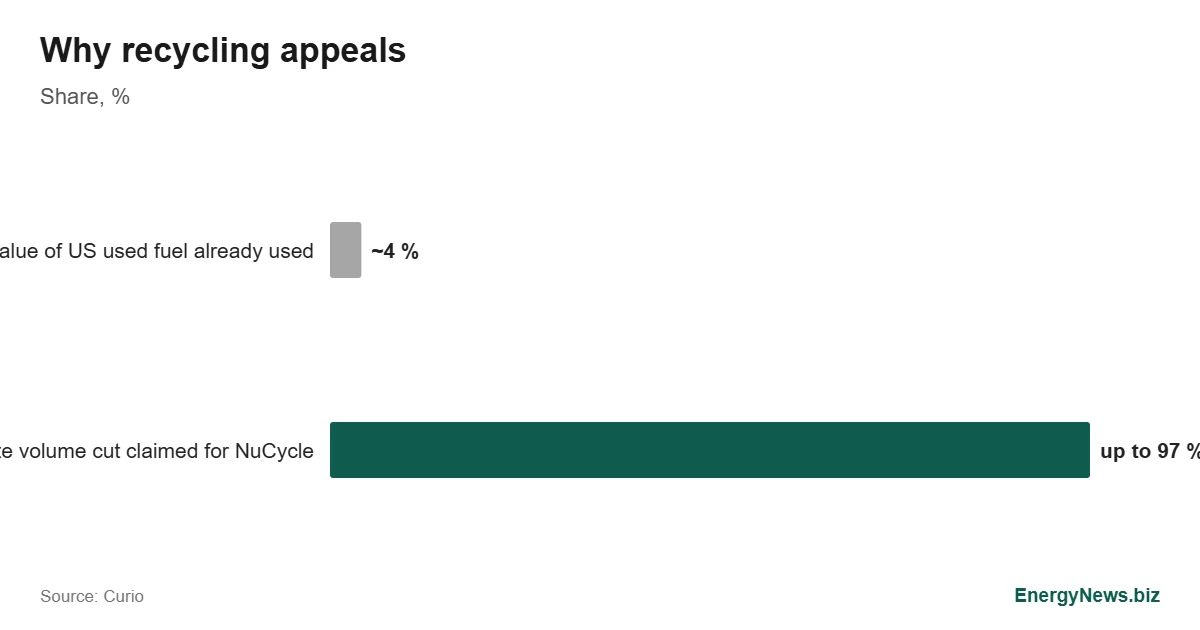
Curio says NuCycle has been validated at laboratory scale and that it works with six Department of Energy national laboratories. It has partnered with Utilities Service Alliance, whose members run 18 operating reactors, and claims its process can reduce the volume of waste needing permanent disposal by up to 97%. Chief executive Edward McGinnis has argued that only about 4% of the energy value in US commercial used fuel has been used.
The hurdles in front of newcleo Curio plans
Commercial recycling has been effectively absent in the United States for decades, and a previous government MOX plant at the Savannah River Site was cancelled in 2018 after large cost overruns. Any new facility will need NRC licensing, strict safeguards and a market for its output, and none of those are in place yet.
Policy is moving in their favour. Curio links its technology to the proposed REFUEL Act, and interest in advanced fuels has grown as developers line up supply, as seen in the Oklo and Centrus HALEU deal. Curio has signed similar memoranda with NuScale and Framatome, so the agreement with newcleo is part of a wider effort to turn used fuel into a commercial feedstock.
The timeline is long. Lead cooled fast reactors have not yet been built commercially, and fuel plants are usually licensed only once reactor demand is clear. For now, the deal secures a potential supply path rather than fuel. The full text is available in newcleo’s SEC filing.
Add EnergyNews.biz as a preferred source on Google


