


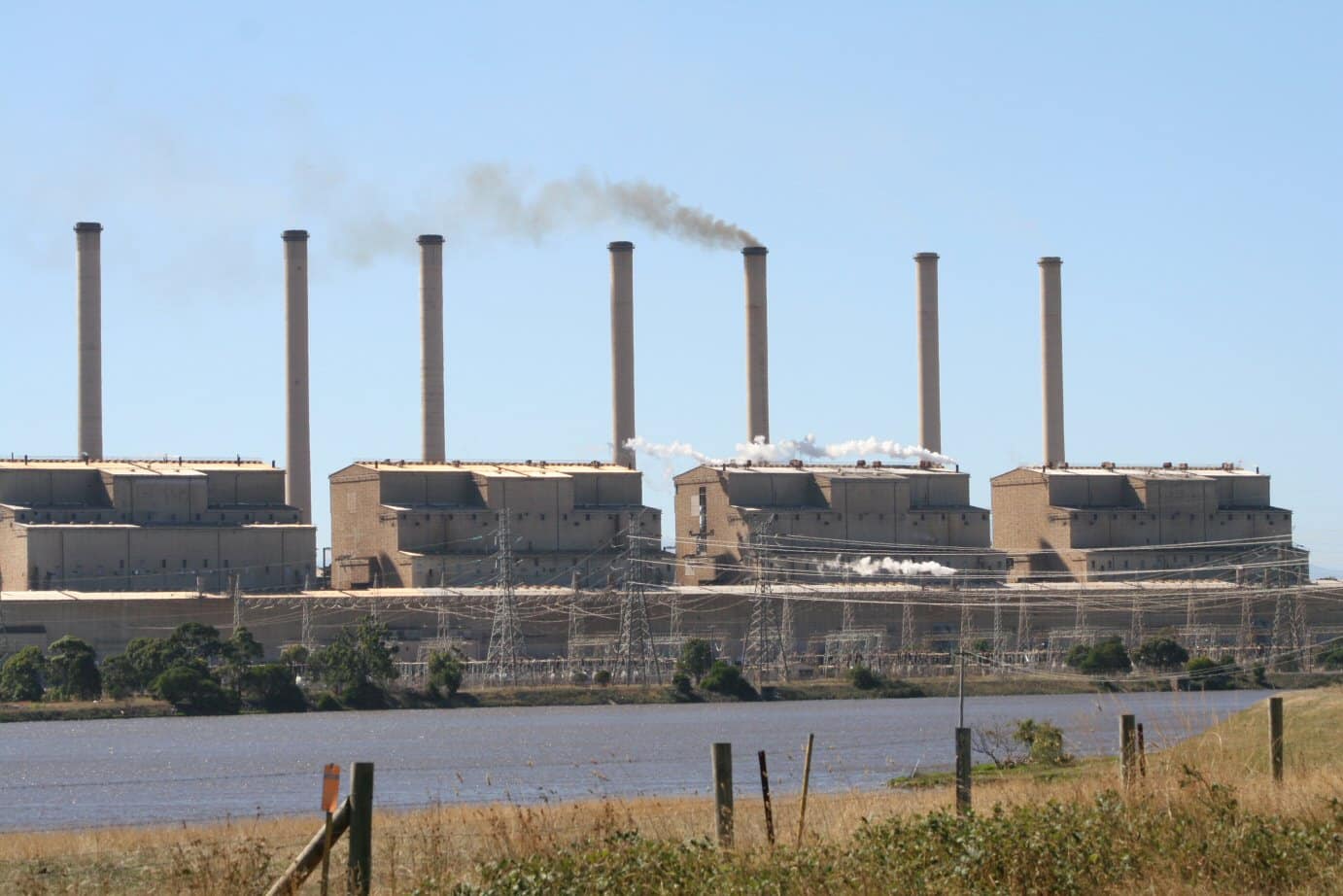


Sungrow said on 28 October 2026 that it will supply 66 battery units and 33 inverter units for Hazelwood BESS 2, the 150 MW / 300 MWh second stage of the Hazelwood battery in Victoria, Australia. ENGIE is the project partner and commercial operation is targeted for 2028.
Two hours where stage one gave one
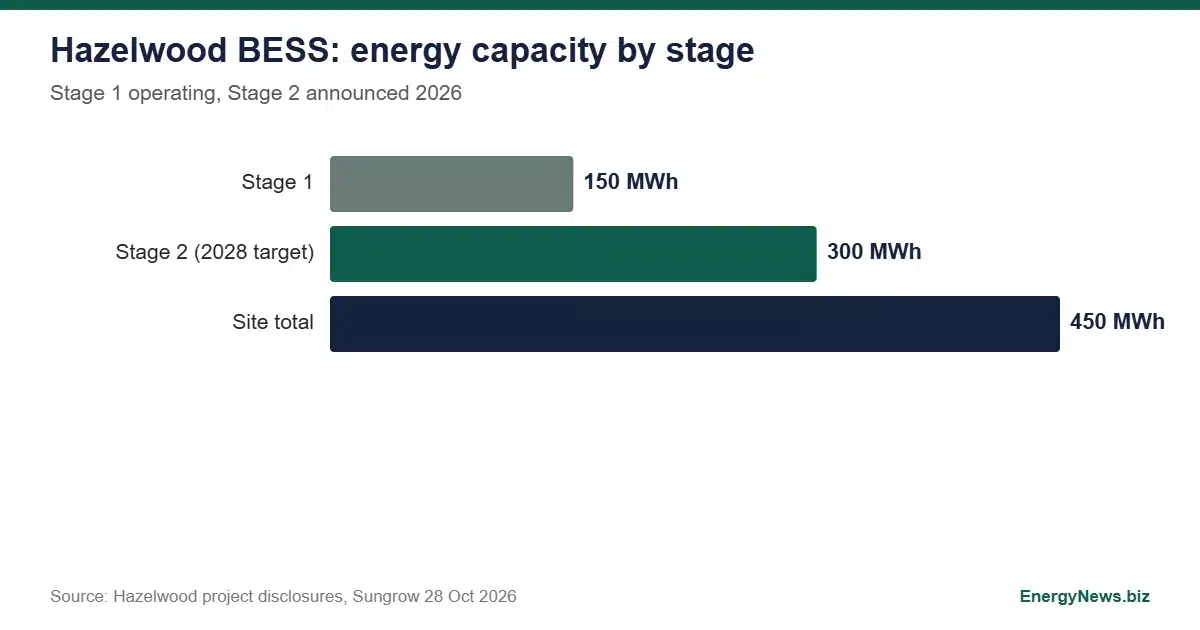
The first Hazelwood stage is 150 MW / 150 MWh, one hour at full power. The second stage keeps the 150 MW and doubles the energy to 300 MWh, which is two hours. The site then stands at 300 MW / 450 MWh, an average of 1.5 hours. Victoria’s government set a target of at least 2.6 GW of storage by 2030 in a June 2023 release, so 150 MW is about 5.8% of that target by power.
What 66 units and 33 inverters imply
Sungrow lists 66 ST5015-UX battery units from its PowerTitan 2.0 series, 33 SC6900UD-MV power conversion units and its EMS3000 controller. That is two battery units per inverter. Dividing the announced totals gives about 4.5 MWh per battery unit and about 4.5 MW per inverter. Those ratios are arithmetic on the headline figures, not datasheet values, and the announcement does not say whether 300 MWh is nameplate or usable energy.
Why duration matters at Hazelwood BESS 2
A 150 MW system holding 150 MWh can run at full power for one hour. At 300 MWh it can run for two, so Hazelwood BESS 2 can cover a longer part of the evening peak than the first stage. The 2023 Victorian release described stage one as able to supply about 75,000 households for one hour during the evening peak. Stage two doubles the energy for the same power, but no household figure has been published for it, and the doubling rests only on the announced MWh.
The Hazelwood BESS 2 equipment list also shows how the project is built: 66 battery units feeding 33 inverters, controlled by one energy management system. Sungrow says it will provide the technology, ENGIE is the partner, and Elecnor builds the balance of plant. How the Hazelwood BESS 2 revenue is earned, through market trading or contracts, is not part of the announcement.
Grid forming is a claim until it is tested
Sungrow says the grid forming capability will help strengthen network performance as renewable generation grows. Thomas Hou, managing director of Sungrow Australia, called the project an important step for grid forming storage in Australia. The announcement gives no performance guarantee, no test regime and no service contract. What would have to be true is a connection agreement and market arrangement that actually pay for fault level, inertia or voltage support, and none of that is disclosed.
What is still missing
Elecnor is named as balance of plant contractor. The contract value, revenue arrangements, financing and construction start date are not stated. The site is the former Hazelwood coal fired power station in the Latrobe Valley, where stage one was launched in June 2023 with the Victorian government. Earlier coverage looked at Victoria’s bet on a CO2 battery at Hazelwood. The next check is the 2028 operation date, and a financial close or construction notice would be the first dated sign that it holds.
Add EnergyNews.biz as a preferred source on Google


