



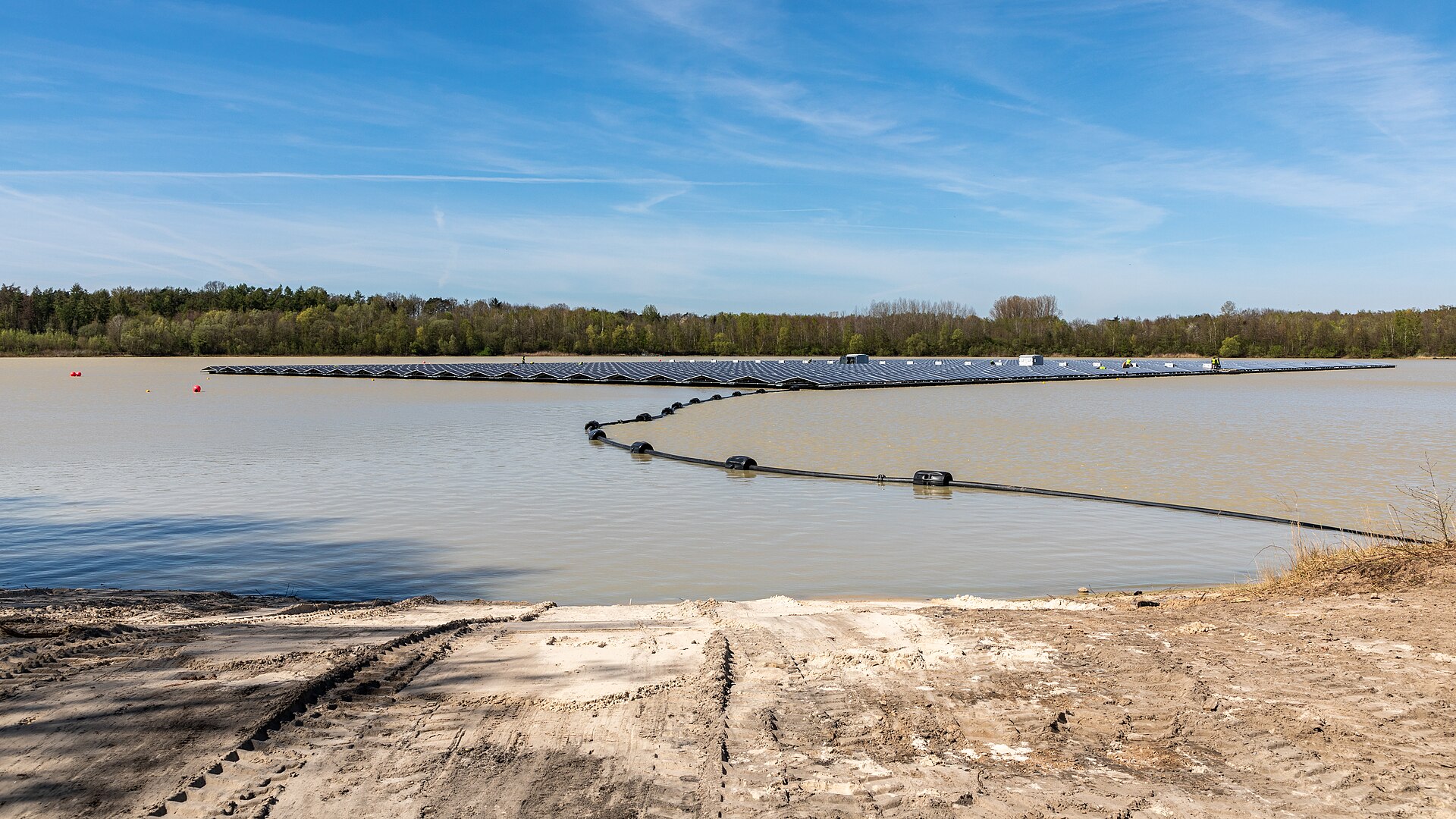
Chereh floating solar has moved from contract to construction. Developers Masdar, Citaglobal and TIZA Global, working through the joint venture Chereh Solar, have started building a 200 MW floating solar plant on the Chereh Dam reservoir in Pahang, Malaysia, after financial close on 27 October.
How the Chereh floating solar project is financed
Financial close raised about RM580 million, roughly 143 million US dollars, from three international lenders. The lenders have not been named, and the total investment and the equity split have not been published, so the RM580 million is best read as the borrowed part rather than the full cost.
The project holds a 21 year power purchase agreement with Tenaga Nasional, signed in December 2025. It was won in Malaysia’s Large Scale Solar Cycle 5+ tender with the lowest tariff in the floating solar category. The tariff value has not been disclosed.
Context helps here. Floating solar in Southeast Asia is still a young segment, and each financed plant widens the reference set for lenders. A 21 year contract with the national utility is the kind of long term revenue that international lenders look for before they commit, which fits the timeline: financial close came about ten months after the contract was signed.
What Chereh floating solar will deliver
The plant is scheduled to start operating in 2028 and is expected to supply power for about 100,000 homes. The partners say development and construction will create about 1,500 jobs. The site agreement is with Pahang Water and Energy Resources.
It is Masdar’s first project in Malaysia under a 10 GW plan agreed with the Malaysia Investment Development Authority in 2023. Masdar’s floating solar record includes the 145 MW Cirata project in Indonesia. The Sultan of Pahang, Al-Sultan Abdullah, said the project reflects how natural resources can be used responsibly, and the state’s chief minister, Wan Rosdy Wan Ismail, also attended.
Why floating solar on a reservoir makes sense
A floating array sits on water that is already set aside for a purpose, so it needs little extra land. The panels are cooled by the water around them and can reduce evaporation, and a reservoir often has a grid connection nearby. Each of these benefits depends on the site, and the partners have not published yield or evaporation data for Chereh floating solar.
Malaysia targets 35 percent renewable capacity by 2030, and its large scale solar programme is one of the main tools. A 200 MW plant on a reservoir adds to that goal without competing for farmland, which is why Chereh floating solar could become a template for other reservoirs in the country.
Solar is also getting a companion. In Victoria, a state utility has just rewritten a contract to add a Glenrowan battery to an operating solar farm. Storage next to solar is becoming the default, and floating plants will face the same question of what to do with midday surplus.
What is not yet known about Chereh floating solar
Missing from the announcement are the tariff, lender names, the engineering and procurement contractor, the module supplier and the number of panels. It is also not stated whether 200 MW refers to alternating or direct current. Those details decide how much power Chereh floating solar will send to the grid each year. Tenaga Nasional publishes its power purchase information on the utility website.
For Masdar, the project is a first step in a market it has said it wants to enter at scale. For Malaysia, it is a test of whether foreign developers, local partners and state owned utilities can deliver a large floating plant on schedule by 2028. The financing is now in place, so the remaining risk is delivery.
Add EnergyNews.biz as a preferred source on Google


