


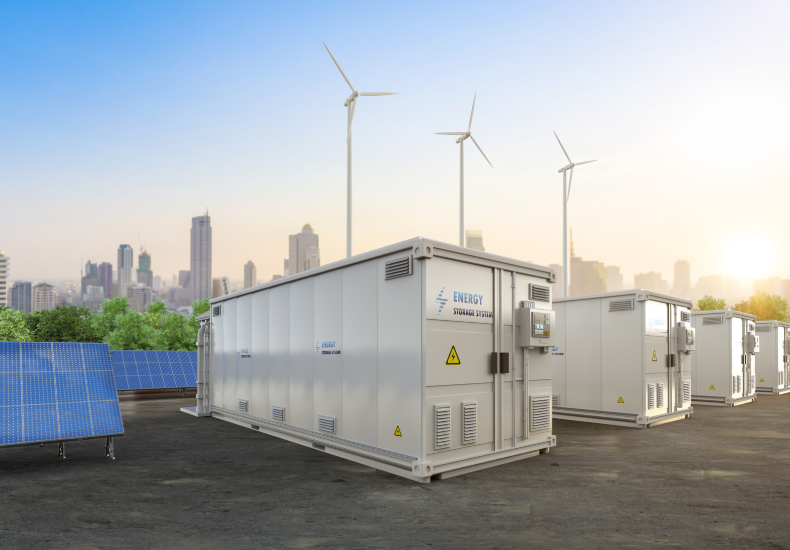


Alpiq has acquired a 103.5 MW/238 MWh battery energy storage system in Bollingstedt, northern Germany, marking the Swiss utility’s entry into the country’s operational large scale battery storage market as competition for flexible power assets intensifies.
The facility, developed by German Norwegian storage specialist ECO STOR, has been operating since June 2025. Financial terms were not disclosed. Alpiq said the acquisition adds its first operational large scale BESS in Germany and complements a broader pipeline of storage projects under development.
The Bollingstedt system is capable of delivering 103.5 MW for a little more than two hours at its 238 MWh installed capacity. Its design includes 212,992 battery cells across 512 battery cabinets and 64 battery stations. The facility can participate in frequency regulation as well as day ahead and intraday electricity markets, allowing its commercial operation to respond to both grid requirements and electricity price signals.
Alpiq’s acquisition illustrates a shift in the German BESS market from development toward ownership and portfolio aggregation. Operational assets provide investors with an immediate revenue generating infrastructure position, while developers can recycle capital into new projects. For Alpiq, Bollingstedt provides direct exposure to Germany while its broader storage pipeline continues to develop.
The company already operates storage assets in France and Finland and said it has more than 250 MW of BESS capacity under construction or close to commissioning. It also recently expanded its European development platform through the acquisition of a majority stake in Harmony Energy.
The strategy reflects the increasing value of flexibility as Germany adds variable renewable generation. Batteries can respond rapidly to short term changes in supply and demand, but their economics depend on successfully combining several revenue streams rather than relying on a single grid service.
ECO STOR designed Bollingstedt to participate in primary and secondary frequency regulation as well as short term electricity markets. This enables the asset to shift between different commercial uses depending on market conditions.
A battery with a two hour duration cannot provide long duration seasonal storage, but it can capture intraday price spreads, provide balancing services and respond to short term system needs. The value comes from the frequency and timing of those opportunities.
ECO STOR’s own analysis of Bollingstedt found that optimized operation under historical 2024 market conditions produced a pattern broadly centered on two daily cycles, charging during periods of lower prices and discharging during higher price periods. The study also modeled participation across day ahead, intraday and balancing markets.
This highlights an important distinction in the storage market: installed capacity alone does not determine profitability. Revenue depends heavily on dispatch strategy, market volatility, cycling constraints and access to ancillary service markets.
Grid Connection Is Becoming a Critical Development Factor
Bollingstedt’s location also reflects the importance of grid access in large scale storage development. The project is connected to the 110 kV network, with proximity to suitable grid infrastructure identified by ECO STOR as a key site selection criterion.
As Germany’s renewable generation expands, storage projects are increasingly being positioned around network constraints and areas where flexibility can have commercial value.
However, the growing BESS pipeline also raises questions about grid connection availability, permitting and market saturation. If large numbers of batteries compete for the same short duration price spreads and ancillary service revenues, individual project returns could come under pressure.
That makes location, trading optimization and access to multiple revenue streams increasingly important differentiators.
For Alpiq, the Bollingstedt transaction provides something a development pipeline cannot: an operating asset with real market performance data. The company said it will continue evaluating additional operational BESS opportunities in Germany alongside projects already in development.
The acquisition also expands Alpiq’s relationship with ECO STOR. The companies signed a long term tolling agreement for the Schuby storage project in northern Germany in 2025, creating another connection between the two companies’ portfolios.
The broader strategy places batteries alongside pumped storage as flexible assets within Alpiq’s generation and trading business. For Germany’s power system, the significance of projects such as Bollingstedt is therefore not simply the additional 238 MWh of storage. It is the growing integration of batteries into electricity markets where flexibility has a measurable commercial value.
Add EnergyNews.biz as a preferred source on Google


