

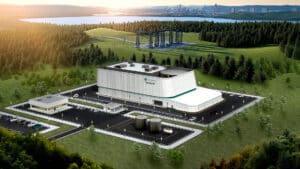





Exactly one natural hydrogen well has ever reached commercial operation anywhere in the world, a small site in Bourakebougou, Mali, that supplies electricity to a single village. That is the entire global track record behind the category MAX Power Mining Corp. is marketing when it describes its Lawson Complex in Saskatchewan as the “world’s first large-scale commercial discovery” of natural hydrogen, a claim that, by the company’s own September disclosures, still describes wells in commercial validation drilling with a completions program planned but not yet finished.
MAX Power was originally a mining company before pivoting into natural hydrogen exploration, building a permitted Saskatchewan land position that grew from roughly 1.3 million acres in June 2026 to nearly 4,700 square kilometers by September, spread along what the company calls the 475-kilometer Genesis Trend. The company holds a parallel lithium exploration position in Arizona through a related entity, Homeland Critical Minerals, which it is separately evaluating for a spinout transaction, the kind of diversified, rebrand-and-reposition structure common among junior resource companies working to attach themselves to whichever theme is drawing investor attention. Canadian mining financier Eric Sprott, better known for precious metals investing than hydrogen or oil and gas, has put approximately 45.6 million dollars into MAX Power since spring 2026 through financings and warrant exercises, building a stake beyond 24%. That capital is real and substantial, but it does not change what GLJ Ltd’s own independent evaluation of a related well near the Montana border found: “prospective” hydrogen and helium zones, the industry’s standard term for an unproven resource that has not been demonstrated to flow at commercial rates, let alone been extracted and sold to a paying customer.
That gap between promotional framing and demonstrated production runs through the federal hydrogen retreat as well. The Department of Energy’s review of its inherited project pipeline, finding many applicants were unproven startups or ventures created mainly to capture Biden-era funding commitments, is consistent with how little of the originally announced 9.5 billion dollar National Clean Hydrogen Strategy has actually reached the ground. California’s ARCHES hydrogen hub agreement, terminated in October 2025, had received only about 30 million dollars of its 1.2 billion dollar federal commitment before cancellation, roughly 2.5% of the total, meaning the vast majority of that headline figure existed only as a contractual promise of future funding rather than money already disbursed when the political environment shifted. The Fortescue Arizona and Plug Power New York green hydrogen plant cancellations Clean Energy Group documented fit the same pattern: projects whose economics depended on federal support that arrived, if at all, well short of what was originally pledged.
The money that has continued moving into US hydrogen, 400 million dollars in the first quarter of 2026, a 27% increase from the prior quarter according to Clean Energy Group, went overwhelmingly to blue hydrogen projects leaning on the 45Q carbon capture tax credit rather than the diminished 45V clean hydrogen credit: a Linde ammonia plant in Beaumont, Texas, and Wabash Valley Resources’ Indiana facility, both fertilizer-oriented rather than aimed at the transportation or power applications hydrogen advocates originally emphasized. The climate case for that shift is weaker than the funding shift suggests. Blue hydrogen’s emissions reduction relative to conventional grey hydrogen has been measured at just 9% to 12% in the research Clean Energy Group cites, a modest improvement that has to be weighed against hydrogen’s own behavior as an indirect greenhouse gas, with an atmospheric warming impact roughly 35 times that of carbon dioxide over its lifetime, meaning leakage anywhere in a blue hydrogen production and transport chain works directly against the climate rationale used to justify the 45Q credit supporting it.
Frank Wolak’s competitiveness argument and H. Sterling Burnett’s cost skepticism describe two ends of a debate that is no longer theoretical, since Big Tech’s capital spending, which the IEA measured at more than 400 billion dollars in 2025 with a 75% increase projected for 2026, is creating exactly the kind of large, immediate power demand that hydrogen promoters across all three categories, natural, blue and green, are now racing to position themselves against. None of the three has yet demonstrated it can deliver power at a price a buyer will pay without a federal subsidy, a tax credit, or, in MAX Power’s case, a story compelling enough to draw continued equity financing ahead of any completions program reaching first production. That was true of the hydrogen pitch in 2023, and reviewing the specific projects that have actually reached commercial operation since then, rather than the ones still described as prospective, validating, or planned, it remains true in 2026.