


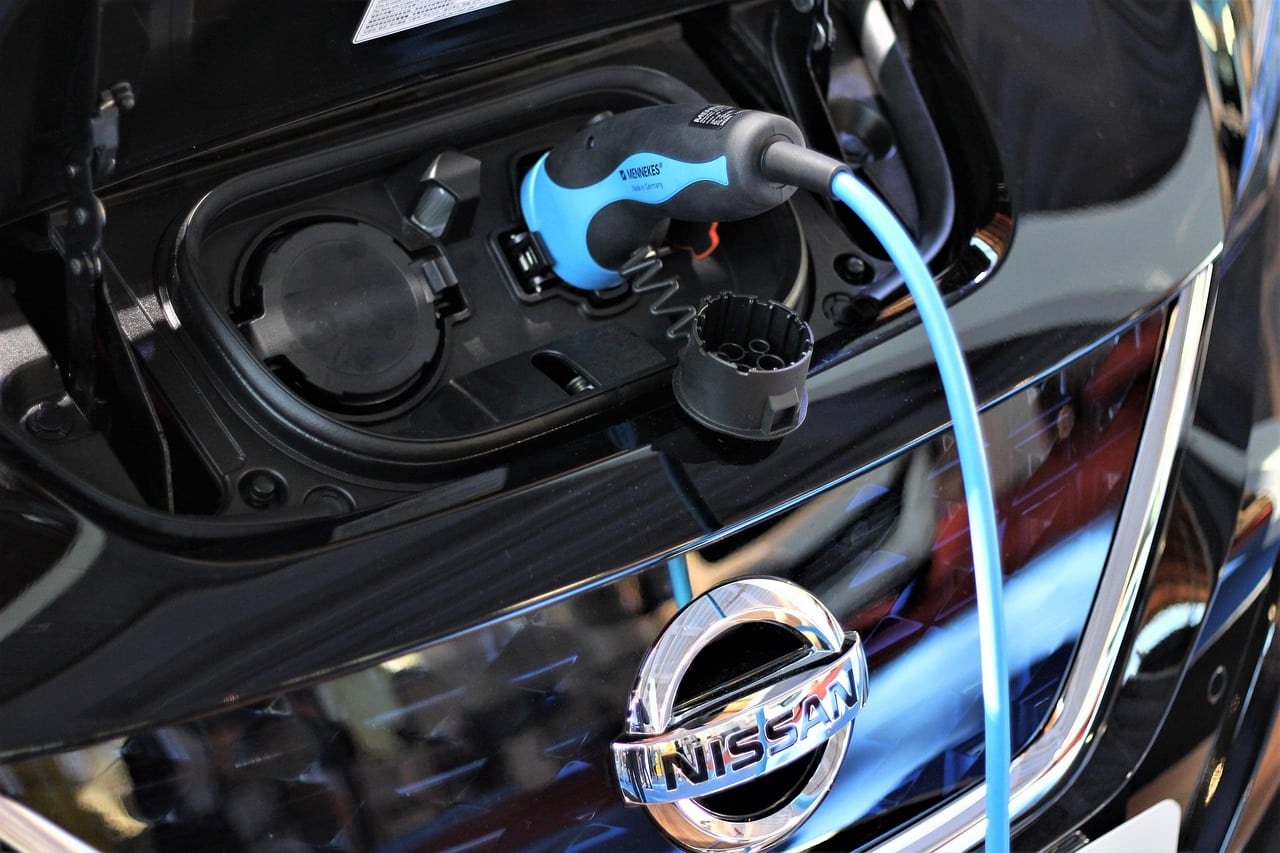


AVILOO’s newly published battery health rankings place the Mercedes-Benz EQA and Hyundai IONIQ 5 at the top after 150,000 kilometers and the Nissan Leaf ZE1 at the bottom, a pattern that holds up consistently across independent coverage of the report. The specific percentage figures behind that ranking do not hold up quite as consistently: the Leaf’s median state of health at that mileage appears as both 86.3% and 86.7% in different summaries of the identical dataset, a small but telling sign that the underlying report’s numbers are not being reproduced with full precision even in outlets covering the same release.
AVILOO, the Austrian battery diagnostics company behind the report, describes its dataset as drawn from “AVILOO Certified EVs, used cars whose real battery condition is a documented fact rather than a guess.” That framing, from the company’s own release material, is worth reading carefully, because it identifies exactly what kind of sample this is and is not. The vehicles in the study were not randomly selected from the broader population of Model Ys, IONIQ 5s or Nissan Leafs on the road. They are cars that underwent an independent battery test, typically in connection with a used vehicle sale, purchase or AVILOO’s own Battery Warranty product for used EVs, which the company launched across Europe this summer. That selection process can push results in more than one direction at once. Sellers confident their battery is in strong condition have an incentive to commission a test that supports a higher asking price, while buyers suspicious of a specific vehicle’s history have an incentive to insist on one before completing a purchase. AVILOO’s release does not indicate which of these dynamics dominates its dataset, or whether the two roughly offset each other, which matters for how confidently the median figures can be extrapolated to the full population of each model rather than to the specific subset of cars whose owners or prospective buyers chose to test them.
The report’s own methodology note adds a further layer of caution that most coverage of the release has not carried forward. AVILOO explicitly states that the four vehicles it examines in the most detail, the Tesla Model Y, Volkswagen ID.4, Hyundai IONIQ 5 and Nissan Leaf ZE1, are “illustrative examples chosen to show a range of battery sizes and vehicle types, not an exhaustive list or a ranking.” The wider 20-model comparison that has driven most headlines, including the specific placement of the Mercedes EQA at the top and the Leaf, MINI Cooper SE and Renault Zoe at the bottom, is treated by nearly every outlet reporting on it as a clean ranking, even though the company’s own report frames its most detailed findings as illustrative rather than comparative. The distinction matters most for models separated by a point or less of median state of health, where the difference between, say, the BMW i4 at 93.6% and the Hyundai Kona EV just behind it falls within a range that AVILOO’s own charts present as a statistical distribution with a 99% prediction interval, not a precise point estimate, meaning close rankings near the middle of the table carry more uncertainty than a single ordered list conveys.
The most defensible finding in the report, and the one most consistently reproduced across independent coverage, is the spread between individual vehicles of the same model rather than the differences between models. AVILOO found that state of health among vehicles of the same model can vary by up to 13.5 percentage points at comparable mileage, with the gap widening as distance traveled increases. For the Tesla Model Y specifically, individual vehicles at 150,000 kilometers can differ by roughly 11 percentage points, and for the IONIQ 5 the spread exceeds 12 points, translating to tens of kilometers of real-world range difference between two examples of the identical model and mileage. That finding survives scrutiny better than the specific model-to-model rankings because it does not depend on precisely which subset of vehicles happened to be tested, it holds regardless of whether the sample skews toward well-maintained cars being sold at a premium or suspect cars being tested out of concern, since the spread itself is the observation rather than the average.
The technical explanation AVILOO offers for its weakest performers is more substantive than a simple verdict on battery quality. The Nissan Leaf ZE1, MINI Cooper SE and Renault Zoe share comparatively small battery packs, 40 kilowatt-hours in the Leaf’s case against Tesla’s 78.8 kilowatt-hour Model Y pack, meaning these vehicles require substantially more charge cycles to cover equivalent distance, and additional charge cycles are a well-established driver of capacity fade independent of any difference in cell chemistry quality. The Leaf and earlier Zoe generations also rely on air cooling rather than the liquid thermal management most competing models use, a design choice that leaves cell temperature less tightly controlled during fast charging and hot weather, both conditions linked to accelerated degradation. Framed this way, the bottom of AVILOO’s table reflects specific, identifiable engineering tradeoffs made when these vehicles were designed years ago rather than a general indictment of any particular manufacturer’s battery technology.
AVILOO’s own state of health metric is also narrower than what at least one competing diagnostics provider offers, a point the company’s report does not raise but that is relevant to how much weight a single published percentage should carry. Other firms in the used EV inspection space report cell or module-level detail alongside dozens of additional parameters, against AVILOO’s single aggregate SoH figure per test. A single percentage is easier to publish in a ranked table, which is part of why this report translates so cleanly into headline-friendly rankings, but it necessarily compresses information about which specific cells or modules within a pack are driving an individual vehicle’s result. None of this changes the report’s broadest and best supported conclusion, that median battery health across nearly all 20 models examined remains above 86% even after 150,000 kilometers, a genuinely reassuring finding for anyone concerned that EV batteries fail wholesale within a normal ownership period. It does mean that the more precise the claim, a specific percentage point separating two closely ranked models, or a single decimal figure repeated across outlets that do not always agree on it, the more that claim should be read as an illustration of a broader pattern rather than a precise, individually verified fact about any specific used vehicle a buyer might be considering.
Add EnergyNews.biz as a preferred source on Google


