




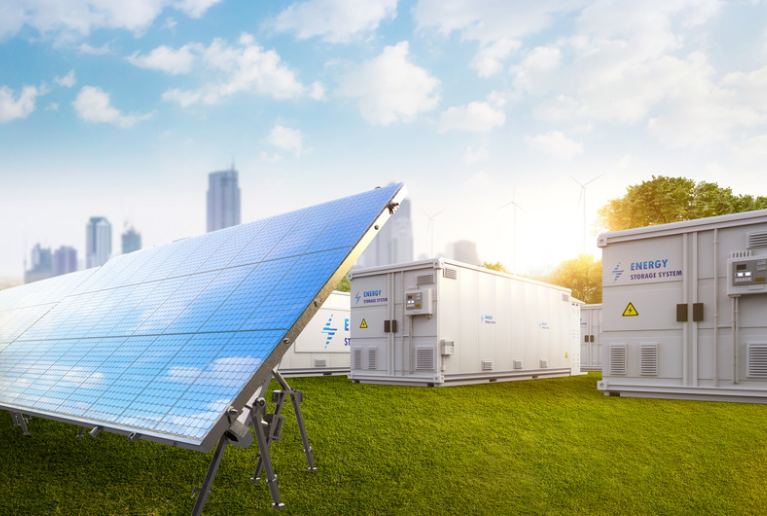
Canadian Solar has secured a 500 MW, 2,493 MWh battery energy storage system agreement through its e-STORAGE division, targeting infrastructure that supports data center reliability and grid resilience.
The project will deploy approximately 500 SolBank 3.0 containerized systems, with battery cells manufactured internally through Canadian Solar’s global production network. From a technical perspective, the system’s 2,493 MWh capacity indicates a multi-hour storage configuration designed to address intraday load balancing rather than short-duration frequency regulation alone. This aligns with the operational requirements of data centers, where sustained power availability and load smoothing are critical, especially as AI workloads increase energy intensity and variability.
The timeline, with shipments scheduled between March and July 2027, suggests a forward-looking procurement strategy by the unnamed U.S. utility, anticipating continued growth in electricity demand tied to hyperscale infrastructure. Industry projections indicate that data center expansion, particularly those supporting AI applications, is becoming a primary driver of incremental power demand in several U.S. regions. This has introduced new constraints on grid capacity, transmission planning, and peak load management.
Battery energy storage systems are increasingly positioned as a near-term solution to these constraints. Unlike traditional grid upgrades, which can face multi-year permitting and construction timelines, containerized BESS installations can be deployed more rapidly and scaled modularly. However, their effectiveness depends on integration with broader grid planning, including transmission expansion and generation mix optimization.
Canadian Solar’s involvement highlights the competitive positioning of vertically integrated suppliers in this environment. By manufacturing its own battery cells and delivering containerized systems, the company reduces exposure to external supply disruptions while potentially improving cost predictability. This approach also aligns with growing policy emphasis in the United States on supply chain localization and resilience, although the extent of domestic versus international manufacturing within the company’s network remains a factor in evaluating long-term strategic alignment with U.S. industrial policy.