


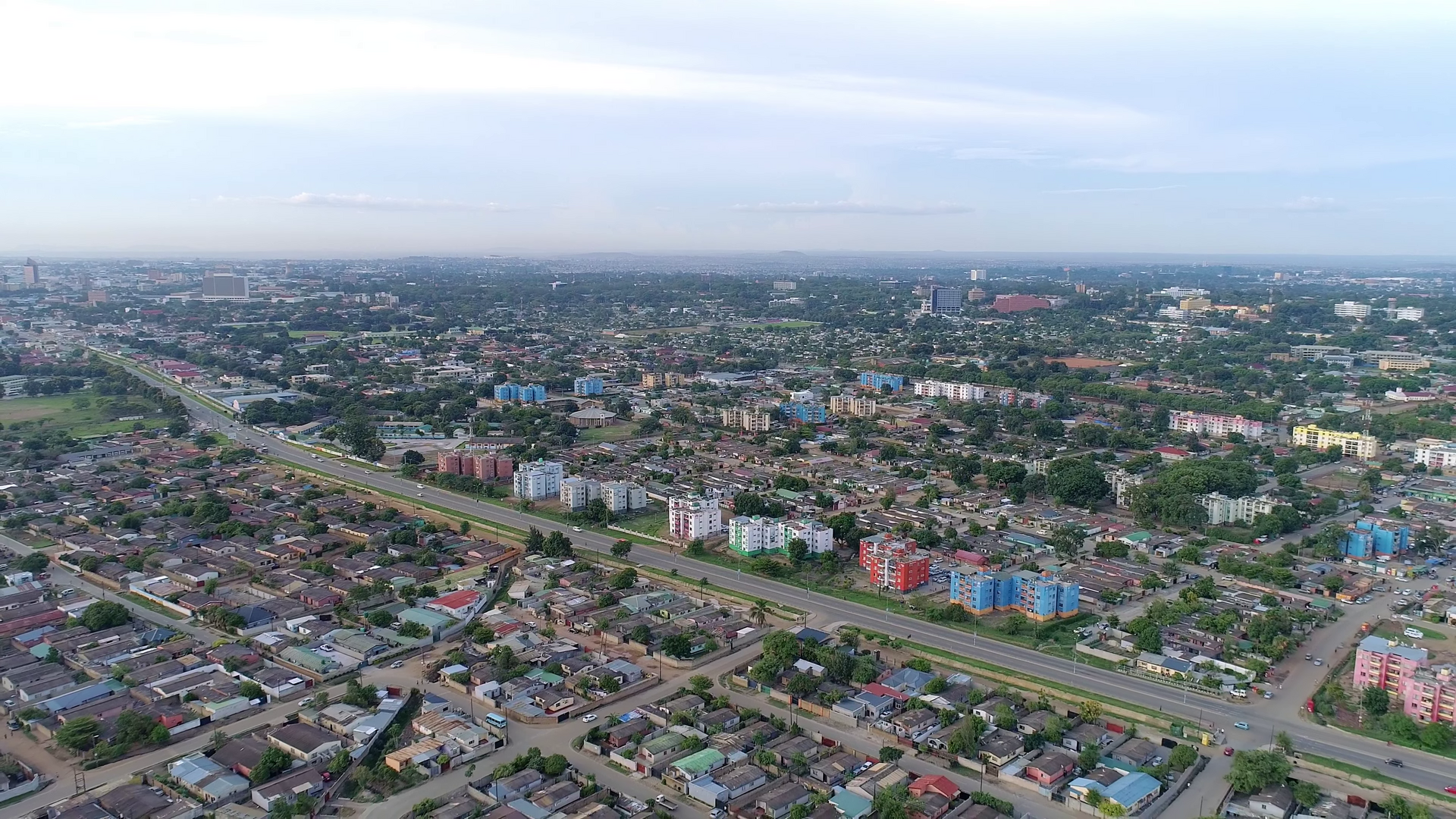


Zambia has signed a $60 million Investment Promotion and Protection Agreement with United Solar Energy Zambia Limited, a company backed by Malaysian investors, for a 50 MW solar power plant in Mapepe, Chilanga, south of Lusaka. The company confirmed that the Chilanga solar project, started in 2024, has reached financial close and is now selecting a contractor before construction begins.
The financing includes contributions from financial institutions and companies in Zambia and Malaysia.
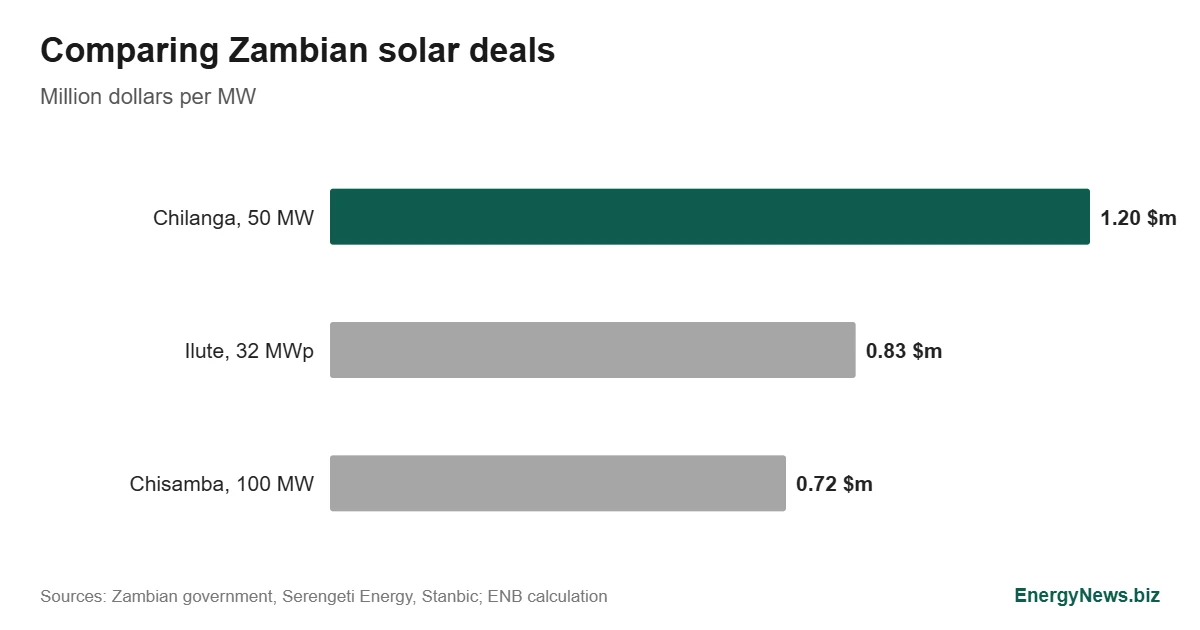
Chilanga solar in numbers
ENB calculated the investment per unit of capacity. $60 million for 50 MW is $1.2 million per MW. That is higher than the reported financing for some recent Zambian projects, but the comparison needs care. The 100 MW Chisamba project secured $71.5 million from Stanbic Bank Zambia, or about $0.72 million per MW, and the 32 MWp Ilute project raised a senior financing package of $26.5 million, about $0.83 million per MWp. Those are loan amounts that do not include equity, while the Chilanga figure is the total investment covered by the agreement.
The project company has not said whether the $60 million includes the grid connection line to the national network, which can add significant cost in rural areas. Seen that way, $1.2 million per MW is within the normal range for a utility-scale plant in southern Africa, where grid connection, transport and financing costs are higher than in Asia or Europe.
Why Zambia needs Chilanga solar and more
Zambia depends heavily on hydropower from the Zambezi basin. Drought in recent years cut output from the Kariba and Kafue Gorge stations and led to long power cuts. The government has since pushed for new solar capacity to diversify supply. Several projects have reached financial close in the past two years, including Chisamba, Ilute and Globeleq’s 40 MWac Kafue plant, the first under the GET FiT Zambia programme.
The structures differ. Chisamba and Ilute sell power under agreements with GreenCo Power Services, a regional power trader, rather than with the state utility ZESCO, which allowed lenders to finance them without government guarantees. The Chilanga agreement focuses on investment protection, which matters to foreign investors given Zambia’s recent debt restructuring.
For investors, the Chilanga solar agreement also signals how the government wants to handle foreign capital. An Investment Promotion and Protection Agreement typically gives guarantees on fair treatment, repatriation of profits and dispute resolution. Malaysian investors are relatively new in Zambian power, and the Chilanga solar deal could open a channel for further Asian capital into the country’s generation sector.
Offtake remains the key risk. Who buys the electricity, at what price and in which currency will decide whether the Chilanga solar plant is bankable over 20 or 25 years. The company has not published those terms. Projects that sell to GreenCo or to mining companies have tended to attract lenders more easily than those relying on state utility payments.
What comes next
The next step is the choice of an engineering, procurement and construction contractor. Chinese contractors built several recent plants in the country, including Chisamba, and the module and inverter supply will likely come from Asia. Similar procurement steps are under way in other emerging markets, such as Jordan’s solar and storage tender.
A 50 MW plant near Lusaka would produce roughly 90 to 100 GWh a year at typical Zambian solar yields, enough to make a noticeable difference to supply around the capital in the dry season, when hydropower is weakest.
The number to watch is the construction start date. A contractor appointment in the first quarter of 2027 would put first power within about a year. Information on Zambia’s investment framework is available from the Zambia Development Agency.
Add EnergyNews.biz as a preferred source on Google


