





Global electricity demand is on track to grow 50 percent faster to 2030 than it did over the past decade, yet power‑sector emissions are forecast to plateau rather than fall, despite an unprecedented build‑out of renewables and nuclear generation. That tension defines the new “Age of Electricity” and exposes a structural gap between ambition and system design.
Between 2026 and 2030, global electricity consumption is projected to rise by an average of 3.6 percent per year, compared with 2.8 percent over the previous ten years. This equates to around 1 100 terawatt‑hours of additional demand each year, versus 700 terawatt‑hours annually from 2015 to 2025, lifting total consumption from 28 200 terawatt‑hours in 2025 to 33 600 terawatt‑hours in 2030. Electricity will grow at least 2.5 times faster than overall energy demand, reversing three decades in which power demand only outran GDP during crises.
The geography of this expansion is skewed. Emerging economies account for nearly 80 percent of incremental consumption to 2030, with China alone supplying close to half of the global increase and India plus Southeast Asia taking an ever larger share of the remainder. China is expected to add around 2 600 terawatt‑hours over 2026‑2030, equivalent to today’s electricity consumption of the European Union, even as its annual growth rate moderates. India’s demand is forecast to rise by 6.4 percent per year over the same period, while Southeast Asia grows at 5.3 percent.
Advanced economies are re‑entering the picture after fifteen stagnant years. In 2025, they contributed almost 20 percent of global demand growth and are expected to maintain this share through 2030. In the United States, demand increased 2.1 percent in 2025 and is projected to grow just under 2 percent annually to 2030, with roughly half of the increase driven by data centres. In the European Union, demand rose 0.9 percent in 2025 and is forecast to grow around 2 percent per year, and will not regain 2021 levels until 2028, assuming a moderate industrial rebound.
Buildings dominate incremental demand. The residential and commercial sectors are expected to provide nearly half of global growth between 2025 and 2030, heavily influenced by space cooling, data centres, and heat pumps. Transport, propelled by electric vehicles, is forecast to account for more than 10 percent of demand growth to 2030, double its contribution in the previous five years. Industrial consumption accelerates as light manufacturing and electro‑intensive sectors expand.
Per capita consumption trajectories underscore the structural shift. United States electricity use per person is expected to surpass its 2005 record by 2030, while the European Union’s per capita consumption is set to exceed its 2008 peak. China’s per capita electricity use passed that of the European Union in 2022 and continues to rise, even though household consumption per capita remains lower. Across Middle Eastern economies, per capita electricity consumption has climbed from below the global average three decades ago to almost EU levels today, driven by air‑conditioning demand. Sub‑Saharan Africa, by contrast, has seen almost flat per capita use for thirty years, with around 600 million people still lacking reliable access.
Electricity is becoming the primary energy input to industrial processes, transport, buildings, and digital infrastructure. Demand growth is increasingly dominated by a small number of system‑critical loads: data centres, air conditioning, and EV charging. That concentration makes growth both more predictable and more difficult to serve securely.
Supply pivots toward low‑emissions sources while coal remains entrenched
Low‑emissions sources – renewables plus nuclear – are forecast to account for half of global electricity generation by 2030, up from just over forty percent in 2025. Renewables alone already reached one‑third of global generation in 2025, up from less than a quarter a decade earlier, and are now approaching coal‑fired output. Annual renewable generation is expected to increase by roughly one thousand terawatt‑hours through 2030, with solar PV providing more than six hundred terawatt‑hours of that growth each year and total renewable output rising around eight percent per year.
Nuclear generation also reached a new high in 2025 and is expected to grow by nearly three percent annually to 2030, more than double its recent growth rate. China is projected to contribute about forty percent of global nuclear expansion, with sizeable additions in India and other emerging economies, while output in the United States and European Union remains broadly flat. Interest in reactor lifetime extensions and small modular reactors is increasing, but deployment will depend on policy, regulation, and financing rather than technology alone.
Coal’s global trajectory is only gradually downward. Coal‑fired generation was broadly flat in 2025, with declines in China and India offset by a rebound in the United States, where higher gas prices and slower coal‑plant retirements pushed coal back into merit. In the European Union, record solar output offset weak hydro and wind, limiting coal’s decline. Over 2026‑2030, renewables, gas, and nuclear are expected to meet all additional electricity demand, enabling coal output to shrink slightly and return to near its 2021 level by 2030. Coal’s share of generation falls from roughly one‑third to just over one‑quarter, yet it remains the single largest source of electricity – a reminder that relative shares can shift quickly while absolute volumes prove stickier.
Gas‑fired generation is set for renewed growth, increasing at an average of 2.6 percent annually to 2030, after a much slower pace in recent years. Rising demand in the United States and substitution away from oil in the Middle East are the main drivers. Gas plays a dual role: complementing renewables where it displaces coal, but also adding emissions where its growth is additive rather than substitutive.
Solar PV is the common denominator across regions. In China, solar generation grew by more than forty percent in 2025 and is expected to add around 320–360 terawatt‑hours annually over the forecast period, meeting about sixty percent of incremental demand and pushing variable renewable shares above one‑third by 2030. India is forecast to grow solar generation by almost a quarter each year, lifting its share of total generation to close to one‑fifth. In the European Union, solar already exceeds ten percent of generation and is projected to reach about twenty percent by 2030, supported by over four hundred gigawatts of new renewable capacity additions, seventy percent of which will be solar. By decade’s end, variable renewables are expected to supply more than a quarter of global electricity.
These dynamics are reshaping market value. Capture rates for utility‑scale solar have fallen from above parity with average wholesale prices in 2018 to levels around sixty percent or lower in many European markets and even below thirty percent in some Australian regions. A rising share of solar output is produced at zero or negative prices. Wind capture rates have declined less sharply but are still under pressure. Flexible dispatchable technologies, including hydropower and gas, now achieve capture rates two to three times those of solar in several markets. System value is increasingly attached to flexibility and timing rather than marginal generation costs alone.
Grids as the new bottleneck
The binding constraint of the next phase is no longer generation capacity but the ability of networks to connect and manage it. Globally, more than 2 500 gigawatts of renewable, storage, and large‑load projects are stuck in grid connection queues, including at least 1 700 gigawatts of renewables and more than 600 gigawatts of utility‑scale batteries. Meeting forecast electricity demand by 2030 implies increasing annual grid investment by roughly half over current levels and accelerating equipment supply chains, while dealing with permitting cycles that are measured in decades for some projects.
The mismatch in lead times between generation and networks, combined with limited operational flexibility, is producing rising congestion and technical curtailment. In a growing number of systems, several percent of wind and solar potential output is curtailed for network reasons, with double‑digit percentages in cases such as Chile. Curtailment is not inherently wasteful when it is a by‑product of economically optimal over‑building, but the current pattern often reflects grid bottlenecks that could be alleviated at lower cost.
Non‑firm connection agreements and grid‑enhancing technologies offer a near‑term way to relieve these constraints. Conditional, non‑firm grid access – where generators or loads accept the risk of being curtailed during congestion in exchange for faster connection and lower tariffs – could enable roughly three‑quarters of a terawatt or more of projects to connect before major reinforcements are built. Technologies like dynamic line and transformer rating, advanced power‑flow control, topology optimisation, storage as a transmission asset, reconductoring, and voltage uprating can collectively unlock hundreds of gigawatts of additional hosting capacity, at far lower cost and lead time than new corridors.
The scale of potential indicates that institutional inertia, risk aversion, and misaligned incentives are now as important as physics. Utilities and system operators have historically been rewarded for building assets, not for optimising them. Regulators are only beginning to adjust frameworks to encourage cost‑effective grid optimisation instead of defaulting to new construction. In parallel, queue‑management reforms are trying to filter out speculative projects and prioritise those that are technically and financially mature, but these processes are still evolving.
Flexibility is the new scarcity
As variable renewables grow and demand becomes more electrified, system operators face a dual challenge. At one end of the spectrum are low‑renewables events and “dunkelflaute” conditions, where dispatchable capacity, interconnection, and storage must cover extended lulls. At the other end are “bright breeze” periods, when solar and wind output is high while net demand collapses and conventional plants are needed mainly for system services rather than energy.
Flexibility must come from a portfolio. Supply‑side options include more flexible operation of thermal fleets, hydro optimisation, and storage; network options include interconnections and grid‑enhancing technologies; and the demand side encompasses both explicit demand response programmes and implicit flexibility via dynamic pricing.
Today, demand response is significantly underutilised. Global utilisation is on the order of 100 gigawatts, mostly industrial, even though some specific end‑uses – such as aluminium smelting and residential cooling – contribute several times that to peak demand. Residential and commercial flexibility potential is constrained by limited deployment of smart meters, automation, and interoperable control systems, as well as regulatory barriers to aggregator participation and dynamic tariffs. The gap between theoretical potential and actual use represents a major opportunity but also a governance challenge.
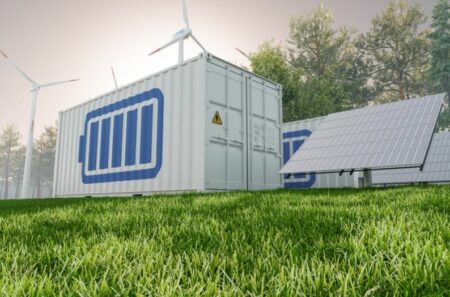
Battery storage is the fastest-growing flexibility resource. Utility‑scale battery capacity more than doubled in two years to reach well over 100 gigawatts, and is increasingly deployed not only for frequency services but also for intraday energy shifting and capacity provision. Markets such as California and South Australia now rely on batteries for a significant share of evening peak coverage. However, as more batteries enter frequency markets, ancillary service prices are falling, compressing returns and shifting revenue reliance toward more volatile arbitrage and capacity payments. At the same time, battery projects face the same interconnection delays and tariff anomalies as renewables, including double charging of network fees, metering complexity for co‑located projects, and restrictions on service stacking.
Regulators are experimenting with long‑term contracts designed to de‑risk storage investments, from contracts‑for‑difference on storage revenues to regulated capacity mechanism payments and hybrid schemes that blend capital grants with revenue stabilisation. These instruments can lower the cost of capital for storage, but they also socialise risk and require careful calibration to avoid undermining market signals for flexibility.
Prices, emissions, and competitiveness
On the climate dimension, the picture is one of relative success. Global power‑sector emissions have stopped rising and are projected to remain broadly flat to 2030, even as electricity demand grows at more than three percent per year. Emissions intensity has fallen notably and is set to decline faster as low‑emissions generation expands.
On prices and competitiveness, the picture is more mixed. Wholesale electricity prices in the European Union remain significantly higher than in North America and parts of Asia, driven by gas prices, carbon costs, and the pace of fleet transitions. Energy‑intensive industries in Europe face electricity prices around twice those of their US counterparts and materially above those in China and India, prompting extensive state‑aid frameworks and industrial power‑price support schemes. Household tariffs in many countries have risen faster than both incomes and general inflation since 2019, with taxes and network charges forming a large portion of the final bill, and in many cases, electricity is taxed more heavily than natural gas, contrary to decarbonisation objectives.
These trends suggest that the transition’s economics are as much about policy design as about technology. Supporting low‑emissions investment while maintaining industrial competitiveness and household affordability requires rebalancing tax structures, refining retail market design, and targeting support at structural bottlenecks – grids, flexibility, and vulnerable consumers – rather than applying broad price suppression.
Reliability under compound stress
A final thread running through recent experience is the rising systemic cost of unreliability. Major outages linked to voltage instability, protection misoperations, equipment failures, and extreme weather events have affected systems from Chile and the Iberian Peninsula to Mexico, Southeast Asia, and the Middle East. In each case, growing electrification and interdependence amplified the social and economic impacts of disruptions.
For Ukraine, operating under wartime conditions with reduced domestic capacity and sustained physical threats, synchronisation with neighbouring systems and the development of decentralised renewables and storage are no longer long‑term options but immediate necessities. For other systems, these events highlight that the combination of ageing infrastructure, climate volatility, and cyber‑physical risks turns electricity security into a macro‑critical issue.
Across all of these dimensions, the central message is that the easy gains have been taken. Demand is growing faster than in the past, low‑emissions supply is scaling at unprecedented rates, and emissions intensity is falling. Yet grids, markets, and institutions are not evolving at a comparable pace. The Age of Electricity will be defined less by how many solar panels and turbines are installed and more by whether power systems can be made flexible, affordable, and resilient quickly enough to keep up with the demands now being placed on them.