






If the global energy transition were as settled as policymakers claim, oil prices would not still be acting as a proxy for geopolitical stress. Yet every major rupture of the last two decades has traced back to energy control, not climate targets. The illusion of orderly transition persists only because financial systems have been absorbing physical constraints through debt, currency expansion, and strategic distraction.
WATCH THE FULL INTERVIEW HERE

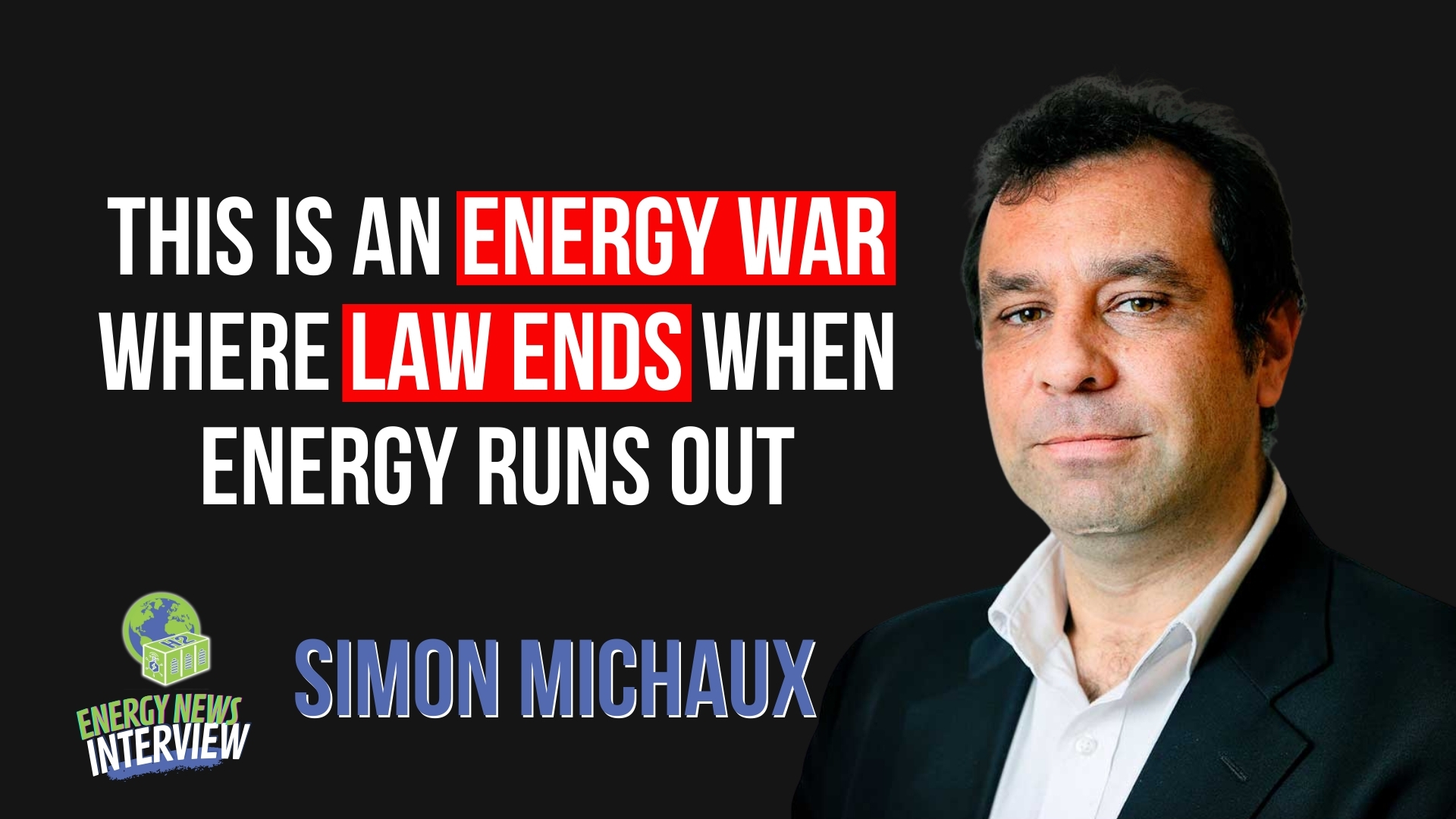
In recent interviews and presentations, Simon Michaux frames the current moment less as a transition and more as a structural reckoning. His argument is not ideological. It is grounded in how industrial systems actually function when energy, materials, finance, and geopolitics are treated as one coupled system rather than separate policy domains.
At the core of that system sits oil. Not as a fuel choice, but as the master input that underwrites transport, mining, food production, and global trade. Despite record renewable installations, fossil fuels have not been displaced in absolute terms. They have continued to grow alongside renewables. The claim that electrification alone preserves existing industrial capacity collapses once transport, heat, and materials are fully accounted for.
The geopolitical layer exposes the stress fractures even more clearly. The BRICS bloc and the Anglo-Western system are not merely competing political alliances. They represent rival energy and monetary architectures. Venezuela became strategically dangerous not because of its governance, but because of its oil. Had it been fully integrated into a BRICS-aligned commodity settlement system, the balance of reserves would have tilted decisively. Control over oil reserves still determines which financial system survives.
That explains the urgency behind seemingly erratic interventions. When financial systems approach debt saturation, law becomes secondary to survival. The Venezuelan episode functioned as a last attempt to prevent a reserve realignment that would have accelerated de-dollarization. The signal to non-aligned states was unambiguous. Rules are conditional. Trust is optional. Choose sides accordingly.
Ukraine fits the same pattern. The conflict is routinely framed as territorial or moral, yet its economic consequences have been disproportionately borne by Europe. Industrial energy costs surged. Manufacturing competitiveness eroded. Supply chains destabilized. These outcomes were not accidental. They reflect how deeply Europe remains embedded in an energy architecture it does not control, while policy decisions were outsourced to a financial logic rooted elsewhere.
The risk calculus around Taiwan reveals the limits of conventional military thinking. Semiconductor capacity has become a strategic choke point precisely because energy and manufacturing are inseparable. A kinetic conflict over Taiwan risks destroying the very asset being contested. From a systems perspective, denial may be as effective as control. If no one gets the chips, dependency itself becomes the weapon.
Meanwhile, attention is repeatedly redirected. Taiwan. Ukraine. Venezuela. Each flashpoint dominates headlines while structural shifts proceed underneath. Control over rare earths, uranium, heavy oil, and industrial metals quietly determines the outcome. Greenland emerges in this context not as a climate concern, but as a convergence point for military basing, mineral access, and Arctic logistics.
What distinguishes the current phase from previous geopolitical cycles is the nature of warfare itself. Fifth-generation conflict does not require occupation. Economic pressure, information control, and financial exclusion now precede and often replace kinetic force. Carrier groups are effective only if fuel is affordable, currencies are accepted, and logistics remain solvent. Those assumptions are no longer guaranteed.
Energy transitions framed as moral imperatives ignore this reality. The constraint is not ambition. It is physics, material throughput, and energy density. Wind and solar struggle to provide the continuity required by heavy industry. Power storage at the scale required introduces mineral demands that outstrip known reserves within a single generation of technology deployment. Recycling cannot solve what has not yet been mined.
This is why the masterclass framing matters. Not as education, but as a diagnosis. The industrial system is already transforming under pressure. Attempts to manage that transformation through narrative rather than arithmetic are failing. Monetary tools delay consequences but amplify instability. Geopolitical theater distracts from material limits.
The most destabilizing variable may not be China or the United States, but India. Its current per capita resource use remains low. Any convergence toward industrial norms would dwarf all other demand growth. That prospect alone renders many transition scenarios mathematically incoherent.
The architecture for a post-petrodollar world is already partially built. Alternative payment systems, commodity-backed settlement mechanisms, and regional trade blocs are operational. Adoption lags not because the infrastructure is missing, but because alignment requires political risk acceptance. The longer the transition stalls, the more abrupt the correction becomes.
The uncomfortable implication is that the energy transition, as currently advertised, is not failing because it is too slow. It is failing because it was never designed to survive contact with the full system.