



The EU’s Connecting Europe Facility for Energy carries a total grant budget of €5.88 billion for the period 2021 to 2027, making it the primary public financing instrument for cross-border energy infrastructure across the bloc.
Against that overall envelope, the €600 million indicative budget attached to the newly launched call for proposals represents a significant but not outsized allocation, reflecting both the selectivity of the Projects of Common Interest and Projects of Mutual Interest framework and the expectation that multiple tranches of funding will follow as the second PCI and PMI list matures. Organised by the Climate, Infrastructure and Environment Executive Agency and open until 30 September 2026, this is the first call specifically linked to projects on the second list, covering both preparatory studies and construction works across eligible cross-border energy infrastructure categories.
The timing of the launch is not incidental. The Middle East conflict and the associated closure of the Strait of Hormuz have returned energy supply security to the top of the European political agenda with an urgency not seen since Russia’s invasion of Ukraine in 2022. Energy Commissioner Dan Jørgensen’s framing of the call explicitly references the current energy crisis, positioning cross-border grid investment as essential for reducing energy costs, improving competitiveness, and integrating domestically generated renewables. That framing reflects a recognition that the energy security argument for interconnection infrastructure, which had sometimes competed with the decarbonisation argument in policy discourse, has now merged with it: building the grid capacity to move electricity across borders is simultaneously a supply security measure, a cost reduction tool, and a renewable integration prerequisite.
The PCI and PMI Framework and Its Regulatory Advantages
Projects of Common Interest are cross-border infrastructure developments that link or significantly affect the energy systems of two or more EU member states. Projects of Mutual Interest extend that framework to infrastructure connecting one or more EU member states with neighbouring non-EU countries. Both categories receive a structured set of advantages under the Trans-European Network for Energy regulation that goes beyond access to CEF Energy grant funding. Automatic eligibility for accelerated permitting processes reduces the administrative timeline between project approval and construction commencement, a critical advantage given that permitting delays have been identified as one of the primary bottlenecks slowing European grid expansion relative to renewable capacity addition. Enhanced regulatory treatment provides project promoters with greater certainty over cost recovery mechanisms, improving the bankability of projects that might otherwise struggle to attract private co-financing at acceptable terms.
The practical consequence of PCI or PMI status is that it compresses the development timeline and reduces the financing cost of projects that would otherwise spend years navigating national permitting regimes, regulatory uncertainty, and multi-jurisdiction coordination challenges. For interconnectors and other cross-border infrastructure, where project benefits are distributed across multiple national grids, but costs are typically borne by developers and national network operators within specific jurisdictions, the regulatory framework provided by TEN-E designation addresses a fundamental market failure in the provision of cross-border grid capacity.
The December Grids Package and Its Relationship to the Current Call
Jørgensen’s reference to the Grids Package proposed in December 2025 as strengthening the regulatory framework for cross-border projects places the current funding call within a broader legislative context. The Grids Package represents the Commission’s most recent attempt to address the regulatory, permitting, and financing barriers that have historically constrained European grid investment relative to the scale required by the clean energy transition. Its provisions include measures to streamline permitting further beyond the existing TEN-E framework, enhance mechanisms for cross-border cost sharing in interconnector projects, and create stronger incentives for transmission system operators to invest in cross-border capacity rather than optimising for domestic grid performance alone.
The relationship between the Grids Package and the CEF Energy call illustrates the Commission’s integrated approach to grid investment: regulatory reform reduces the barriers and improves the risk profile for private investment, while grant funding from CEF Energy addresses the residual financing gap for projects where the regulatory improvements are insufficient on their own to make construction commercially viable at the speed the energy system requires. The €600 million available in this call will not fund the full cost of major interconnection infrastructure, which can run to several billion euros for a single high-voltage direct current link, but it provides the catalytic public co-financing that unlocks private and national public investment in projects that might otherwise stall.
Studies and Construction: The Dual-Track Funding Structure
The call covers both preparatory studies and construction works, a dual-track structure that reflects the different stages at which projects on the second PCI and PMI list currently sit. For projects in earlier development phases, grants for feasibility studies, environmental impact assessments, and detailed engineering work allow promoters to advance project preparation without exposing private capital to the full pre-construction development risk. This is analytically significant because development-phase risk is one of the primary barriers to private investment in cross-border infrastructure: the costs of studies and permitting are sunk costs that cannot be recovered if a project is ultimately not approved or does not proceed to construction.
For more advanced projects ready to proceed to construction, direct capital grants reduce the overall financing requirement and improve project returns to a level that attracts long-term infrastructure investors. The combination of study funding and construction funding within a single call allows CINEA to support the full project pipeline simultaneously, ensuring that the projects currently in preparation are advancing toward a future construction funding application while those ready for construction receive support without waiting for a separate call cycle.
The Market Integration Argument and Its Current Urgency
The case for cross-border energy infrastructure investment rests on three distinct but reinforcing arguments that have different weights depending on the policy moment. The renewable integration argument holds that expanding interconnection capacity allows surplus generation in one region to be exported to regions with demand, reducing curtailment, improving the utilisation of renewable assets, and lowering the average cost of electricity across connected markets. The energy security argument holds that diversifying supply routes and access points reduces dependence on any single supplier or transit corridor, distributing supply risk across a broader network. The market integration argument holds that eliminating price differentials between connected markets improves economic efficiency, reduces the cost of energy for industrial and residential consumers, and strengthens the competitiveness of European industry relative to regions with lower energy costs.
All three arguments have gained force simultaneously in the current policy environment. The solar oversupply conditions now regularly observed in Central and Southern European markets during spring and summer midday periods, which are producing structural negative pricing in Germany, Belgium, and the Netherlands, represent a direct economic cost of insufficient interconnection capacity: surplus electricity that cannot be exported is curtailed or sold at negative prices rather than delivered to markets where it has positive value. The IEA has estimated that approximately €7.2 billion of clean energy was curtailed across Europe in 2024 due to grid constraints and transmission bottlenecks, a figure that provides a lower bound for the annual economic cost of the current interconnection gap.
The energy security dimension has been sharpened by the Hormuz crisis, which has demonstrated that the price signal from a physical supply disruption in one part of the world transmits across all connected markets regardless of whether those markets import from the affected region directly. A more tightly integrated European electricity market with greater cross-border capacity reduces the extent to which national price spikes driven by gas supply disruption propagate into electricity costs, because greater interconnection allows cheaper clean generation from elsewhere in the European grid to substitute for gas-fired generation at the margin. That substitution effect was demonstrated during the 2022 to 2023 gas price crisis, when countries with stronger interconnection to renewable-rich neighbours were better insulated from the worst electricity price outcomes than those more reliant on domestic gas-fired generation.
PMIs and the External Dimension of EU Energy Infrastructure
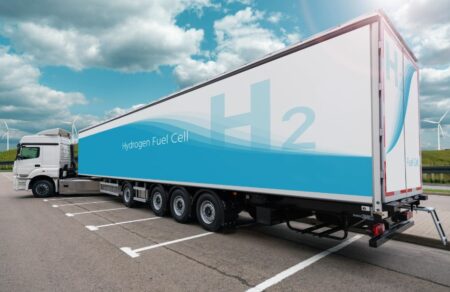
The inclusion of Projects of Mutual Interest alongside Projects of Common Interest in the current call reflects the Commission’s recognition that the European energy system’s future supply security and decarbonisation trajectory depend in part on infrastructure connecting EU member states to neighbouring non-EU countries. The southern hydrogen corridor that Austria and other Central European countries are pursuing through North African partnerships, the electricity interconnections being developed between the EU and Ukraine, and the potential for importing solar-generated electricity from North Africa via submarine cable are all examples of the infrastructure category that PMI status and CEF Energy funding are designed to support.
PMI eligibility extends the geographic reach of EU infrastructure financing beyond the bloc’s borders in ways that serve both supply diversification and energy diplomacy objectives. For partner countries, access to the CEF Energy co-financing framework and the associated TEN-E regulatory advantages creates a tangible financial benefit from alignment with EU energy market standards and integration processes. For the EU, it provides an instrument for advancing the infrastructure development of neighbouring economies in directions that support European energy security without requiring full EU membership or the full adoption of the EU regulatory acquis. The €600 million call is therefore not solely a domestic grid investment mechanism; it is also a tool of the EU’s external energy strategy at a moment when that strategy is being reformulated under the pressure of multiple simultaneous supply disruptions.