





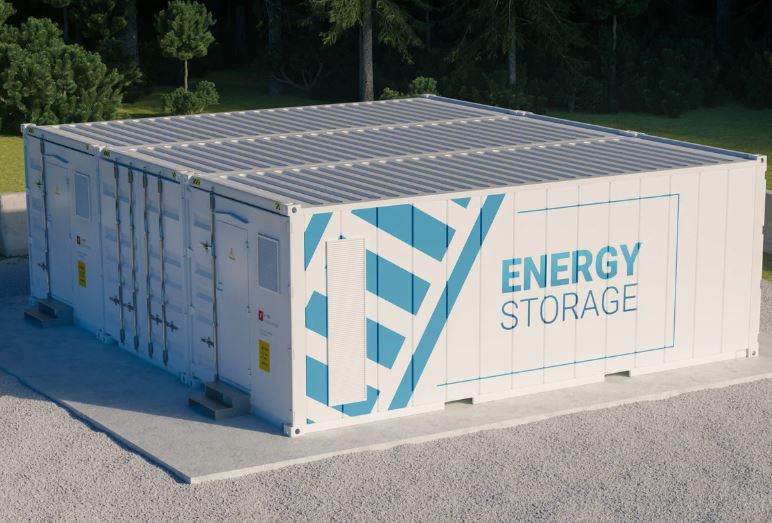
In New Zealand, Genesis Energy has reached final investment decision on the second stage of its battery energy storage system programme at Huntly Power Station, advancing a 100 MW / 200 MWh expansion that will bring total installed storage capacity at the site to 200 MW / 400 MWh.
The scale of the combined system is designed to provide short-duration backup equivalent to powering approximately 120,000 homes for up to two hours, highlighting the increasing role of grid-scale batteries in meeting peak demand events rather than continuous baseload supply.
The project forms part of Genesis’ broader Gen35 strategy and its $2 billion growth plan aimed at reshaping its generation portfolio toward lower-emission and more flexible assets. The expansion at Huntly is particularly significant because it integrates directly into an existing thermal generation site, allowing the company to leverage shared grid infrastructure, land, and operational systems from the first-stage battery installation. This reduces incremental capital requirements and positions the project as one of the lowest-cost committed grid-scale battery deployments in New Zealand to date.
From a system perspective, co-location with existing infrastructure is becoming a defining feature of storage economics. By avoiding the need for new transmission connections, developers can reduce both permitting timelines and connection costs, which remain key constraints in expanding battery capacity globally. The Huntly configuration also enables shared plant utilization across both stages, improving asset efficiency and operational coordination.
Technology supply for the second phase will again be provided by Saft, extending continuity from the first-stage deployment. Construction is scheduled to begin in the second quarter of fiscal year 2027, with commissioning targeted for the third quarter of fiscal year 2028. The multi-year timeline reflects both supply chain lead times for large-scale battery systems and the integration complexity of grid-connected storage at transmission level.
Financially, the project will be funded on Genesis’ balance sheet, which was strengthened by a $400 million equity raise completed in March 2026. This approach aligns with a broader capital allocation framework that combines direct investment, joint ventures, and third-party financing structures such as power purchase agreements. The strategy is designed to maintain a BBB plus credit rating while enabling continued expansion of Gen35 investments.
The deployment also reflects a structural shift in how utilities are managing generation portfolios. Rather than relying solely on gas-fired peaking plants to manage variability, systems are increasingly integrating storage assets that can respond within milliseconds to frequency and demand fluctuations. At Huntly, this is particularly relevant as battery capacity is positioned to displace reliance on baseload gas generation while supporting growing electrification demand.
System flexibility is further enhanced by the integration of solar assets within Genesis’ portfolio, where storage is expected to play a balancing role during periods of high renewable output and low demand. This interaction between variable generation and dispatchable storage is becoming central to grid planning, particularly in smaller interconnected systems like New Zealand where reserve margins are tightly managed.