





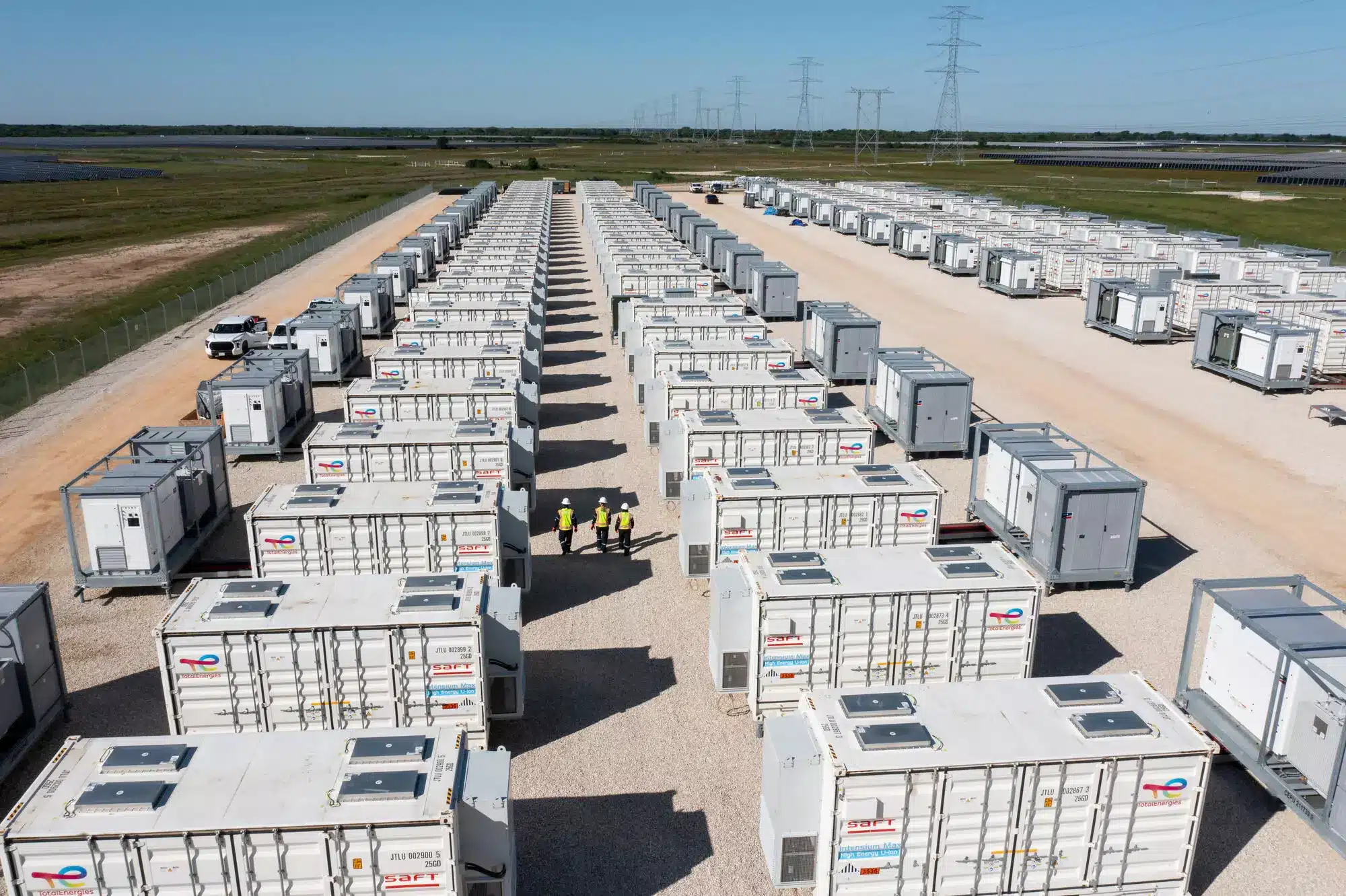
Global battery energy storage capacity is expanding at a compound annual growth rate of 42% through 2030, according to GlobalData’s 2026 Strategic Intelligence report on batteries in power. China and the United States together held 74.6% of installed capacity at the end of 2025. Still, the geography of deployment is broadening: Australia has emerged as the third-largest market worldwide, with total installed capacity in the National Electricity Market exceeding 9 GW after more than doubling in the past year, alongside more than 1 GW added in Western Australia’s Wholesale Electricity Market over the same period. AEMO commissioned 2.7 GW of new battery capacity in the main grid in the three months to June 2026 alone and approved 3.6 GW of new connection applications during the quarter, with a further 39.6 GW progressing through the end-to-end connection process.
The growth rate is significant, but the structural shift embedded within it is arguably more consequential: the industry is standardising on four-hour battery systems rather than two-hour designs, and that transition reflects a fundamental change in what grid batteries are expected to do. Two-hour systems were built around frequency response, voltage support, and short-duration peak shaving, services that earned ancillary market revenues and required relatively small energy reservoirs. Four-hour systems are built around energy shifting, moving midday solar generation into the evening demand peak, a function that requires substantially larger energy capacity relative to power output and that positions batteries as load-serving infrastructure rather than grid-stabilisation tools.
Why Duration Is the Central Market Variable
The shift from two-hour to four-hour duration is being driven by the same solar build-out that created the economics for short-duration batteries in the first place. At low solar penetration, batteries earn their value from frequency response and rapid discharge during short demand spikes. As solar’s share of the generation mix rises, the daily net load curve steepens at either end of the solar generation window, and the hours immediately after sunset represent the period of highest residual demand that batteries must serve. A two-hour battery discharged into the evening ramp is depleted before demand has peaked in markets with high solar penetration. A four-hour system can carry the discharge through the full demand peak and into the point where demand begins to relax.
In Australia’s National Electricity Market, rooftop solar now regularly suppresses midday prices toward zero or below. In contrast, evening prices spike as solar generation ceases and industrial and residential demand runs concurrently. The battery economics in this environment strongly favour longer duration: a four-hour system that captures curtailed or near-zero-cost solar at midday and discharges into peak evening prices generates a spread that a two-hour system cannot fully exploit because it exhausts its charge before the highest-price hours arrive. AEMO’s pipeline data reflects this directly: 31% of battery projects in the Australian pipeline are now classified as medium-storage duration, up from 16% a year earlier.
Regulatory frameworks are formalising the four-hour standard in parallel with market forces. Regulators in multiple jurisdictions are adopting four-hour duration as a minimum threshold for capacity credit and resource adequacy qualification, meaning that projects below this duration receive less or no credit toward meeting reliability requirements. This regulatory convergence creates a procurement floor that is reshaping project design economics across the industry regardless of whether individual project developers have independently concluded that four-hour systems are optimal for their market.
Co-Location as the Default Configuration
The co-located hybrid model, pairing battery storage with solar PV at the same site and sharing a single grid interconnection, has moved from a niche configuration to the default structure for new storage development in most major markets. AEMO approved 1.8 GW of hybrid solar-plus-battery connection applications in the June 2026 quarter alone. The economics are straightforward: sharing grid connection infrastructure reduces capital cost per unit of capacity, the battery captures curtailed solar generation that would otherwise be wasted, and the combination enables round-the-clock revenue stacking that improves project bankability.
The revenue stacking dimension has become the primary justification for hybrid development economics. A standalone solar plant earns revenue only during generation hours and is fully exposed to low midday prices as solar penetration rises. A co-located battery system modifies that revenue profile by shifting a fraction of generation to higher-price periods, earning ancillary service revenues during low-generation hours, and providing capacity credit that earns capacity market payments or bilateral contract premiums. The combination of these revenue streams across a single interconnection point, with shared civil works and operation and maintenance costs, produces a project economics profile that is more attractive to both equity investors and debt providers than either technology alone.
Data Centres as a Structural Demand Driver
The GlobalData report identifies data centres as a growing demand category for battery storage alongside grid-scale deployment, a connection that operates through two channels. The first is direct: data centres are increasingly co-locating battery storage on-site or nearby to manage grid connection constraints, provide backup power, and reduce peak demand charges. The second is indirect: the AI-driven surge in data centre electricity consumption is contributing to the evening peak demand growth that makes energy-shifting batteries more valuable to grid operators.
Data centre electricity consumption in the United States could reach 17% of total national consumption by the end of the decade according to recent projections, compared to approximately 4% currently. In Australia, hyperscaler investment is driving connection requests that are contributing to the 39.6 GW of capacity working through AEMO’s connection process. The intersection of renewable energy generation growth and data centre load growth is therefore not merely a coincidence of timing: both trends independently increase the value of battery storage, the first by creating surplus generation that needs to be shifted, the second by deepening the demand peak that shifted generation serves.
The 42% annual growth rate through 2030 implies a roughly six-fold increase in global BESS capacity over five years, from an installed base that China and the United States currently dominate but that Australia has already demonstrated can grow extraordinarily quickly when market incentives align with regulatory frameworks and supply chain availability. Lithium-ion costs continue their multi-decade decline, with battery pack prices falling approximately 20% in 2024 and further reductions projected as sodium-ion chemistry enters commercial-scale production alongside continued LFP manufacturing expansion. The cost floor that determines when battery energy shifting becomes competitive against gas peaking plants or demand curtailment in any given market continues to move in the direction that makes the 42% growth rate self-reinforcing rather than dependent on subsidy support in the world’s leading deployment markets.