


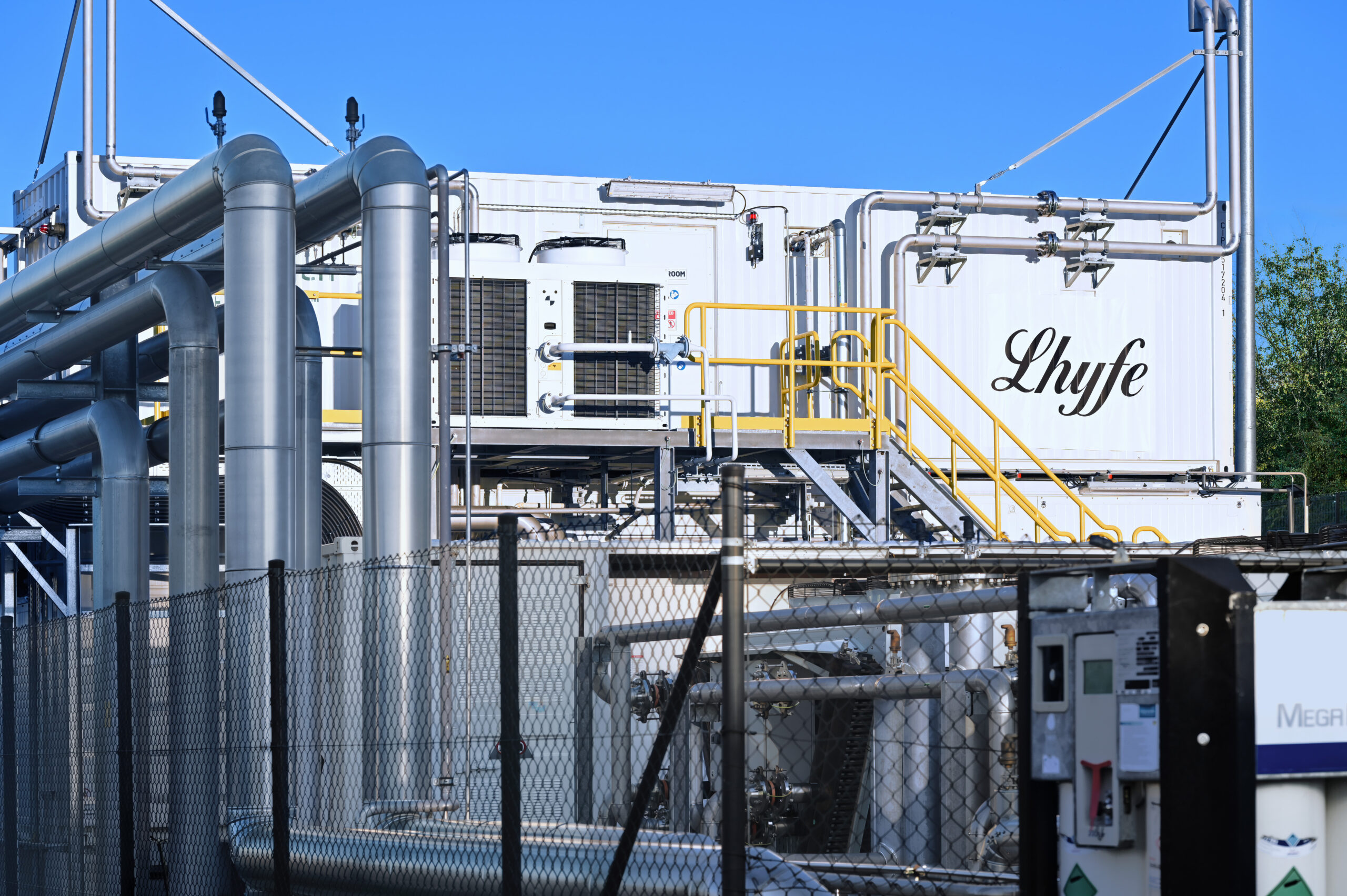


A planned 220,000 tonne per year biomethanol facility in the Netherlands is being positioned around access to renewable hydrogen, highlighting how hydrogen demand could increasingly emerge from processes that combine biogenic carbon with additional low carbon hydrogen rather than from conventional hydrogen applications alone.
Perpetual Next and Lhyfe Delfzijl have signed a memorandum of understanding to examine a potential long term supply of renewable hydrogen from Lhyfe’s planned DelfzHyl production facility to Perpetual Next’s DeltaNor biomethanol project in Delfzijl. The companies are assessing potential deliveries of up to approximately 12,000 tonnes of renewable hydrogen annually, although the volume remains subject to technical and commercial evaluation.
The proposed integration reflects a specific feature of biomethanol production. Biomass can be converted into synthesis gas containing carbon monoxide, carbon dioxide and hydrogen, but the hydrogen content can limit the amount of carbon that can ultimately be converted into methanol. Adding renewable hydrogen can increase the hydrogen to carbon ratio of the synthesis gas, potentially allowing a greater proportion of the biogenic carbon to be converted into methanol.
That makes renewable hydrogen an input to the carbon conversion process rather than simply a replacement for fossil based hydrogen.
The economics of the DeltaNor project will depend partly on whether renewable hydrogen can be secured at a cost compatible with biomethanol production. A potential 12,000 tonnes per year of hydrogen corresponds to a substantial renewable electricity requirement. A modern electrolyzer typically requires around 50 to 55 kWh of electricity per kilogram of hydrogen at the system level, although actual consumption varies by technology and operating conditions. At that range, producing 12,000 tonnes annually would require roughly 600 to 660 GWh of electricity per year before accounting for additional system requirements.
That calculation illustrates why hydrogen availability alone is insufficient. The commercial case depends on electricity sourcing, electrolyzer utilization, grid conditions, hydrogen storage, compression and the cost of integrating the hydrogen supply with the biomethanol plant.
Lhyfe’s planned DelfzHyl facility is designed around a 120 MW electrolyzer project in Delfzijl. The company has positioned the project as a source of renewable hydrogen for local industrial users, making the proposed Perpetual Next integration consistent with a broader strategy of locating hydrogen production close to industrial demand.
For DeltaNor, local supply could reduce some of the logistical complexity associated with transporting hydrogen over longer distances. It also potentially creates an industrial cluster in which renewable electricity, hydrogen production and carbon conversion are physically integrated.
The location is significant because Delfzijl is already part of the Netherlands’ industrial hydrogen network. The Groningen Seaports industrial area hosts chemical and energy intensive industries, while the broader Northern Netherlands region has been identified by Dutch and European authorities as an important area for hydrogen production, transport and industrial consumption.
This existing industrial base is relevant to the economics of new hydrogen infrastructure. Developing an electrolyzer alongside established industrial demand can improve the potential utilization of hydrogen production assets compared with projects that must first establish an entirely new customer base.
It also provides a regulatory rationale. The European Union’s revised Renewable Energy Directive, known as RED III, establishes binding targets for renewable hydrogen and renewable fuels of non biological origin in industry and transport. For industry, EU rules require renewable fuels of non biological origin and renewable hydrogen to account for 42% of hydrogen used for final energy and non energy purposes in industry by 2030, rising to 60% by 2035, subject to the directive’s accounting rules.
Those requirements are designed to create demand for compliant renewable hydrogen, but they do not eliminate the cost challenge. Industrial consumers must still secure hydrogen at prices that allow their products to remain competitive.
The DeltaNor model highlights an important distinction in the emerging low carbon fuels market. Biomethanol does not depend solely on renewable hydrogen. Its carbon component originates from biomass, while additional hydrogen can increase the efficiency with which that carbon is converted into methanol.
The resulting product can potentially serve applications where direct electrification remains difficult, particularly maritime fuels and chemical feedstocks.
Shipping is an important potential market because methanol can already be handled using established liquid fuel logistics and has been adopted by major shipping companies as part of their fuel transition strategies. However, the environmental performance of biomethanol depends on the origin and sustainability of the carbon feedstock as well as the energy used in production.
That creates a need to distinguish between methanol production capacity and genuinely low emission methanol supply. Adding renewable hydrogen can improve the carbon utilization of a biomass based process, but the resulting emissions profile still depends on the complete production chain.
For Perpetual Next, this distinction is commercially relevant because DeltaNor will need to demonstrate not only that it can produce methanol at scale, but also that its feedstocks and production pathway meet the sustainability requirements of the markets it intends to serve.
The proposed hydrogen supply also demonstrates the scale relationship between electrolyzer projects and industrial offtake. A 120 MW electrolyzer is substantially larger than what would be required solely to produce 12,000 tonnes of hydrogen annually. Depending on efficiency and utilization, 120 MW of electrolysis could theoretically produce considerably more hydrogen than the volume contemplated under the MoU.
That leaves room for multiple industrial customers around Delfzijl, but it also creates a development challenge. Lhyfe will need sufficient offtake commitments to support investment in the electrolyzer and associated infrastructure, while customers such as Perpetual Next need confidence that renewable hydrogen will be available at commercially viable prices.
The two projects therefore have complementary but not identical investment requirements.
The MoU itself does not establish a binding hydrogen purchase agreement. The companies explicitly intend to continue technical and commercial discussions, including evaluating the supply arrangement and the support mechanisms required for both projects.
That qualification is important in assessing the significance of the agreement. The proposed 12,000 tonnes per year represents potential future demand rather than contracted hydrogen consumption.
Both companies have acknowledged that public support schemes may be required to advance their respective projects. That reflects a broader problem facing European hydrogen projects. Renewable hydrogen production remains substantially more expensive than conventional fossil based hydrogen in many markets, particularly where electrolyzers operate at relatively low utilization or where renewable electricity costs are high.
Biomethanol production adds another layer of cost because the renewable hydrogen must be integrated into a chemical conversion process whose economics depend on biomass feedstock availability, methanol prices and the value of its lower carbon characteristics.
The potential advantage of Delfzijl is therefore not simply that it has access to renewable electricity. It is that several parts of the value chain can be developed within the same industrial cluster.
Add EnergyNews.biz as a preferred source on Google


