




The economics of clean hydrogen have long been trapped in an uncomfortable paradox. Green hydrogen, produced through electrolysis powered by renewables, costs between €4 and €12 per kilogram to produce. Grey hydrogen, derived from natural gas without carbon capture, sits at €1 to €2 per kilogram. The gap between what the planet needs and what the market will bear has defined the hydrogen sector’s central challenge for years. Against that backdrop, Mantle8, the Grenoble-based natural hydrogen exploration company, is making a specific and audacious claim: that geological hydrogen can be extracted at production costs as low as €0.80 per kilogram.
Whether that number is achievable at a commercially relevant scale is the €31 million question the company’s newly closed Series A now exists to answer.
The round was led by Sandwater and includes Breakthrough Energy Ventures, BPifrance’s Ecotechnologies 2 fund, IP Group, Wind Capital, and Calderion, bringing Mantle8’s total funding to €37 million. Geologic hydrogen sector investment has surged since 2023, with US-based Koloma alone raising an estimated $340 million by 2026, representing approximately 85% of the roughly $400 million raised by the sector to date. Mantle8’s raise, while more modest in absolute terms, is significant in a European context where sovereign energy security concerns now sit alongside decarbonization as a primary policy driver.
The cost claims require scrutiny. Peer-reviewed techno-economic analysis of natural hydrogen extraction scenarios places production costs in a range of $0.14 to $5.33 per kilogram across 32,000 modeled scenarios, with payback periods across viable cases ranging from 0.5 to 2.9 years against a 20-year operational lifespan. The lower bound of that range depends on reservoir purity, volume, well depth, and separation technique, variables that can only be confirmed through drilling. Mantle8’s €0.80 per kilogram projection lands within the plausible range, but it is a projection, not a demonstrated outcome, and the company acknowledges as much by framing it as what its economic models project rather than what operational wells have delivered.
The Hydrogen Science Coalition, drawing on academic and engineering expertise, has characterized natural hydrogen exploration as still at an embryonic stage, noting that the world’s only producing hydrogen well, located in Mali, supplies just a fraction of the daily energy output of a single wind turbine. That framing is a useful context for evaluating the ambition embedded in Mantle8’s timeline. The company plans to deploy its Series A capital over two years to complete a global exploration and drilling campaign targeting the first commercially exploitable reservoir of high-purity natural hydrogen. That is an aggressive schedule for a sector where progress has been relatively slow, with only a few companies having actually started drilling as of early 2025, despite many having announced campaigns.
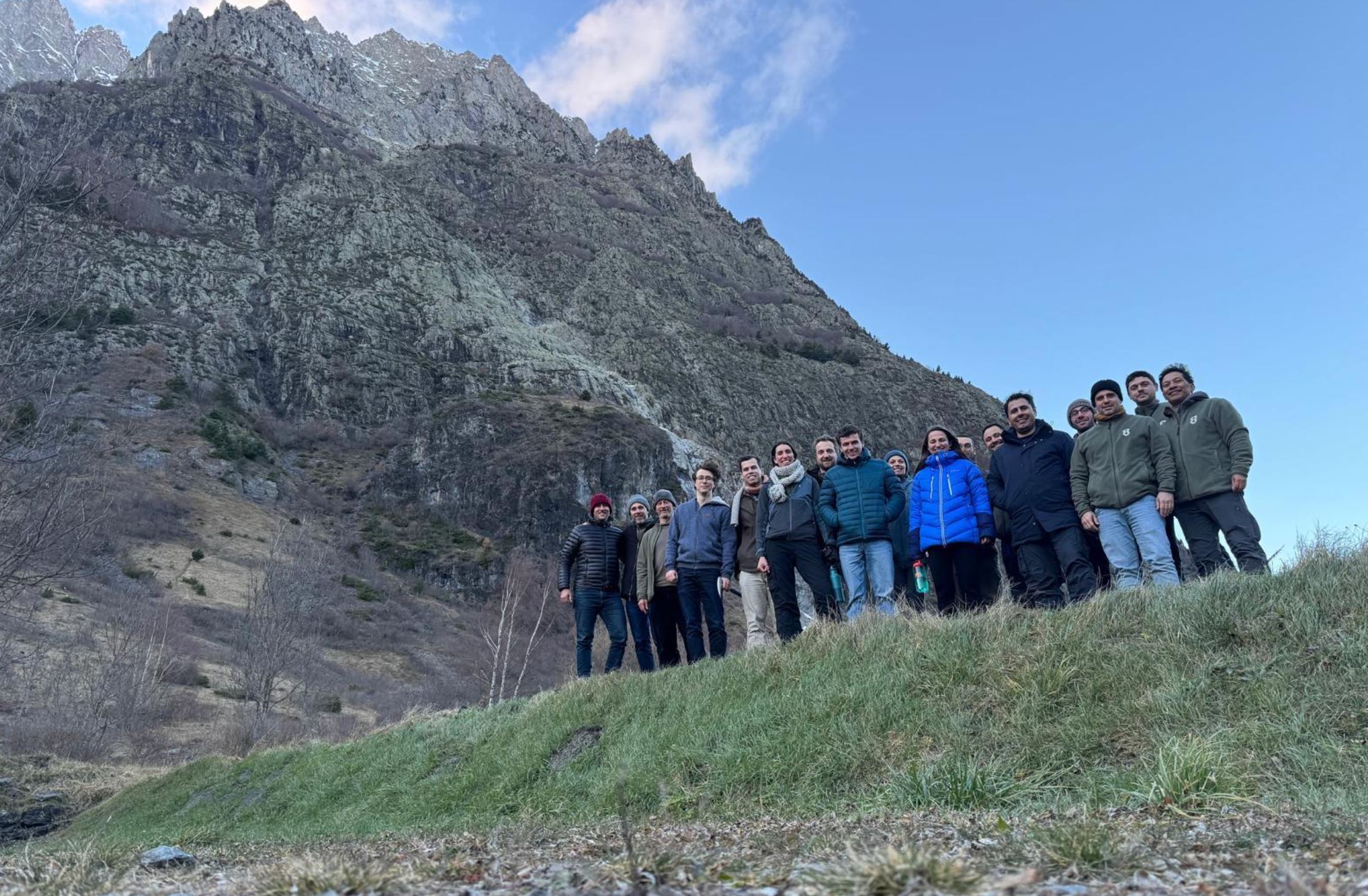
What differentiates Mantle8 technically is its proprietary exploration technology, specifically the HOREX system, which it describes as capable of 4D imaging of active underground hydrogen systems. In 2025, the company completed what it claims was the world’s first 4D imaging of an active underground natural hydrogen system at its Hydrogeco project in the French Pyrenees. The ability to visualize dynamic subsurface hydrogen behavior, rather than just static accumulation, is a meaningful technical advance if replicable across diverse geological settings. The company has also received a €2.06 million EU Just Transition Fund grant to industrialize these core exploration technologies, providing independent third-party validation that the approach is scientifically credible enough to warrant public co-investment.
The geologic hydrogen sector has transitioned from theoretical modeling and small-scale proofs-of-concept to active, venture-backed commercial drilling aimed at proving scalable resource extraction, marking a shift from assessing whether the resource exists to determining whether it can be produced economically. This transition is precisely the inflection point Mantle8’s raise is designed to navigate. The company’s model, which focuses on developing and licensing its exploration technology stack while partnering with drilling specialists for reservoir exploitation, is a capital-efficient approach to a capital-intensive problem. It reduces Mantle8’s direct exposure to the high cost of production-stage operations while allowing faster geographic diversification across its global development pipeline.
The investor composition tells its own story. Breakthrough Energy Ventures has now backed both Mantle8’s seed round and its Series A, reinforcing a pattern visible across the natural hydrogen sector. Bpifrance’s participation through the Ecotechnologies 2 fund adds a strategic dimension that goes beyond financial return, reflecting the French government’s interest in securing a sovereign low-carbon energy supply before mid-decade. That alignment of commercial and strategic capital is a more durable funding base than venture capital alone, particularly given the exploration timelines involved.
Global hydrogen demand reached approximately 97 million metric tons in 2023, with projections pointing to a two to fourfold increase by 2050 driven by hard-to-abate sectors including heavy industry, long-distance transport, and energy storage. The scale of that demand growth means that even a partial contribution from naturally occurring geological sources could represent a substantial market. The critical question is not whether natural hydrogen exists, which is geologically well-established, but whether the accumulations Mantle8’s technology identifies will prove commercially viable when drilled, and whether the purity and flow rates observed at exploration wells can be sustained at production scale.
Even optimistic analysts draw on the evolution of US shale gas as a reference point, noting that even if large finds are made, achieving industrial production at scale will likely take decades. The shale analogy cuts both ways. Shale was also dismissed as commercially marginal for years before proprietary drilling and completion technology unlocked it at scale. The risk is not whether natural hydrogen can eventually be produced commercially, but whether the capital and timeline required to prove it align with the investment horizons of the current funding cohort and the urgency of Europe’s energy security needs.
Mantle8’s €0.80 per kilogram production cost projection, if validated by drilling results over the next two years, would place natural hydrogen below grey hydrogen on a production cost basis while carrying a dramatically lower carbon footprint. That would not merely improve the economics of clean hydrogen supply; it would restructure them. The next stage of the company’s work will determine whether that potential survives contact with the subsurface.