

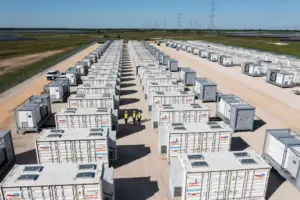





Mexico has extended the deadline for energy storage developers to register under its first strategic call for electricity storage, giving projects nearly two additional months to enter a program targeting 935 MW of storage capacity nationwide.
The Energy Secretariat, Sener, moved the deadline for storage projects and requests for interconnection studies from September 2 to October 30, 2026, while keeping the September 2 deadline for renewable generation projects unchanged. The government said the extension is intended to attract more participants, strengthen technical analysis and improve administrative efficiency.
The call, launched in May, forms part of Mexico’s effort to expand electricity infrastructure through investment partnerships between state-owned Comisión Federal de Electricidad (CFE) and private companies. Projects that meet the requirements can benefit from expedited permitting, interconnection studies and contracts, with priority given to facilities entering commercial operation by 2030.
The 935 MW target is notable not only for its size but also for its structure. The projects are distributed across Mexico’s regional electricity control areas and are designed around three hours of storage, equivalent to approximately 2.8 GWh of energy if the full capacity is deployed at that duration.
That configuration points primarily to a flexibility role. Three-hour batteries can shift renewable electricity into periods of higher demand, reduce short-term congestion and provide balancing services. They cannot, however, provide prolonged coverage during multi-day periods of low renewable generation or major fuel and transmission disruptions.
The distinction matters as Mexico plans a major expansion of renewable generation. The country’s 2025-2030 electricity plan calls for 32 GW of additional generation capacity, including 22 GW from renewable sources. The government is targeting a 38% clean-energy share by 2030 under its medium scenario.
Storage is already becoming part of individual projects. CFE’s Puerto Peñasco solar project in Sonora is planned to reach 1 GW of solar capacity alongside 246 MW of battery storage when all stages are completed. Such projects demonstrate how batteries are increasingly being treated as grid infrastructure rather than simply as an optional addition to renewable generation.
Yet Mexico’s challenge extends beyond installing batteries. New storage and generation will require sufficient transmission capacity and viable interconnection points. The IEA has identified grid constraints as an increasingly important limitation on electricity-system expansion globally, making the location and operational role of storage as important as its headline capacity.
The extension to October 30 therefore gives developers more time to address technical and commercial requirements, but it also highlights the complexity of building a functioning storage market.