




Conventional enhanced geothermal systems access rock at temperatures around 150 to 200 degrees Celsius. Quaise Energy is targeting 300 to 500 degrees Celsius, temperatures that exist at depths beyond what standard drill bits can reach economically.
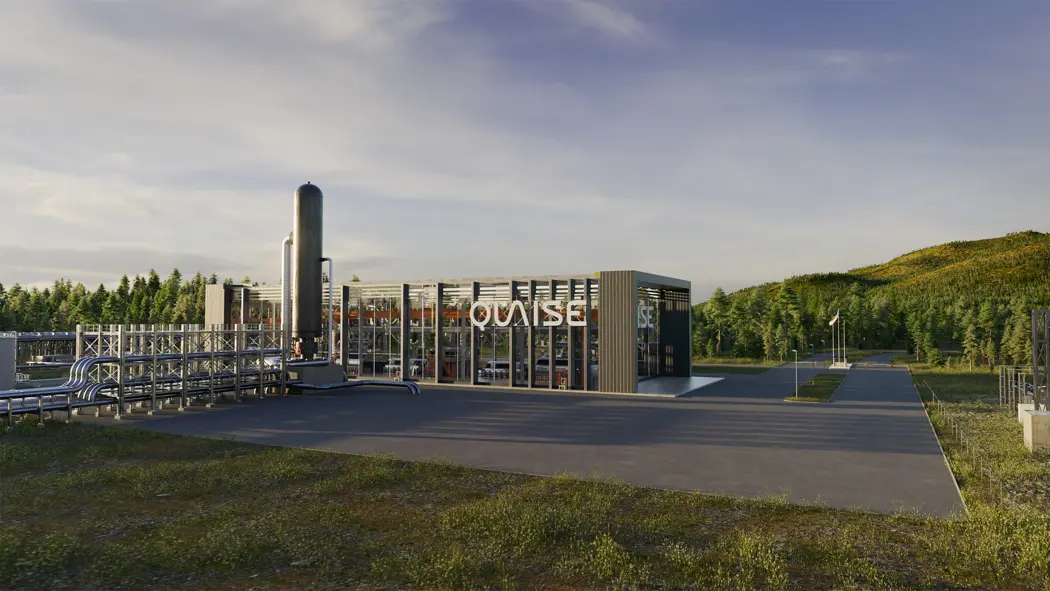
The Houston-based company has raised $134 million in a first close of its Series B, led by Prelude Ventures with strategic investment from JERA and Idemitsu, two of Japan’s largest energy companies, bringing its total capital raised to $230 million. The money funds Project Obsidian, a 250-megawatt superhot geothermal power plant being built on federal leases in Oregon’s Deschutes National Forest near the Newberry Volcano, where the site carries gigawatt-scale assessed potential. The company has already signed an offtake agreement with an undisclosed hyperscaler customer for the project’s first 50 megawatts.
The investment arrives during what has become a genuine reactivation of geothermal as a serious power sector option, driven in large part by demand from data centre operators who cannot run their facilities on intermittent renewables. Fervo Energy’s IPO in May 2026, which raised nearly $1.9 billion at a price above the marketed range, established a public market valuation for next-generation geothermal that is attracting both investor interest and competitive pressure across the sector. Quaise’s CEO, Carlos Araque, has acknowledged the cost problem that Fervo’s market debut implicitly confirmed: geothermal power remains expensive relative to wind and solar, and the primary constraint is drilling cost.
What Millimeter-Wave Drilling Changes
Conventional geothermal drilling uses rotating drill bits that require periodic replacement as they wear against hard basement rock. At commercial depths, bit replacement constitutes a significant fraction of total drilling cost, both in equipment and in the time required to pull thousands of metres of drill string from a borehole, swap the bit, and re-run it to depth. Quaise’s approach uses a gyrotron to generate a directed beam of millimeter-wave energy that ablates rock, vaporising it without mechanical contact. The technology was developed over more than a decade at MIT and eliminates the downhole mechanical wear that makes deep drilling in hard granite and basalt prohibitively expensive.
The practical consequence is the ability to reach temperatures that are commercially out of reach for conventional geothermal. At the rock temperatures Quaise is targeting, geothermal wells can produce superheated fluid with energy content substantially greater per well than what shallower systems access, reducing the number of wells required for a given power output and improving the economics of plant development. Quaise says its system can reach target temperatures in most locations worldwide, not only in volcanically active zones, which would expand the addressable geography for geothermal development far beyond the western US, Iceland, and similar resources.
The drilling results to date establish proof of concept, but not yet commercial scale. Quaise has drilled to 100 metres using its millimeter-wave system at its Marble Falls, Texas, site, a record for the technology but well short of the 5,000-metre depth required for commercial superhot temperatures. Its current system is approaching 1,000 metres at the Texas site, with the company targeting that milestone by the third quarter of 2026 and 5,000 metres by the end of 2027. The gap between demonstrated depth and target depth is the central risk that the Series B is designed to help close, both technically and on the project financing side.
Project Obsidian: The Milestones That Matter
Project Obsidian’s first revenues are expected from the hyperscaler offtake covering the initial 50 megawatts. The company plans to complete a first flow test at the Oregon site by the end of 2026, a prerequisite for project-level debt financing. Without a successful flow test demonstrating producible fluid at commercial temperatures and flow rates, lenders will not commit to a geothermal project of this scale. That test therefore gates the entire financing sequence that follows: project equity and debt are being raised concurrently with the Series B, as noted in Quaise’s announcement, and their close depends on the technical outcome at Oregon.
The 250-megawatt total plant scale and the first grid delivery target of 2030 are ambitious relative to where the technology currently sits in its development curve. The step from a successful 2026 flow test to commercial electricity delivery in 2030 requires drilling enough wells to sustain 250 megawatts of production, constructing surface power infrastructure, completing regulatory approvals, and executing reservoir management in a rock formation that has not previously been produced at these temperatures. Each of those steps involves execution risk that is standard in power plant development but compounded by the novelty of the drilling technology in Quaise’s case.
Japanese Industrial Capital and the Strategic Interest
The participation of JERA and Idemitsu in the Series B is worth examining beyond the capital contribution. JERA operates Japan’s largest fleet of thermal power stations and has committed to a phased decarbonisation of its portfolio. Idemitsu is one of Japan’s largest integrated oil and gas companies, also pursuing energy transition repositioning. Both have a strategic interest in baseload clean energy technologies that could serve either export or domestic power markets. Japan’s geological resources for conventional geothermal are among the best in the world, but development there has been constrained by national park regulations limiting drilling in volcanic areas. A technology that can reach superhot rock outside conventional geothermal zones would materially expand Japan’s domestic geothermal opportunity, which may explain why the two Japanese companies are investing at Series B rather than waiting for proof of commercial operation.
Quaise’s total capital of $230 million remains modest relative to the investment required to bring a 250-megawatt geothermal plant to commercial operation. Fervo’s $1.9 billion IPO scale, by comparison, reflects the capital intensity of even more conventional enhanced geothermal development. Quaise plans to follow Fervo’s public markets trajectory after a Series C, expected once the 2027 milestones on drilling depth and project flow testing are achieved. Whether the public market appetite for geothermal that Fervo’s listing demonstrated in May 2026 persists through 2028 or beyond is a market timing question that sits outside Quaise’s control, but the structural demand signal from data centre operators seeking firm, carbon-free power is unlikely to diminish on that timescale, which gives the IPO thesis a more durable foundation than pure investor sentiment.