





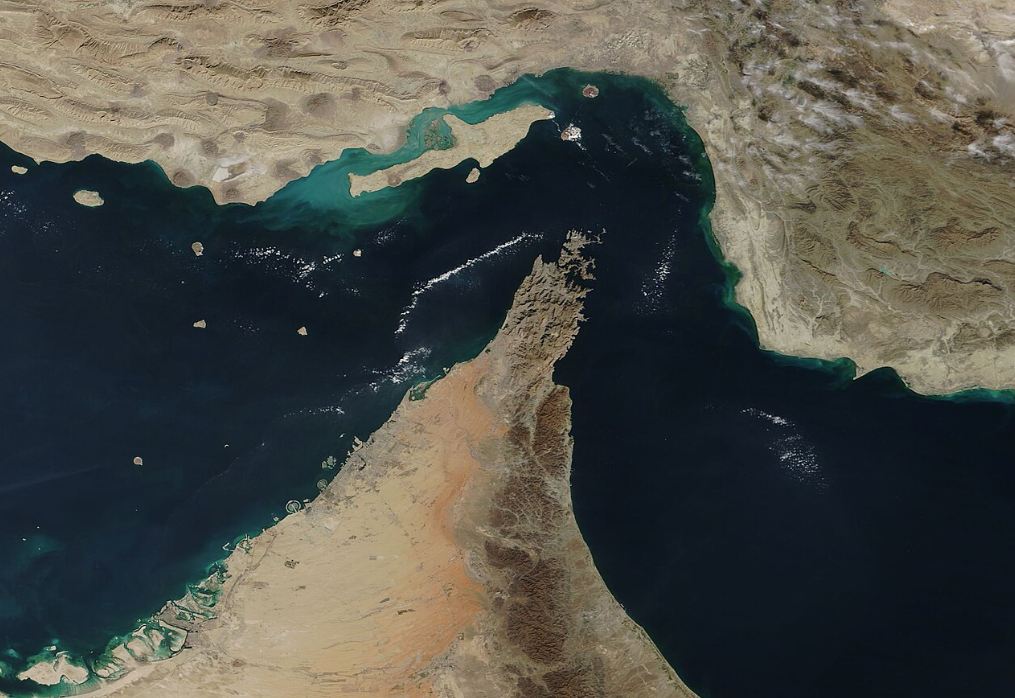
Global LNG markets are operating under an extreme stress test as tanker traffic through the Strait of Hormuz collapses from an average of 94 vessels per day to just over five in early March 2026, with LNG and oil tanker flows falling from more than 53 per day to roughly two.
This abrupt contraction in a critical maritime corridor is now translating into measurable supply losses, price volatility, and demand destruction across key consuming regions.
Modeling by the Oxford Institute for Energy Studies outlines three disruption scenarios, each illustrating how the duration of the Strait closure reshapes global gas balances. Even in the most optimistic case, where flows resume by early summer, the system absorbs a loss of approximately 38 bcm of LNG export capacity in 2026 relative to pre-crisis expectations. While this still allows for a modest year-on-year increase in total capacity, it masks deeper structural stress, particularly in Europe, where flexible demand acts as the primary balancing mechanism.
The divergence becomes more pronounced under extended disruption scenarios. A reopening delayed until the fourth quarter results in a 74 bcm capacity loss, pushing total LNG availability below 2025 levels. A full-year shutdown scenario deepens the deficit to 87 bcm, with lingering effects into 2027 due to infrastructure damage and delayed expansion timelines. These figures underscore a central vulnerability in global gas markets: supply concentration in geopolitically exposed regions with limited short-term substitution capacity.
Import dynamics reveal how these supply shocks propagate. Global LNG imports decline by 27 bcm in the short disruption scenario, expanding to 62 bcm and 74 bcm under the longer scenarios. The discrepancy between lost export capacity and reduced imports reflects the activation of spare liquefaction capacity, estimated at 10 to 12 bcm, primarily in Australia. However, this buffer is insufficient to offset sustained outages, forcing demand-side adjustments.
Regional distribution of these adjustments highlights asymmetries in market flexibility. Europe absorbs the initial shock due to its liquidity and pricing responsiveness, with reductions concentrated in power generation and industrial consumption. In prolonged disruption scenarios, demand destruction extends into South Asia and China, where price sensitivity is higher and alternative supply options are more constrained. India, Pakistan, and Bangladesh face particularly acute impacts as LNG affordability deteriorates, reinforcing structural exposure in emerging markets.
Price formation reflects these tightening fundamentals. Baseline projections place the average Dutch TTF price at $11.50 per MMBtu for 2026, but disruption scenarios shift this trajectory sharply upward. A short-lived closure lifts average prices to around $13.50 per MMBtu, while a fourth-quarter reopening drives averages to $21 per MMBtu. In the most severe case, sustained disruption pushes average prices to $34 per MMBtu, with spot pricing exceeding $40 per MMBtu during peak periods. These levels approach or exceed the price spikes observed during the 2022 European energy crisis, suggesting a reactivation of demand destruction mechanisms across multiple regions.
Storage dynamics further amplify system risk. European inventories, already below recent averages at the end of March, face constrained refill rates during the summer injection season. Under tighter supply conditions, storage levels entering winter could fall 11 to 16 bcm below the previous year, narrowing the margin for seasonal balancing and increasing exposure to cold-weather demand spikes. This creates a feedback loop where reduced storage capacity intensifies price volatility, which in turn accelerates demand curtailment.
The interaction between LNG flows and overall gas demand illustrates a partial decoupling driven by substitution effects. While LNG imports fall sharply, total demand declines are smaller, as higher pipeline imports and domestic production partially compensate. Europe offsets some losses through increased pipeline flows, including routes via Turkey, while China leans on Central Asian and Russian supply. These adjustments, however, are constrained by infrastructure limits and geopolitical dependencies, limiting their scalability in prolonged disruption scenarios.
Longer-term impacts extend beyond immediate supply gaps. Even after the restoration of flows, global LNG capacity remains below pre-crisis projections due to delayed Qatari expansions and damaged liquefaction trains. In the one-year shutdown scenario, capacity in 2027 remains approximately 54 bcm below the baseline trajectory, indicating that short-term disruptions can produce multi-year structural deficits.