






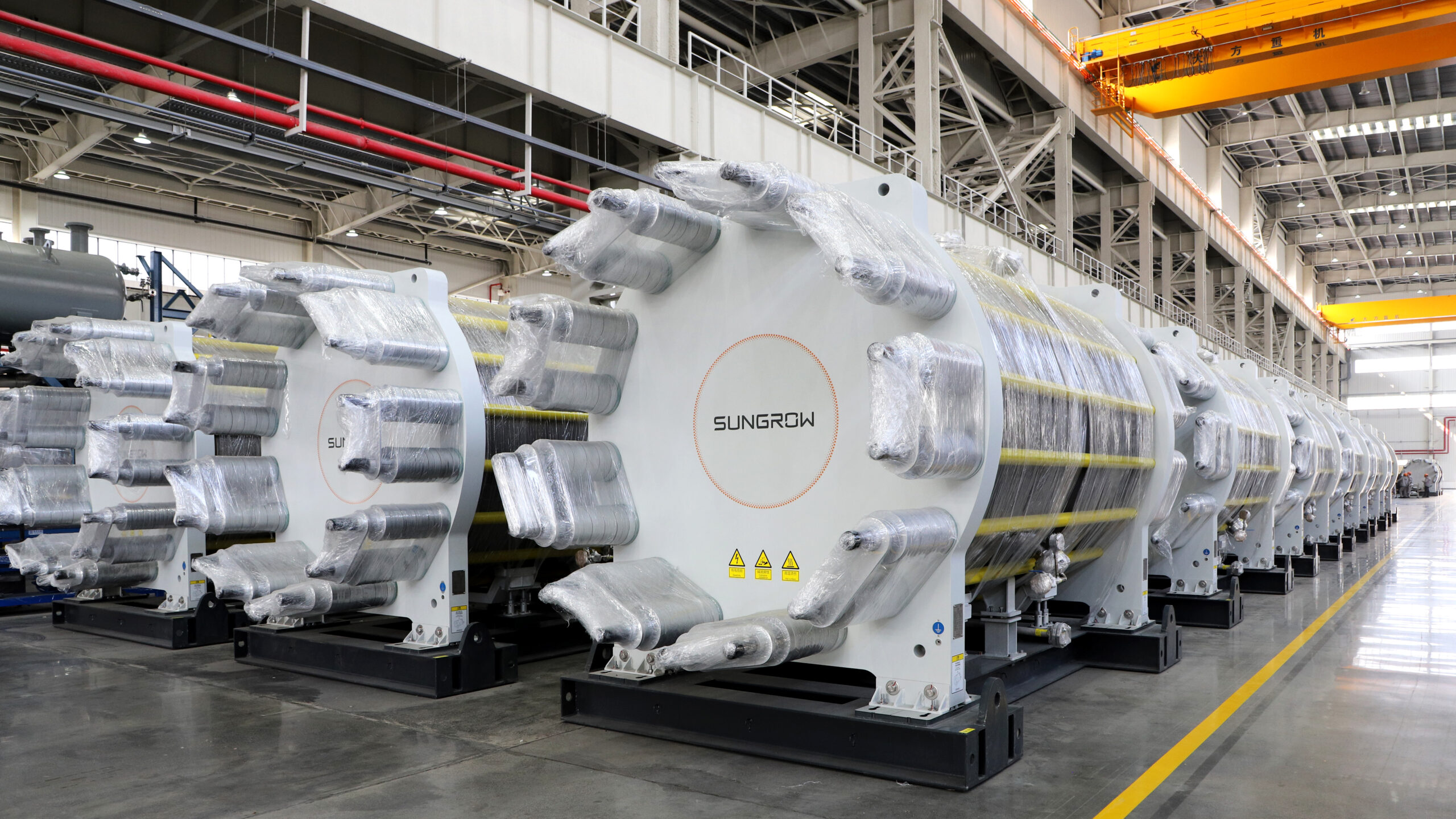
Sungrow Hydrogen has completed near-simultaneous shipments of electrolysis systems to projects in Oman, Italy, and Brazil, offering a case study in how vendors are attempting to scale both manufacturing and delivery in parallel.
The largest component of this deployment is tied to a green ammonia project in Oman, where Sungrow Hydrogen has supplied 160 MW of alkaline water electrolysis capacity to a development led by ACME Group. At that scale, alkaline electrolysis remains the dominant technology choice due to its relative cost maturity compared to proton exchange membrane systems, particularly for baseload or large industrial applications. The shipment highlights a broader industry trend in which gigawatt-scale ammonia export projects are being positioned as anchor demand for early hydrogen supply chains, particularly in regions with strong solar resources.
However, the scale of electrolyzer deployment does not, in itself, resolve the economic constraints facing such projects. Large ammonia developments rely on long-term offtake agreements, access to low-cost renewable electricity, and stable policy frameworks in importing markets. While Oman has positioned itself as a potential export hub, the viability of these projects remains closely tied to European and Asian demand signals, which continue to evolve alongside regulatory frameworks for low-carbon fuels.
In contrast, the Italian project reflects a different segment of the hydrogen market, focused on smaller, decentralized systems. Sungrow Hydrogen is supplying a 3 MW containerized proton exchange membrane unit for what is described as the country’s first megawatt-scale off-grid photovoltaic-to-hydrogen installation. The system integrates solar generation, battery storage, and electrolysis under a unified control platform, addressing one of the more persistent technical challenges in hydrogen production: managing the intermittency of renewable power inputs.
This configuration illustrates the growing interest in hybridized systems that combine generation, storage, and hydrogen production to improve utilization rates. Electrolyzers operating under variable load conditions face efficiency losses and increased wear, particularly in alkaline systems. PEM technology, while more expensive, offers greater operational flexibility, making it better suited to intermittent applications. The trade-off between capital cost and operational adaptability continues to shape technology selection across projects.
In Brazil, Sungrow Hydrogen’s deployment centers on a flexible electrolysis system designed to accommodate fluctuations in solar generation while meeting multiple international and local certification standards, including ASME, ISO 22734, and Brazilian regulatory requirements. The system is expected to support hydrogen blending with natural gas, a pathway that has gained attention as a transitional decarbonization measure for existing gas infrastructure.
Blending, however, presents its own limitations. Hydrogen’s lower volumetric energy density and material compatibility challenges constrain blending ratios, while regulatory frameworks governing gas quality vary significantly across markets. As a result, blending is often viewed as an interim solution rather than a long-term decarbonization pathway, particularly for sectors requiring high-purity hydrogen.
Sungrow Hydrogen’s multi-regional deployment strategy highlights a broader structural issue within the hydrogen sector: the lack of standardization across project designs, regulatory environments, and technical requirements. Each market introduces distinct constraints, from grid access and permitting in Europe to certification and infrastructure readiness in emerging economies. Vendors capable of adapting to these variations may gain a competitive advantage, particularly as projects move from pilot scale to commercial deployment.
At the same time, the emphasis on simultaneous project execution underscores the pressure on manufacturers to scale production capacity without compromising system performance. Automated assembly lines and in-house manufacturing, as cited by the company, are becoming increasingly important as order volumes grow. Yet the industry has not fully demonstrated its ability to deliver at the multi-gigawatt scale implied by long-term hydrogen strategies, particularly given the supply chain dependencies for key components.