



Peregrine Energy Solutions plans to build a $400 million battery energy storage facility in Harrison County, reflecting both local economic ambitions and broader grid balancing needs across the Texas and Southwest Power Pool systems.
The project, planned for a 42 acre site near FM 3251 and Fyffe Cutoff, ranks among the largest private investments in Harrison County’s history, according to Marshall Economic Development. While local officials emphasize economic benefits, the more consequential context lies in the timing. Texas continues to add load from population growth, industrial expansion, and data centers, while dispatchable thermal capacity faces retirements and tightening environmental constraints. Battery storage has emerged as a near term response to that mismatch, particularly for peak demand coverage and short duration grid support.
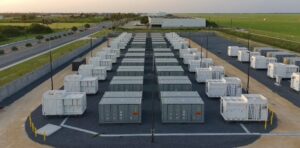
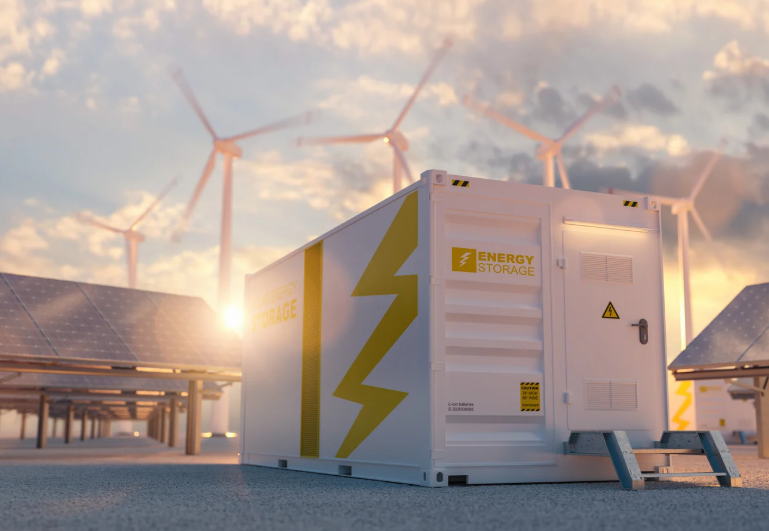
Peregrine’s facility is intended to store and release electricity to support the Texas and Southwest Power Pool grid during periods of high demand. Although capacity details have not been disclosed, the scale of the capital investment suggests a utility scale installation comparable to other large battery projects entering service across Texas in recent years. ERCOT alone added several gigawatts of battery capacity between 2023 and 2025, with storage increasingly deployed not as energy supply but as a volatility management tool for a grid dominated by wind and solar generation.
The economic narrative presented by county and school district officials highlights a secondary but politically significant dimension of large scale energy infrastructure. Even though the project lies outside Marshall city limits, property tax revenues are expected to support Marshall Independent School District funding for teachers, technology, and student programs. Harrison County Judge Chad Sims framed the project as a direct benefit to families and businesses, linking grid infrastructure investment to community stability rather than abstract energy policy goals.
That framing is increasingly common as battery projects face scrutiny over land use, safety, and long term value. Peregrine and local authorities have emphasized fire safety preparedness, noting that the project will include specialized training for local first responders. This acknowledgment reflects lessons from earlier battery deployments nationwide, where thermal runaway incidents have raised concerns among communities unfamiliar with lithium ion systems. Addressing those risks upfront is now a baseline expectation rather than a differentiator.
From a system level perspective, the project’s planned timeline underscores both momentum and constraint. Construction is expected to begin before the end of 2027, with operations targeted for 2028. That schedule aligns with forecasted load growth but also illustrates how long grid infrastructure now takes to permit, finance, and build. Batteries can be deployed faster than new transmission or firm generation, yet multi year development timelines still leave exposure during near term demand spikes.
The investment also raises questions about market dependence. Battery projects in Texas rely heavily on price volatility and ancillary service revenues. While recent summers have validated storage economics during scarcity pricing events, longer term revenue certainty remains sensitive to regulatory adjustments and market saturation. As more batteries enter service, spreads may compress, testing assumptions behind large capital commitments like Peregrine’s.