

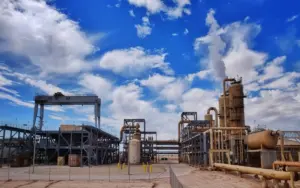





A new agreement between thyssenkrupp Uhde and KÖKSAN to develop a low-emission PET plant in Yumurtalık reflects a broader shift toward integrating decarbonization into core production processes rather than treating it as an add-on.
The planned facility, with an annual capacity of 324,000 tons of PET resin, is scheduled for completion in 2028 and will serve multiple end-use segments, including packaging materials and bulk filament production. The scale of the project places it within the upper tier of global PET manufacturing, where efficiency gains can materially affect both cost structures and emissions intensity.
Conventional PET production involves multiple energy-intensive stages, particularly in solid-state post-condensation, which significantly contributes to both operational costs and carbon emissions. The project’s adoption of Melt-To-Resin technology, developed by thyssenkrupp Uhde’s Inventa-Fischer division, eliminates this step by integrating polymerization into a continuous process.
This approach reduces overall energy consumption and simplifies plant design. Reported emissions reductions of up to 30 percent are primarily linked to lower electricity and fuel requirements, although the actual impact will depend on the carbon intensity of the energy supply used at the site.
The shift toward continuous polycondensation also improves raw material yield and reduces process complexity. For large-scale facilities, even incremental efficiency improvements can translate into significant cost savings over time, particularly in markets where energy prices remain volatile.
thyssenkrupp Uhde’s role extends beyond technology licensing to include engineering, equipment supply, and operational training. This integrated delivery model is designed to streamline project execution and reduce risks associated with commissioning and early-stage operations.
Such approaches are increasingly common in capital-intensive industrial projects, where coordination across multiple contractors can introduce delays and cost overruns. By consolidating responsibilities within a single provider, the project aims to maintain tighter control over timelines and performance metrics.
However, reliance on a single technology provider also concentrates risk. Performance outcomes will depend on the successful scaling of the Melt-To-Resin process under commercial conditions, particularly in maintaining consistent product quality at high production volumes.
PET demand remains structurally strong, driven by growth in food and beverage packaging, textiles, and consumer goods. At the same time, regulatory frameworks are tightening around emissions, recyclability, and material efficiency, particularly in export markets such as Europe.
KÖKSAN’s investment can be viewed as a response to these converging pressures. By reducing the carbon intensity of production, the company positions itself to meet evolving customer requirements and regulatory standards while maintaining cost competitiveness.
The company’s existing global footprint, with exports to more than 100 countries, amplifies the importance of aligning production with international sustainability expectations. Failure to do so could result in reduced market access or increased compliance costs in regions implementing stricter environmental policies.
The selection of Yumurtalık as the project site introduces logistical advantages. The region’s access to key shipping routes facilitates distribution across Europe, the Middle East, Africa, and the Americas, supporting KÖKSAN’s export-oriented strategy.
Proximity to major markets can reduce transportation costs and lead times, factors that are increasingly important as supply chains adapt to disruptions and geopolitical uncertainties. For bulk materials such as PET resin, logistics efficiency can significantly influence overall competitiveness.
While the technological advantages of low-emission production are clear, their commercial viability depends on maintaining competitive cost structures. Advanced processes often involve higher upfront capital expenditure, which must be offset through operational savings and potential pricing premiums for lower-carbon products.
The Yumurtalık project highlights how efficiency, emissions reduction, and supply chain strategy are becoming interconnected within the polymer industry, where technological choices increasingly determine both environmental impact and long-term competitiveness.