




Vietnam’s rapid expansion of renewable energy capacity has outpaced the development of grid flexibility, increasing the urgency for large-scale storage solutions to stabilize supply and demand. The inauguration of a new battery energy storage manufacturing facility by GG Power in Hung Yen province reflects a strategic shift toward domestic production of storage technologies to support this transition.
The facility, located in northern Vietnam, represents an initial investment of approximately VND300 billion, equivalent to $11.4 million. With a designed annual capacity of 5 GWh, the plant positions itself as one of the first professionally developed battery energy storage system manufacturing sites in the country.
Vietnam has emerged as one of Southeast Asia’s fastest-growing renewable energy markets, particularly in solar power. However, the pace of deployment has introduced structural imbalances, including curtailment during peak generation periods and insufficient capacity to shift energy across time.
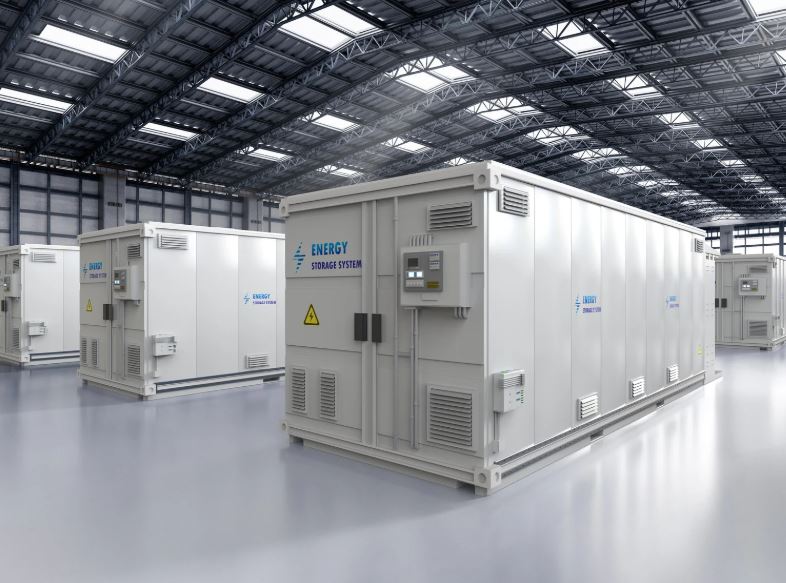
Battery energy storage systems are increasingly viewed as essential to addressing these challenges. By storing excess electricity during periods of high generation and releasing it during demand peaks, BESS installations can reduce grid congestion and improve system reliability.
The development of domestic manufacturing capacity reflects a recognition that reliance on imported systems may limit scalability, particularly as demand for storage increases alongside renewable deployment.
The GG Power facility spans 1.2 hectares and includes a two-story production workshop alongside a dedicated research and development center. With an automation rate exceeding 90 percent, the plant emphasizes process efficiency and quality control, both critical factors in battery system manufacturing.
High levels of automation are increasingly standard in advanced battery production, where consistency in cell assembly, module integration, and system configuration directly affects performance and safety. For Vietnam, developing such capabilities domestically represents a step toward building a competitive position within the regional energy storage supply chain.
The plant is designed to serve multiple market segments, including residential, commercial and industrial, and utility-scale applications. This diversified approach aligns with the varying needs of Vietnam’s energy system, where distributed generation and large-scale grid projects are developing simultaneously.
GG Power has secured technology licensing from Goldwind, enabling access to established research and development processes. This collaboration has facilitated the optimization of an energy management system tailored to Vietnam’s grid conditions.
Localization of energy management systems is particularly relevant in markets with evolving grid infrastructure. Compatibility with national systems and data security requirements can influence deployment speed and regulatory approval, especially as digitalization becomes more integrated into energy operations.
However, reliance on external technology partners also highlights the transitional nature of domestic capability development. While licensing accelerates deployment, long-term competitiveness may depend on the ability to develop independent innovation capacity.
Vietnam’s Ministry of Industry and Trade has identified energy storage as a necessary component of future power system development. Deputy Minister Nguyen Hoang Long emphasized that storage systems are a required element for integrating higher shares of renewable energy, reflecting a broader shift in policy priorities.
This position aligns with global trends, where storage is increasingly treated as core infrastructure rather than a supplementary technology. As renewable penetration rises, the ability to manage variability becomes central to system planning and investment decisions.
Local government support also plays a role in shaping industrial development. Authorities in Hung Yen province have positioned the project within a broader strategy to develop high-tech industrial capacity, linking energy infrastructure with regional economic growth objectives.