





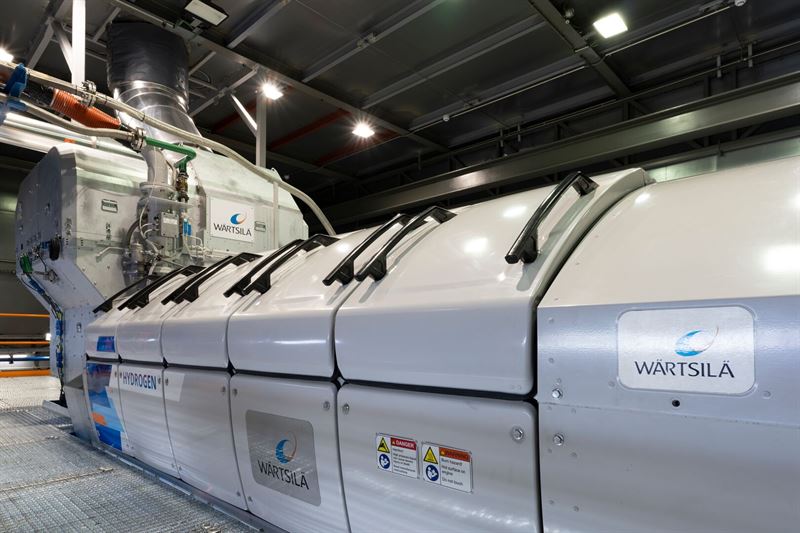
Wärtsilä is testing a 100% hydrogen fueled engine in Bermeo, northern Spain, in what the company describes as the first large scale demonstration of a pure hydrogen engine supplying electricity to a national grid.
The trial is focused on validating whether hydrogen combustion technology can provide dispatchable power for renewable dominated electricity systems. The project involves the Wärtsilä 31H2 engine, part of the Wärtsilä 31 platform, which the company positions as one of the world’s most efficient multi fuel four stroke engine platforms. The demonstration aims to move hydrogen powered electricity generation from concept development toward operational deployment.
As renewable generation increases, power systems face a growing need for balancing resources. Wind and solar can produce large amounts of electricity but cannot always match demand patterns, particularly during periods of low wind speeds or reduced solar output.
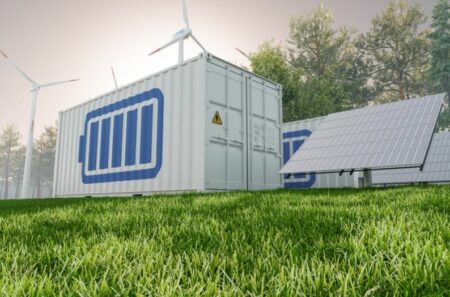
Battery storage can address short duration fluctuations, but longer periods of renewable variability require additional solutions. Hydrogen is increasingly considered a potential option because it can store renewable electricity over longer time periods and later be converted back into power.
In this model, renewable electricity is used to produce green hydrogen through electrolysis. The hydrogen can then be stored and used when electricity demand rises or renewable output falls.
The value proposition is not simply energy production but system flexibility. For grids with increasing renewable penetration, technologies capable of responding quickly to changing conditions could become essential for maintaining stability.
Spain has become one of Europe’s leading renewable energy markets, supported by strong solar resources and expanding wind generation. The country’s energy transition has also increased the need for technologies that can manage periods of variable renewable output.
This makes Spain a relevant location for testing hydrogen based power generation. A successful demonstration could provide evidence for how hydrogen engines might support future electricity systems with high shares of renewable generation.
The Bermeo trial connects directly to broader European efforts to reduce dependence on imported fossil fuels and increase energy system resilience. However, the commercial viability of hydrogen power depends on several factors, including hydrogen availability, production costs, infrastructure development, and regulatory frameworks.
Green hydrogen production remains electricity intensive. The cost of renewable electricity, electrolyzer efficiency, infrastructure investment, and storage requirements all influence the final price of hydrogen fuel. Hydrogen engines also face competition from other flexibility technologies, including battery storage, pumped hydro, demand response, and grid interconnections. Each solution has different technical advantages depending on duration requirements and system needs.
For hydrogen engines, the strongest applications may be where long duration energy storage and rapid power response are both required, particularly for industrial sites, remote facilities, and energy intensive operations.
The Wärtsilä 31H2 platform is designed for applications beyond national grids, including industrial facilities, manufacturing sites, data centers, and locations without direct grid access.
This is significant because industries are increasingly seeking reliable low carbon electricity as they face pressure to reduce emissions. Data centers, in particular, are becoming major electricity consumers due to the growth of artificial intelligence and cloud computing.
Hydrogen capable engines could offer these users an alternative to conventional backup generation while supporting broader decarbonization strategies.
However, industrial adoption will depend on whether hydrogen supply chains develop at sufficient scale. A hydrogen engine requires access to fuel that is produced, transported, stored, and certified according to renewable energy standards.