


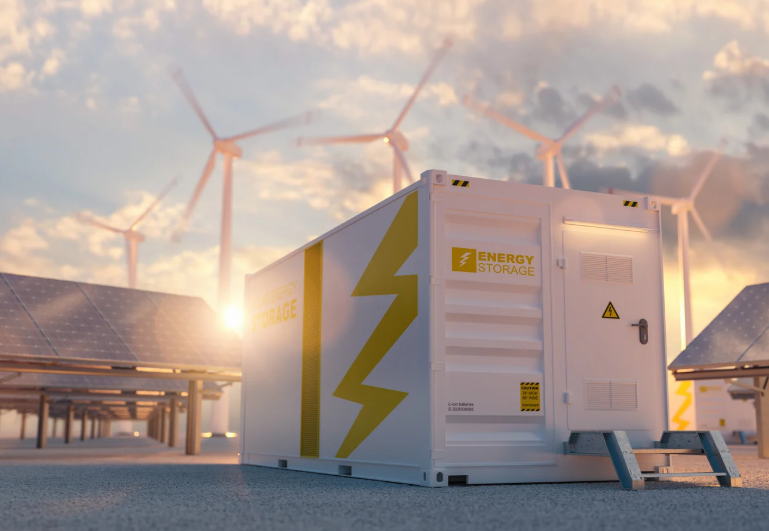


Eurowind Energy has divested its 50% stake in the Potentia-Viridi battery energy storage system to an unnamed American independent power producer, marking the Danish developer’s withdrawal from a California project initially structured as a joint venture with Capstone Infrastructure Corporation. The transaction signals a broader recalibration of European renewable developers’ US market strategies as regulatory complexity, interconnection delays, and financing costs challenge profitability projections that drove transatlantic expansion in previous years.
The PoVi facility represents a four to eight-hour duration battery storage asset designed to provide grid services and renewable energy firming capacity in Alameda County. Planning documents submitted to the California Energy Commission in late 2024 through Alameda LLC, a subsidiary of the Capstone-Eurowind joint venture Obra Maestra Renewables, outline a June 2028 operational target with connection to Pacific Gas and Electric’s Tesla substation. The extended development timeline reflects California’s interconnection queue challenges, where projects increasingly face multi-year waits for grid connection approval and required system upgrades.
Duration specifications of four to eight hours position the asset in a market segment experiencing significant capacity additions but uncertain price formation. California added approximately 6.6 GW of battery storage capacity through 2024, driven largely by regulatory mandates following reliability events and the state’s solar integration challenges. This rapid capacity growth has compressed frequency regulation revenues and shifted market focus toward longer-duration assets capable of addressing evening peak demand periods when solar generation declines. The PoVi project’s duration range suggests flexibility to optimize revenue participation across multiple grid service markets, though economic returns depend heavily on capacity payment mechanisms and energy arbitrage spreads that have demonstrated considerable volatility.
Eurowind’s characterization of the sale as part of a “strategic divestment plan for US activities” and “realignment of our US set-up” indicates broader difficulties European developers encounter in American markets. These challenges include unfamiliar regulatory frameworks across state jurisdictions, different project finance structures, tax equity requirements, and operational complexities that offset perceived market opportunities. Several European renewable developers have reduced US exposure in recent years after discovering that market scale does not compensate for structural differences in permitting, power purchase agreements, and revenue risk allocation compared to European frameworks.
The transaction’s timing coincides with elevated interest rates that particularly impact battery storage economics. Storage projects typically require 100% capital recovery through operational revenues, unlike wind or solar facilities that benefit from production tax credits or investment tax credits covering substantial upfront costs. Rising financing costs directly compress internal rates of return for battery assets, creating pressure on developers to either accept lower returns or defer projects until market conditions improve. Eurowind’s exit may reflect reassessment of return thresholds given current capital costs rather than fundamental project viability concerns.
Capstone Infrastructure’s retention of its 50% stake through the transaction suggests divergent strategic priorities between the Canadian and Danish partners. Capstone maintains broader North American infrastructure investments and possesses institutional knowledge of US regulatory environments that European entrants lack. This asymmetry in market familiarity frequently emerges in international joint ventures, where the foreign partner’s capital and development expertise prove insufficient to overcome the domestic partner’s structural advantages in navigating local requirements.
The buyer’s identity remains undisclosed, described only as a “large American independent power producer.” This characterization suggests an entity with existing US battery storage operations, established relationships with California grid operators and utilities, and capital access through domestic financial markets. American IPPs increasingly acquire storage projects from foreign developers as asset valuations adjust to reflect execution risk and regulatory complexity more accurately than initial development budgets anticipated. These acquisitions allow domestic operators to expand portfolios without bearing early-stage permitting and interconnection risks that disproportionately challenge international developers.
California’s battery storage buildout continues despite individual developer exits, driven by legislative mandates including the requirement for utilities to procure additional clean energy capacity following the Diablo Canyon nuclear plant’s planned retirement. The California Public Utilities Commission’s resource adequacy requirements effectively guarantee capacity payments for qualified storage assets, providing revenue stability that attracts capital even as energy arbitrage revenues fluctuate. This policy framework creates viable projects but concentrates returns among operators capable of managing complex regulatory compliance and market participation requirements.
Pacific Gas and Electric’s role as an interconnection point operator adds another variable to project execution. PG&E’s service territory has experienced substantial grid modernization challenges, including wildfire-related equipment upgrades and bankruptcy-related capital constraints that affected infrastructure investment timelines. Interconnection processes in PG&E territory have proven particularly lengthy, with studies identifying transmission upgrade needs that delay project completion beyond initial schedules. The June 2028 target date for PoVi likely incorporates buffer time for these known bottlenecks, though actual commissioning could shift based on utility construction priorities.
Project ownership through Obra Maestra Renewables LLC, with subsequent stake transfer, illustrates the increasingly complex corporate structures characterizing US renewable development. These multi-layered ownership arrangements serve various purposes, including tax optimization, risk isolation, and partnership flexibility, but they also create opacity that complicates project tracking and accountability assessment. The structure allowed Eurowind’s exit without requiring full project dissolution, preserving development continuity while enabling strategic reallocation of the Danish firm’s capital and management attention.
European developer retrenchment from US markets does not indicate fundamental market weakness but rather a realistic reassessment of competitive positioning. American renewable developers benefit from domestic institutional relationships, familiarity with state-specific regulatory processes, and capital sources comfortable with US project risk profiles. Foreign entrants attracted by market size frequently underestimate the advantages these domestic factors provide to incumbent developers. Eurowind’s withdrawal represents recognition of these competitive dynamics rather than rejection of the underlying market opportunity that the PoVi project represents for its new American owner.
Add EnergyNews.biz as a preferred source on Google


