


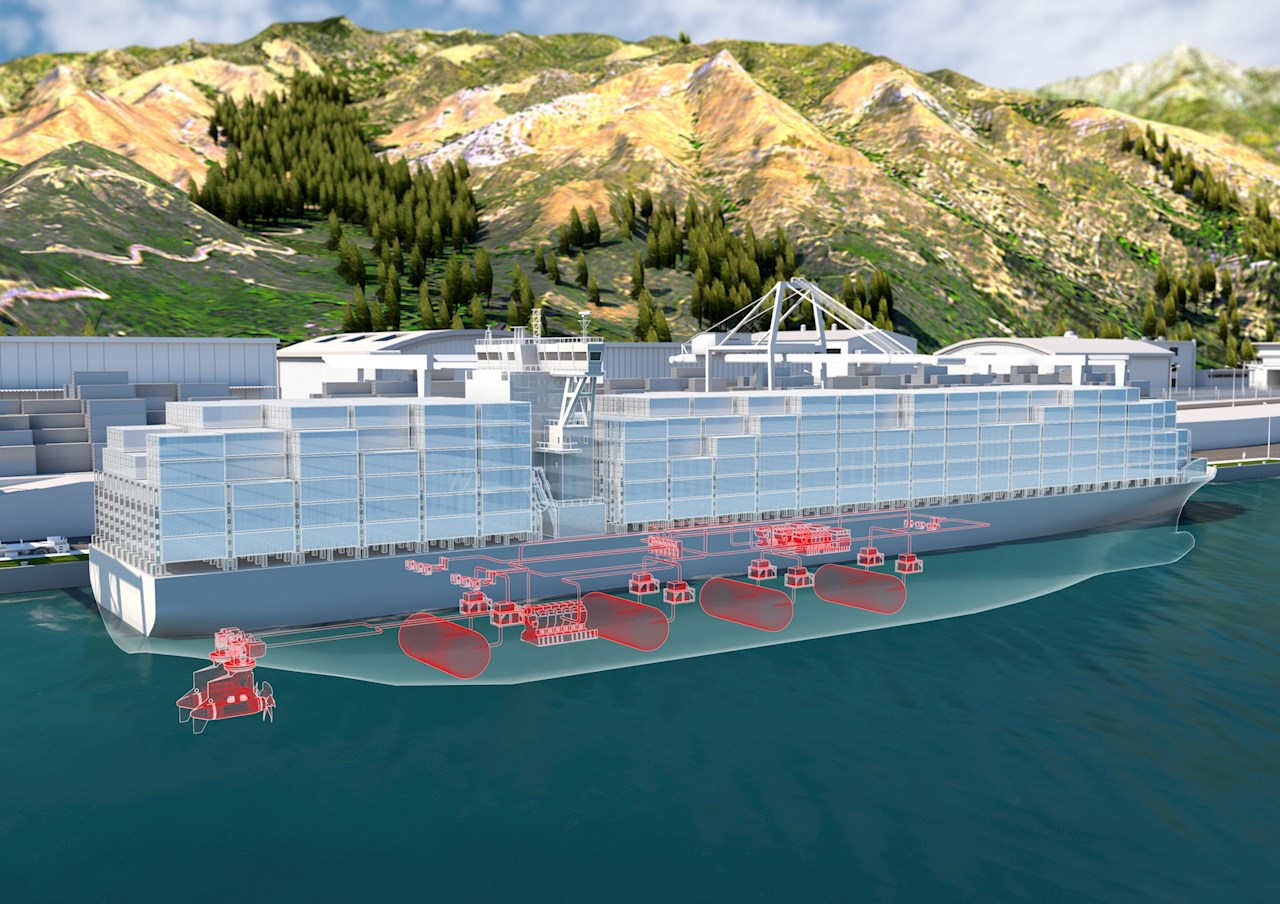


ABB and HDF Energy’s joint-development agreement (JDA) to design high-power hydrogen fuel cell units for marine applications addresses a technical gap that has constrained hydrogen’s role at sea.
The agreement, building on a 2020 memorandum of understanding, sets out a clear but cautious development pathway, with pilot installations targeted for 2028–2029 and serial production from 2030. The timeline itself reflects the complexity of scaling fuel cells beyond kilowatt and low-megawatt ranges into applications suitable for container feeder ships and liquefied hydrogen carriers—segments where auxiliary power alone can exceed several megawatts and where reliability standards mirror those of conventional marine gensets.
At the core of the collaboration is a division of labor that aligns with each company’s strengths. France-based HDF Energy brings experience in designing and manufacturing large fuel cell units, while ABB contributes system integration, power conversion, and onboard power management. This distinction matters because fuel cells rarely fail due to electrochemistry alone; integration into a vessel’s electrical architecture, redundancy philosophy, and safety systems often determines their commercial viability. ABB’s Onboard DC Grid™ platform is positioned as the enabling layer, allowing fuel cells to operate alongside batteries and other power sources within a hybrid configuration.
From a technical standpoint, the project’s emphasis on high-power units rather than distributed stacks is notable. Scaling fuel cells for maritime use has often relied on modular containerized systems, which can increase space and weight penalties. ABB and HDF’s approach—illustrated through configurations combining containerized units and skid-mounted systems, suggests an effort to balance modularity with higher individual unit output. Whether this translates into acceptable volumetric efficiency compared with diesel auxiliary engines remains one of the key metrics operators will scrutinize.
The decarbonization case hinges on both application and fuel pathway. Replacing diesel auxiliary gensets with hydrogen fuel cell units could deliver immediate emissions reductions in port and coastal operations, particularly where local air quality regulations are tightening. However, the climate benefit depends entirely on hydrogen sourcing. The companies explicitly reference carbon-neutral fuels such as green hydrogen, acknowledging that without low-carbon supply chains, fuel cells merely shift emissions upstream. Given current constraints in green hydrogen availability and bunkering infrastructure, early deployments are likely to be geographically limited.
Beyond shipboard use, the partners point to an additional, less-discussed application: ports. High-power fuel cell units integrated with shore-power systems could help meet peak demand when grid capacity is constrained, effectively acting as mobile or semi-permanent zero-emission power sources. This dual-use concept—vessel and port—aligns with broader trends toward port electrification but also introduces regulatory and operational questions around classification, ownership, and utilization rates.
Commercial viability remains the unresolved variable. Fuel cells at this scale must compete not only on emissions performance but also on lifecycle cost, availability, and maintenance regimes comparable to conventional marine equipment. The long lead time to serial production suggests that ABB and HDF recognize certification, safety validation, and cost reduction as gating factors rather than afterthoughts. In that sense, the JDA is less a declaration of imminent market disruption and more an acknowledgment that megawatt-scale hydrogen propulsion is still in an engineering and integration phase.


