


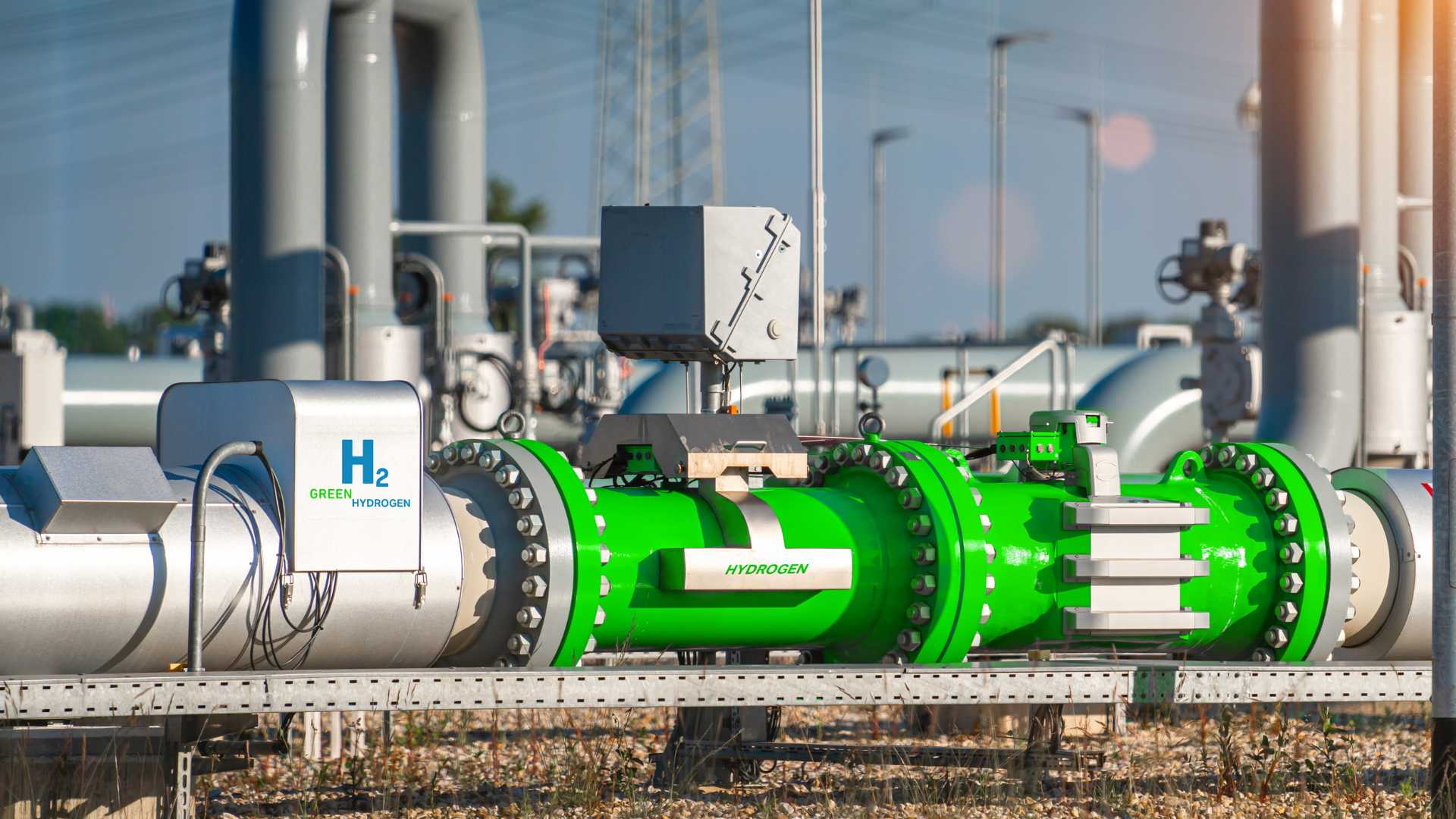


The Federal Network Agency has approved 9,040 kilometers of hydrogen pipeline infrastructure across Germany, representing €18.9 billion in planned investment through 2032. The first 400 kilometers are operational. Industrial customers have signed exactly zero transport contracts.
This discrepancy reveals the central tension in Europe’s energy transition: infrastructure precedes markets by design, but the gap between technical readiness and economic viability threatens to derail the entire hydrogen economy before it begins. The Lubmin-based pipeline, converted from the Nord Stream 1 natural gas route, exemplifies this challenge. Gascade has invested hundreds of millions in conversion costs, yet the facility remains unutilized as hydrogen prices reach three times current natural gas rates.
The Price Barrier to Industrial Adoption
Energy-intensive sectors face brutal economics. Management consultant Matthias Deeg quantifies the challenge: hydrogen currently costs approximately €5-8 per kilogram to produce, while industry requires prices below €2 per kilogram for competitiveness with fossil alternatives. Steel manufacturers, chemical plants, and glass producers operate on margins that cannot absorb this differential. The result is predictable: ArcelorMittal cancelled direct reduction plants in Bremen and Eisenhüttenstadt, while lignite company LEAG withdrew electrolyzer plans entirely.
The Federal Network Agency’s response involves regulatory intervention rather than market forces. A uniform network charge of €25 per kilowatt-hour has been established for the ramp-up phase, attempting to ensure infrastructure financing regardless of demand levels. This approach acknowledges that conventional market mechanisms have failed to bridge the investment timeline mismatch between network operators and potential industrial users.
Infrastructure Risk Without Demand Signals
The conversion strategy relies heavily on repurposing existing natural gas infrastructure, with 60 percent of the planned network utilizing converted pipelines. This approach reduces capital costs compared to entirely new construction, yet it accelerates the chicken-and-egg problem: operators are converting assets without confirmed offtake agreements, betting that availability will stimulate demand.
Lubmin’s strategic positioning demonstrates the technical logic. Offshore wind power cables converge at the site, providing renewable electricity inputs for planned electrolyzers. Multiple companies have announced production facilities, yet these remain in planning stages. The disconnect between announced capacity and contracted volumes reflects broader uncertainty about industrial hydrogen consumption timelines.
The 2040 Competitiveness Horizon
Analysis from Deloitte and the Öko-Institut projects green hydrogen achieving price competitiveness around 2040. This 15-year timeline creates immediate strategic problems for industrial planning cycles. Companies making furnace and plant investments in the next seven to ten years must decide whether to design for eventual hydrogen compatibility or optimize for current energy prices. The longer hydrogen remains economically unviable, the more capital gets locked into fossil-dependent infrastructure.
Brandenburg’s Minister of Economic Affairs, Daniel Keller, frames this as requiring framework conditions that reduce market risks, acknowledging that hydrogen economy development is not guaranteed by infrastructure investment alone. The phased commissioning schedule through 2032 allows time for market development, but also extends the period during which network operators carry stranded asset risk.
Political Support Versus Market Reality
The designation of green hydrogen as essential for industrial climate neutrality creates political momentum that exceeds current economic fundamentals. The technology produces only water as a byproduct, making it attractive for decarbonization targets. However, political support has not translated into procurement commitments from industrial users facing immediate cost pressures.
The international comparison matters for network operators. Deeg argues that delayed network completion perpetuates high prices, which in turn suppresses market formation. Germany risks falling behind in electrolyzer manufacturing and hydrogen logistics if industrial users conclude the technology will remain economically marginal through their next investment cycle.
The pipeline infrastructure exists. The renewable electricity capacity continues to expand. Industrial processes requiring decarbonization remain unchanged. What’s missing is the price point where these elements converge into functioning markets. Until production costs decline substantially or carbon pricing makes fossil alternatives comparably expensive, the 400-kilometer hydrogen highway serves primarily as physical proof that technical obstacles no longer constrain the energy transition. The constraints are purely economic.
Add EnergyNews.biz as a preferred source on Google


