


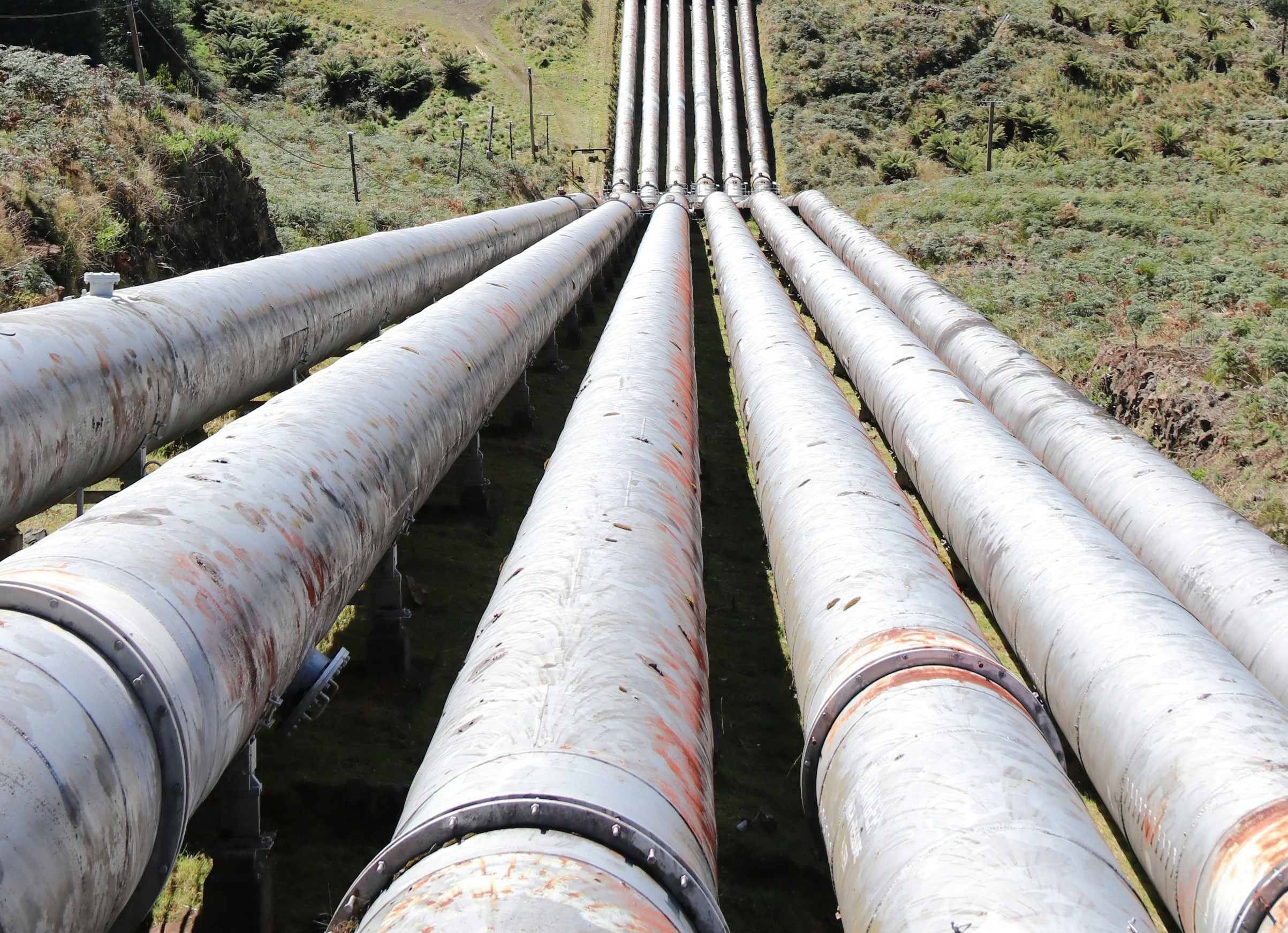


Maintaining gas supply reliability above 99.99% across 3,700 kilometers of underground pipework provides Hong Kong and China Gas Company Limited with an operational foundation few utilities can match. That infrastructure advantage, combined with the town gas already containing approximately 50% hydrogen, positions the 160-year-old utility to capitalize on decarbonization mandates affecting maritime transport, aviation, and heavy industry sectors, where electrification remains technically constrained.
The company’s strategic repositioning centers on three distinct revenue streams: green methanol production from waste conversion, hydrogen ecosystem development, and sustainable aviation fuel manufacturing through its EcoCeres subsidiary. Each targets industries facing imminent regulatory pressure to reduce emissions, though commercial viability remains dependent on policy frameworks and carbon pricing mechanisms that vary significantly across jurisdictions.
Towngas’s green methanol initiative converts scrap tires and agricultural waste into International Sustainability and Carbon Certification-approved marine fuel, completing its first large-scale bunkering operation in 2024. The company claims 70% lifecycle greenhouse gas emissions reductions compared to conventional bunker fuel, with production capacity targets of 1 million tonnes annually. Maritime decarbonization timelines, however, face uncertainty as the International Maritime Organization continues debating carbon levy structures that would make alternative fuels economically competitive against heavy fuel oil.
The hydrogen development strategy exploits existing operational expertise accumulated over a century of handling town gas with 50% hydrogen content. Towngas is establishing Hong Kong’s first green hydrogen production facility while developing ancillary infrastructure, including EV charging stations and construction site generators. This approach addresses what industry analysts term the infrastructure deployment problem: without coordinated investment in production, distribution, and end-use applications, hydrogen adoption stalls regardless of technological readiness.
The challenge mirrors obstacles facing other hydrogen initiatives globally. Unlike Cummins Inc., which recently abandoned its electrolyzer business, citing deteriorating US policy support, Towngas operates within Chinese regulatory frameworks, prioritizing energy security and emissions reduction. Beijing’s carbon neutrality commitment by 2060 provides policy stability absent in markets experiencing political transitions, though execution timelines and subsidy mechanisms remain subject to revision as economic priorities shift.
EcoCeres converts used cooking oil and agricultural residues into sustainable aviation fuel, addressing feedstock challenges that constrain SAF production scalability. The subsidiary has achieved commercial production status, joining established SAF manufacturers serving airlines facing mandates to blend alternative fuels. The European Union’s ReFuelEU Aviation regulation requires 2% SAF blending by 2025, escalating to 70% by 2050, creating demand certainty that attracts capital investment despite production costs currently exceeding conventional jet fuel by factors of two to four.
Operational technology integration supports these strategic pivots. Ultrasound reflection systems analyze pipe joint integrity in real time, while imaging algorithms assess corrosion on building facade risers. In mainland China, solar installations, AI-enabled drones, and robotics conduct inspections and cleaning operations. These applications represent incremental efficiency improvements rather than fundamental technological breakthroughs, though accumulated cost savings fund capital allocation toward emerging energy segments.
The TERA-Award competition, offering up to $1 million in prize money plus investment access, has attracted over 1,700 submissions from nearly 80 countries since its inception. Winner i2Cool developed electricity-free cooling coating deployed across more than 100 projects globally, demonstrating how established utilities can function as technology incubators. This model addresses capital access constraints facing cleantech startups while providing utilities pathways to acquire innovations without internal R&D overhead.
Towngas Telecom completed blockchain-based real-world asset tokenization in 2025, exploring whether distributed ledger technology can reduce financing costs for infrastructure projects requiring long capital recovery periods. The data center subsidiary maintains power and cooling systems calibrated for high-density computing, positioning the utility to serve AI infrastructure demand if Hong Kong develops as a regional computing hub.
The diversification strategy reflects recognition that regulated utility returns alone cannot sustain growth trajectories investors expect from publicly traded companies. Whether green fuel segments generate returns justifying capital deployment depends substantially on carbon pricing evolution and regulatory mandates phasing out fossil alternatives. Towngas benefits from geographic exposure to markets implementing those policies, though execution risk remains considerable given the early commercial stage of technologies being scaled.
Smart kitchen appliances featuring proprietary TGSE chips enable IoT-based remote control, extending the utility relationship into residential devices beyond commodity gas supply. Multiple patents secured across operational technologies indicate intellectual property development that could generate licensing revenue, though monetization potential remains speculative absent disclosed commercialization agreements.
The operational pivot from pure utility to an integrated energy technology company requires maintaining core service reliability while allocating capital toward ventures carrying higher risk profiles than regulated infrastructure. Gas supply consistency above 99.99% provides the credibility foundation for customer retention as energy sources diversify, though whether alternative fuel segments achieve profitability at scale will determine if the transformation succeeds financially or simply diversifies revenue concentration risk.
Add EnergyNews.biz as a preferred source on Google


